

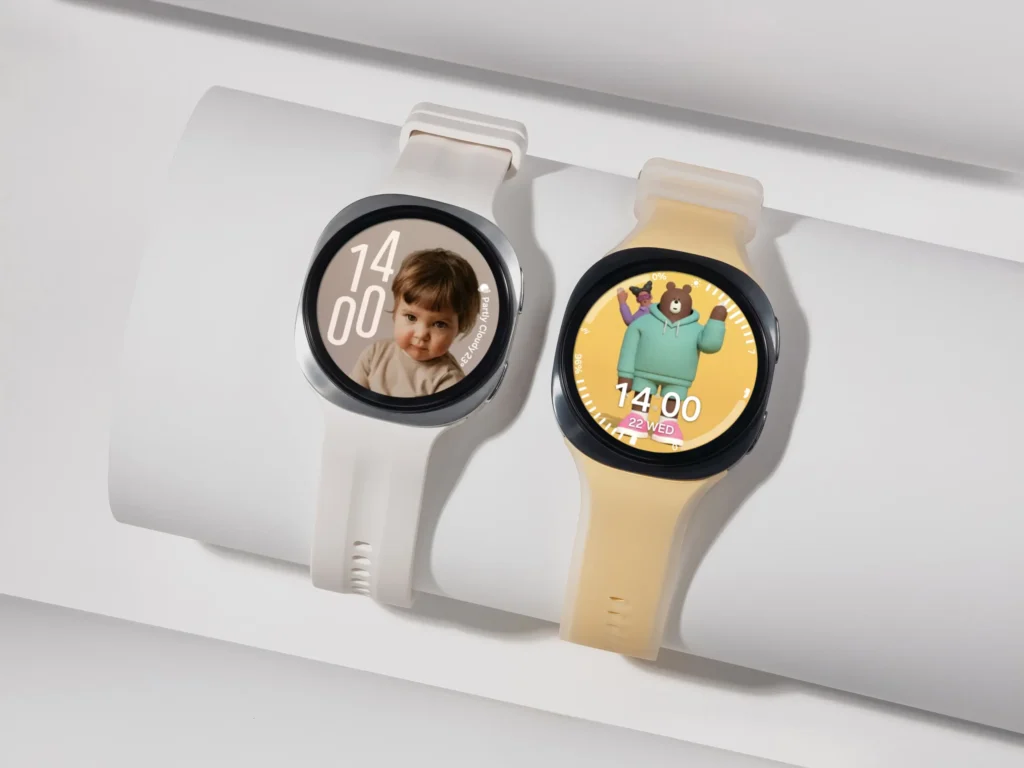
Samsung is rumored to be preparing a mysterious Galaxy Aero smartwatch that would abandon Wear OS
Samsung may soon expand its wearable lineup with an exciting new product. A reference discovered in the code of the Galaxy Wearable app hints at the arrival of a new device called Galaxy Aero. Even more surprising, this watch would not operate on Wear OS but instead utilize a real-time operating system (RTOS), typically reserved for more affordable devices.
If this leak proves accurate, Samsung could introduce a new category of smartwatch that sits between the Galaxy Fit and the Galaxy Watch.
A Galaxy Aero Found in the Galaxy Wearable Code
According to a discovery reported by SamMobile, the source code of the Galaxy Wearable app contains a new reference labeled “galaxy_rtos_watch,” associated with the name Samsung Galaxy Aero. As of now, no official images or technical specifications have emerged. The name “Aero” might merely be an internal code name used during development.
However, one detail grabs immediate attention: the inclusion of the term RTOS.
Unlike the current Galaxy Watches, which are developed in partnership with Google using Wear OS, the Galaxy Aero would operate on a Real-Time Operating System (RTOS). This type of system is significantly lighter and less resource-intensive. Samsung already employs it in several entry-level products, including the Galaxy Fit connected bands.
This approach offers two key advantages: generally superior battery life and lower production costs. However, the trade-off is that features are more limited, with minimal or no support for Wear OS applications available on Google Play.
A New Category of Watch Between Galaxy Fit and Galaxy Watch FE?
What’s particularly intriguing is that the code explicitly mentions the term “watch” rather than “fit.” Samsung officially designates the Galaxy Fit as connected bands rather than watches. This difference in terminology suggests that the Galaxy Aero could mark the beginning of an intermediate category.
The device could thus feature a design similar to a traditional watch, a more comfortable display, some advanced health functions, and significantly better battery life compared to a Galaxy Watch operating on Wear OS.
In other words, Samsung may aim to attract users who desire more than just a fitness band, but don’t wish to invest in a premium smartwatch.
A Strategy That Mirrors Future Galaxy Buds Able
This leak comes at a time when several rumors also discuss the arrival of the Galaxy Buds Able, new clip-on open earbuds intended to enhance Samsung’s audio offerings. The company appears to be broadening its range by introducing products aimed at occupying intermediate segments of its catalog.
In this context, the Galaxy Aero could serve as an ideal companion to the Buds Able, providing a more accessible connected experience than traditional Galaxy Watches.
Why Would Samsung Return to an RTOS?
The decision to use an RTOS is not trivial. While Wear OS currently offers a comprehensive experience, it tends to be relatively demanding regarding energy consumption and hardware power.
Conversely, a real-time system allows for battery life that can last several days, or even weeks, instant startup, lower manufacturing costs, and a simplified interface. In a context where many users prioritize battery life over installing applications, Samsung could see this as a genuine commercial opportunity.
Samsung Could Create a New Family of Wearables
If this leak holds true, the Galaxy Aero could represent much more than a basic entry-level smartwatch. Samsung seems to be gradually segmenting its wearable catalog further to cater to diverse user profiles. Between the sport-oriented Galaxy Fit, premium Galaxy Watches operating on Wear OS, and the upcoming Galaxy Buds Able, the Galaxy Aero might occupy an untapped space: that of a lightweight, autonomous, and more affordable watch.
The choice of an RTOS also signifies that Samsung no longer views Wear OS as the universal solution for all use cases. Battery life, simplicity, and cost are emerging as differentiating factors in a market where high-end smartwatches are becoming increasingly complex.
For now, Samsung has not officially confirmed the existence of the Galaxy Aero or its launch timeline. However, this discovery in the Galaxy Wearable code suggests that the project is already well underway.



