

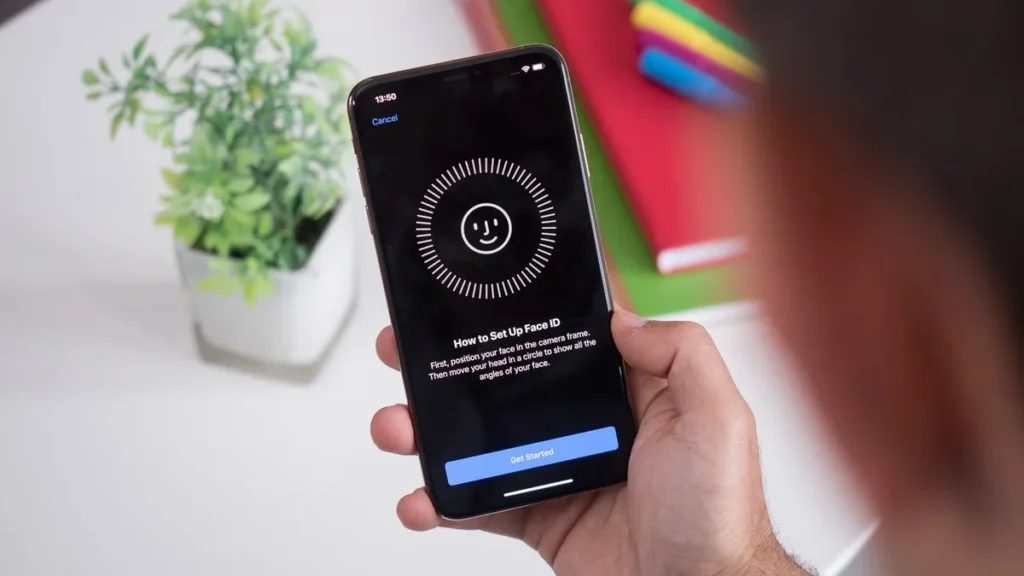
Project Toscana: Google prepares an ‘infallible’ Face ID for Pixel and Chromebook
Google is reportedly addressing one of its long-standing shortcomings: the facial recognition capabilities of its Pixel devices, which have been too dependent on lighting conditions. According to Android Authority, which has uncovered an internal initiative called “Project Toscana,” the company is testing “advanced” facial recognition for both Pixel devices and Chromebooks — with a level of reliability reminiscent of Apple’s Face ID.
A Facial Recognition That Works (Really) in the Dark
The observation is straightforward: recent Pixel devices offer a facial recognition system that operates best in bright light but is less reliable under challenging lighting conditions. Project Toscana aims to enhance facial recognition for difficult conditions and has been tested on a Pixel with a single punch-hole camera and two Chromebooks (using external cameras) in various lighting environments.
This detail regarding Chromebooks is significant: it appears Google is seeking to establish a common biometric framework between Android and ChromeOS — a strategic move aligned with its ecosystem ambitions.
The Mystery of the Punch-Hole: How to Achieve “Face ID Equivalent” Without the Face ID Arsenal?
This is where it gets intriguing. Apple relies on dedicated hardware (infrared dot projection plus IR camera) to create a depth map of the face, explaining the space required on the front of its devices.
However, according to Android Authority’s report, the demonstration of Project Toscana worked on a Pixel with a single front camera, without explicit mention of a visible IR module.
Two plausible and compatible explanations arise from the clues:
- “Invisible” or discreet hardware: an IR transmitter (or NIR sensor/filter) integrated in a less noticeable way, possibly under glass/display — a suggestion that has long been considered for returning a more robust facial recognition system at Google.
- A more powerful computational combination: presence checks, advanced ISP, security through enclave/TEE, and smarter camera signal processing — which aligns with rumors about a future Pixel generation (often referred to as Pixel 11) aiming for a “Face ID-like” solution.
At this stage, it’s impossible to definitively conclude: the leak confirms neither a ToF sensor nor a dedicated IR projector, nor “hidden hardware.” However, the fact that Google is also testing this on Chromebooks suggests an ambition: strong authentication, not just practical unlocking.
Why Is Google Doing This Now?
Because the use of biometric security has evolved. With payments, passkeys, and account protection, biometrics have transitioned from a minor feature to an essential security gateway. On Android, the perception gap compared to Face ID remains significant, particularly when lighting conditions aren’t optimal.
By focusing on Pixel and Chromebook, Google could create a very real scenario: unlocking your phone and laptop with the same logic, while standardizing more robust biometric APIs/attestations for applications.
If Google succeeds, it won’t just be a technical comeback against Apple; it will signal that premium Android is ready to treat biometrics as Apple has for years — not as an option, but as a fundamental feature.



