

Pixel 10a: Launch Date Advanced to February 17 to Compete with Samsung?
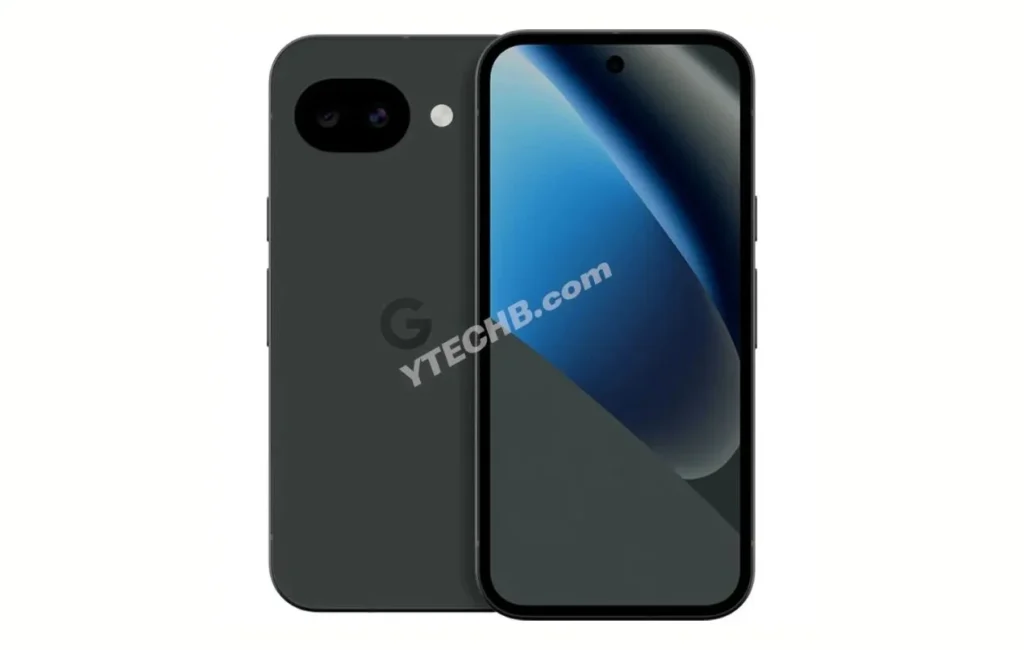
At first glance, one might mistake it for the Pixel 9a. The same silhouette, the same lines, and the same camera module. However, this time, it’s indeed the Pixel 10a that’s being showcased—through a new series of renders—and the discomfort arises: if leaks are to be believed, Google is preparing to launch a “new” smartphone that bears a striking resemblance to its predecessor.
Behind this impression of a copy-paste approach, there is a strategy at play. And with it, a risk: the potential to transform the “a” series into a mere update mechanism instead of a genuinely sought-after product.
Pixel 10a as the Twin of the 9a
The latest renders released in recent days depict a Pixel 10a that is almost indistinguishable from the Pixel 9a, so much so that differentiation comes down to minor details (hue, lighting, angles).
This is not entirely surprising: CAD renders had previously suggested this continuity, and multiple specialized media outlets align in their assessments—Google has made minimal external adjustments.
A Specifications Sheet That Screams “Copy-Paste”
On the specifications front, the table repeats itself: leaks suggest a screen around 6.3 inches with a 120 Hz refresh rate, 8 GB of RAM, a battery of approximately 5100 mAh, 23 W wired charging, and a dual-camera setup featuring 48 megapixels and 13 megapixels—a list that closely mirrors the Pixel 9a.
And for good reason: with the Pixel 9a, Google precisely announces a 6.3-inch display, 60–120 Hz refresh rate, 5100 mAh battery, and a 48 + 13 megapixel camera module.
The only notable change, according to the same leaks: the processor, described as an evolution of the Tensor G4 (again, caution is advised until Google makes an official announcement).

So… Why Release the Pixel 10a?
This is where the story becomes interesting because this kind of launch—minimalistic on the surface—is rarely an accident.
The “a” series also exists to occupy a clear segment among carriers and retailers: a “accessible” Pixel, straightforward, featuring the Google ecosystem and a solid photo promise. Even if the hardware changes little, the label “new model” provides a marketing boost.
Similar design, similar key components: this often means controlled costs, a simplified supply chain, and better-protected margins. In a market where every euro of BOM counts, the temptation to recycle is strong—especially for a model that must remain competitive without engaging in overspending.
Finally, the most tangible benefit for buyers, should the Pixel 10a indeed launch in 2026, could be… time. A newer model potentially means an extra year of support (depending on the policy applied to this generation). It’s a simple lever, not glamorous, but remarkably effective in the mid-range.
The Real Danger: Boredom and Cannibalization
By pursuing continuity to this extent, Google takes a risk: making the Pixel 10a unnecessarily close to the Pixel 9a, which could then find itself discounted. It raises a blunt question: why purchase the “new” model if the previous one offers the same experience at a lower price?
More broadly, a Pixel 10a that is too timid sends a signal: Google is no longer using the “a” series to democratize advancements but rather to maintain a production cadence. In an era where consumers compare more than they dream, such routine can have repercussions.
If the hardware remains largely unchanged, Google has only one option left: to make the Pixel 10a genuinely an AI smartphone, in a practical, everyday, and useful sense—not just a buzzword. Because in the absence of a surprising design, there must be an experience that justifies it. And this time, mere renders will not suffice.



