

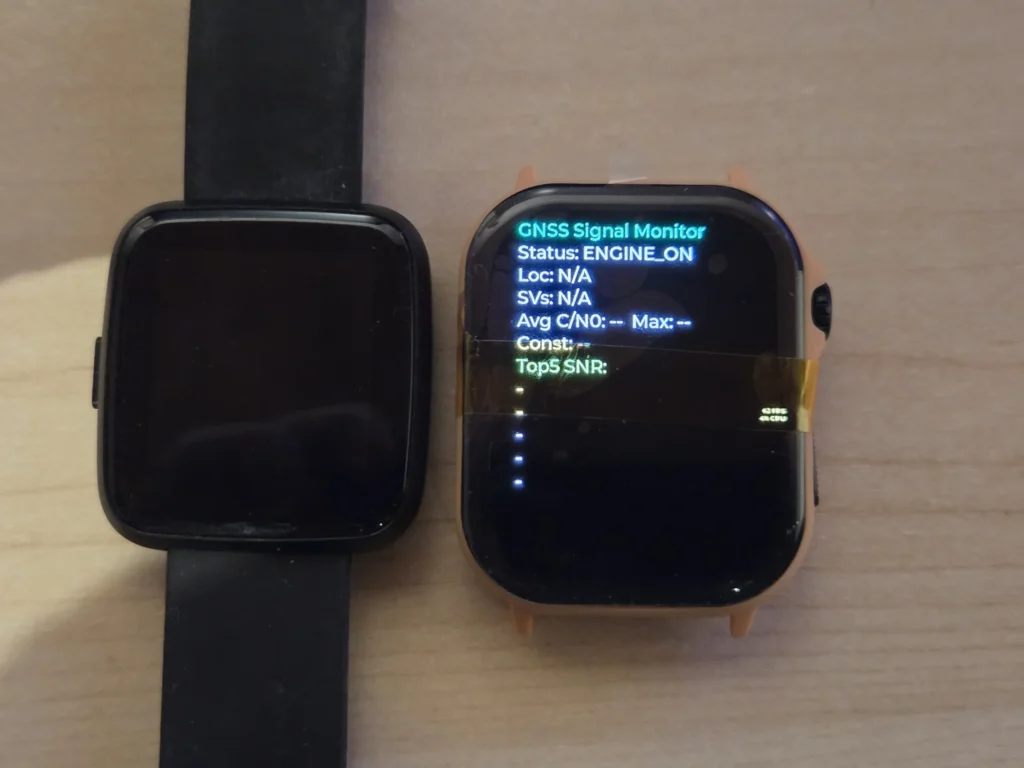
PineTime Pro: The Open Source Watch Upgrades to AMOLED and GPS in 2026
At Pine64, news takes an almost paradoxical turn. On one hand, the company confirms that the current shortage of DRAM memory forces it to suspend or slow production of several devices, including the PinePhone, PineNote, and PineTab2.
On the other hand, it seizes this same context to officially announce a new product: the PineTime Pro, an open-source smartwatch set to succeed the iconic PineTime.
PineTime Pro: A New Watch, Seven Years After the Launch of PineTime
This announcement carries significant symbolism. Pine64 unveiled the original PineTime in 2019 and began large-scale sales around 2021 at an aggressively low price of $26.99. The PineTime Pro thus arrives as a long-awaited evolution of a product that has become legendary in the world of open-source wearables.
For now, Pine64 has not provided a price, launch date, or complete specifications. However, the company has confirmed several key improvements: an AMOLED display, GPS support, additional sensors like blood oxygen monitoring, and a new physical interface featuring a rotating crown along with an extra button. Pine64 also talks about using a “custom chip,” though has yet to clarify which SoC is involved.
What Pine64 Aims to Improve Compared to the Original PineTime
To truly appreciate this new generation, it’s essential to remember the original PineTime. The classic version features a 1.3-inch IPS display with a resolution of 240 x 240 pixels, a Nordic nRF52832 processor with a 64 MHz ARM Cortex-M4 CPU, 64 KB of RAM, 512 KB of flash storage, 4 MB of SPI NOR, an accelerometer, a heart rate sensor, a vibration motor, and a battery of around 170 to 180 mAh, all certified IP67.
In contrast to this minimalist foundation, the PineTime Pro could represent a substantial upgrade. The AMOLED display promises deeper blacks and improved energy efficiency for certain interfaces. GPS would finally allow for navigation or sports tracking that is less reliant on a smartphone. The additional sensors would bring the watch closer to mainstream market standards, all while Pine64 retains its open-source ethos.
An Announcement Amidst a Challenging Industrial Context
The launch of the PineTime Pro cannot be viewed in isolation from Pine64’s broader situation. In its update following FOSDEM 2026, the company explicitly mentions the effects of the DRAM chip shortage, which impacts its ability to produce certain existing devices. The PinePhone, PineNote, and PineTab2 are among those affected.
In other words, Pine64 continues to innovate, but in an environment where component availability is much more challenging than before. This also makes the PineTime Pro interesting: a smartwatch, especially if it is built on a more specific architecture, may be less affected by the same supply chain constraints that impact the brand’s Linux tablets or smartphones, allowing for ongoing product dynamics despite supply challenges.
An Open Source Watch Designed Primarily for Enthusiasts
As is often the case with Pine64, it’s essential to avoid misunderstandings. The PineTime Pro is not intended, at this stage, to compete head-to-head with an Apple Watch or a Galaxy Watch in terms of software sophistication, wellness marketing, or mainstream ecosystems. Instead, it primarily targets developers, tinkerers, and open hardware enthusiasts—those who wish to understand, modify, experiment with, and build around the device. Pine64’s historical positioning aligns perfectly with this intent.
This is precisely what makes it compelling. In a wearable market dominated by highly locked-down platforms, Pine64 continues to advocate a different vision of connected products: less invisible, less intrusive, and more accessible.
Pine64 Focuses on Maturity Rather Than Speed
Perhaps the most interesting aspect of this announcement is its timing. Seven years after the initial introduction of PineTime, Pine64 does not seem to be rushing to catch up with industry giants on their turf. The company appears to prefer a gradual approach, presenting a watch that is finally more credible in display quality, sensor capabilities, and ergonomics, while still adhering to an open philosophy. This strategy may not be spectacular, but it could render the PineTime Pro more relevant than its predecessor.
In summary, the PineTime Pro is not merely a continuation of a low-cost watch. It represents an effort to mature the open-source wearable market at a time when Pine64 must navigate the very real limitations of the supply chain.



