

Perplexity Comet Arrives on iPhone: The AI Browser That Will Outdate Safari
Following its launch on desktop last summer and on Android in the fall, Comet has finally made its debut on Apple’s mobile ecosystem. Perplexity’s application is now available on the App Store as a free “AI browser and assistant” with in-app purchases.
The App Store notes compatibility with iPhone and iPad running iOS/iPadOS 18 or later, though the launch communication has predominantly focused on the iPhone.
Comet: A Browser Designed Not Just to Display the Web but to Understand It
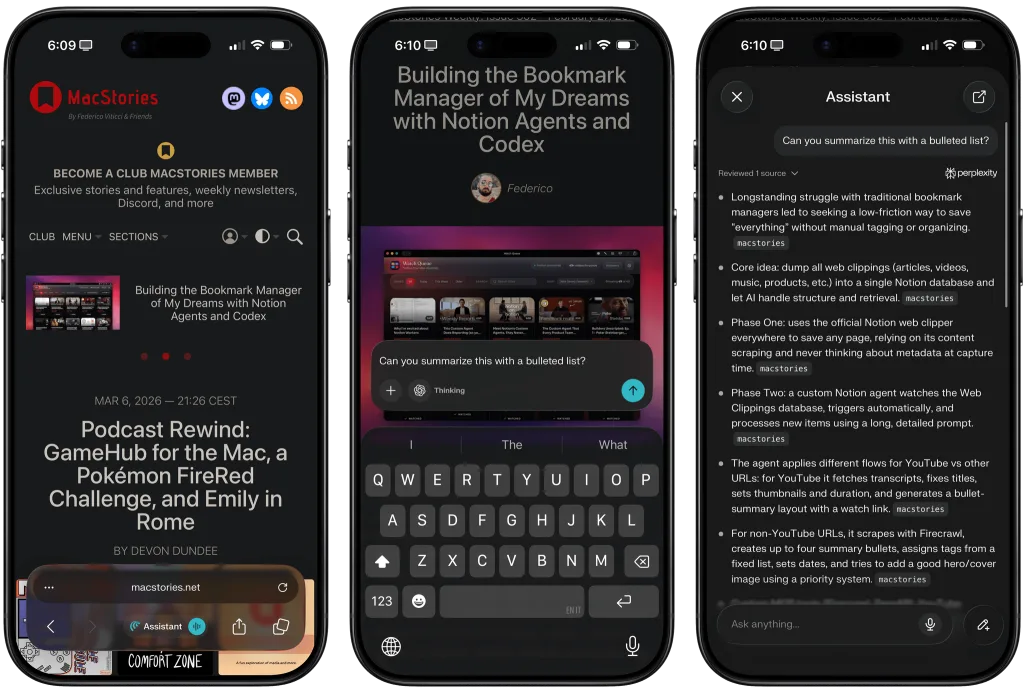
Similar to its desktop version, Comet leverages Perplexity’s AI assistant. The browser allows users to ask questions about the current page, receive quick summaries, explore related topics without leaving the tab, and essentially transforms browsing into a guided research session. Perplexity characterizes Comet as capable of “summarizing, shopping, scheduling, and researching—directly in the browser.”
On iPhone, the interface features an Assistant button integrated into the address bar. According to MacStories’ hands-on review, this assistant can answer questions about the active tab, compare multiple tabs, attach files or images to requests, and retrieve previous conversations from a synchronized library.
Voice Becomes a True Entry Point
One of the most interesting features of this iOS version is the voice mode. MacStories reports that Comet allows users to access a voice assistant directly from the address bar and have a conversation about the displayed page. The browser can also read responses aloud, enhancing the experience of a more conversational and less passive browsing.
This positioning is significant, as Perplexity does not market Comet as just another competitor to Safari or Chrome. Instead, the company presents it as a productivity and research tool, designed to assist with comparing, summarizing, organizing, and acting faster within the browser. This interpretation aligns with the product positioning highlighted by Perplexity and the initial user experience of the iOS version.
An AI Browser, but With iOS Limitations
However, it’s essential to temper these ambitions. On iPhone, Comet still operates on WebKit, like all browsers on iOS, and lacks the same level of freedom found on Mac, Windows, or Android. MacStories also notes that certain agent functions do not execute locally in the iOS app: when Comet needs to “browse for you,” it may rely on a virtual cloud browser, temporarily transferring cookies to complete the task before deleting them.
In essence, Comet on iPhone captures the spirit of its desktop counterpart but must make compromises dictated by Apple’s platform.
Ad Blocker, Synchronization, and Multiple Models
Comet also features a built-in ad blocker, which has been highlighted by the App Store, Perplexity’s help pages, and early user feedback. MacStories points out the synchronization of browsing data between devices via Perplexity’s “sync chain” system. The article also indicates that users can choose among different high-end models for their conversations based on the context.
Perplexity finally Completes Its Cross-Platform Deployment
The iPhone launch signifies the culmination of a rollout effort that has spanned several months. 9to5Mac notes that Comet was initially listed for pre-order on the App Store before its official release today, thus joining the already available versions for Mac, Windows, and Android.
Ultimately, this arrival on iPhone speaks to a broader evolution of the mobile browser. For a long time, browsers were merely windows to the web. With Comet, Perplexity aims to transform it into a layer of interpretation, synthesis, and action. The real question is no longer just whether Comet can compete with Safari in market share, but whether it can convince users that an AI-driven browser truly deserves a default spot on their home screen.



