

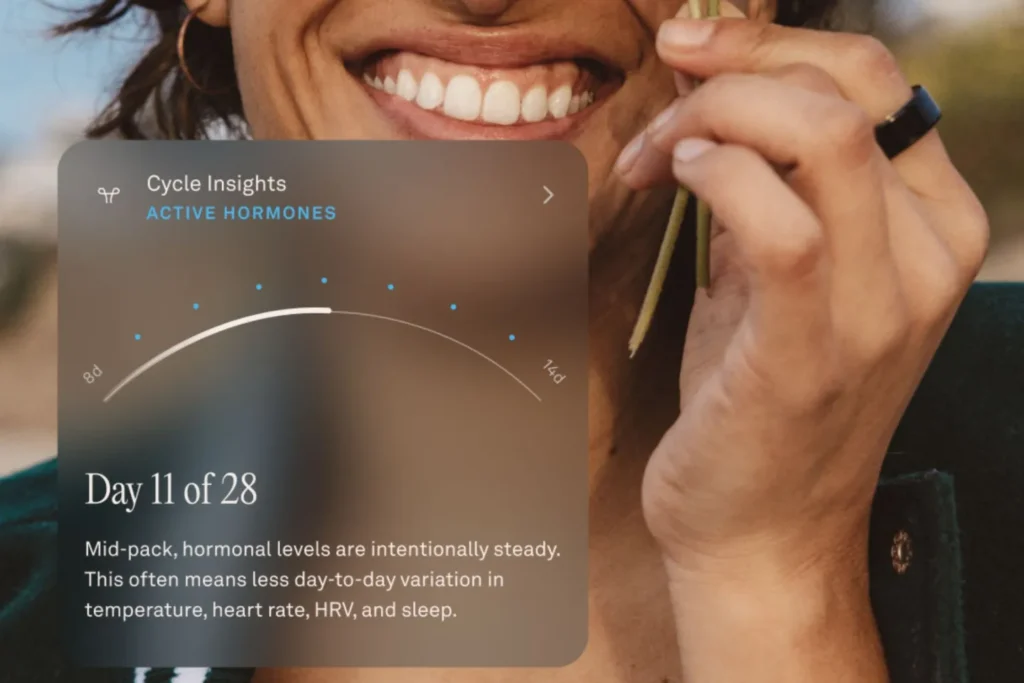
Oura integrates hormonal contraception into cycle tracking
The manufacturer of connected rings, Oura, is enhancing its approach to reproductive health. With a major update, the platform now incorporates the impact of hormonal contraception in cycle tracking — a first in the world of consumer wearables.
A cycle reading finally adapted to hormonal realities
With this new feature, Oura goes beyond merely tracking a “standard” cycle. The algorithm now considers over 20 types of hormonal contraception, including pills, patches, hormonal IUDs, and implants.
The objective is clear: to reflect the physiological realities of users, often overlooked by traditional menstrual tracking tools.
This update, integrated into Cycle Insights, allows for the analysis of temperature variations, sleep quality, and recovery indicators. This data is then cross-referenced with hormonal phases (active or inactive) to identify what constitutes a “normal cycle” for each user.
This approach transforms the wearable into a physiological reading tool rather than just a simple tracker.
Another step toward personalized health data
This launch aligns with a broader trend: the rise of hormonal self-tracking. The wellness industry is increasingly offering solutions focused on hormonal optimization, sometimes blurring the lines between real science and vague promises. Here, Oura adopts a more measured stance: to provide context without claiming a medical role.
This advancement also raises a sensitive question: what happens to this intimate data? Information related to cycles, symptoms, and contraception can be extremely sensitive. Safeguarding and protecting this data is thus as crucial as its accuracy.
A useful innovation… to be approached with caution
The integration of hormonal contraception represents a logical and welcome evolution. It finally allows for a more accurate interpretation of biological data for many users.
However, as is often the case in health tech: more data does not always mean more clarity, nor does it equate to a medical diagnosis.
With this update, Oura takes a significant step forward: from simple tracking to a more nuanced understanding of the body. It remains to be seen whether the balance between innovation, education, and confidentiality will be maintained.



