

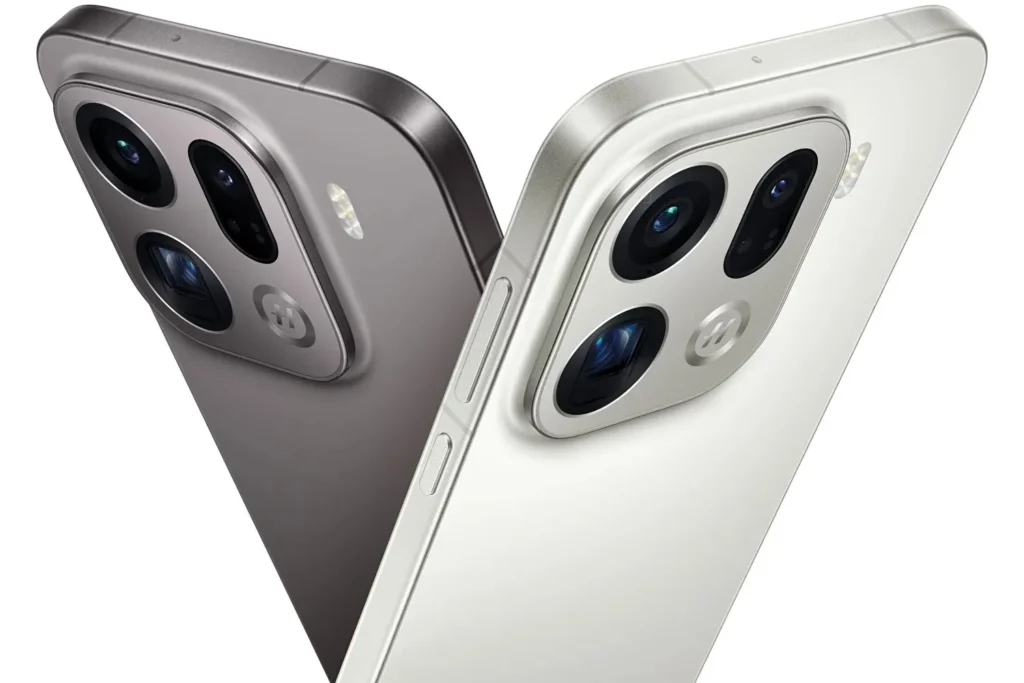
OPPO Find X10 Pro: Is It the First Smartphone with Two 200-Megapixel Sensors of 1/1.3 Inch?
The latest update from OPPO focuses on the Find X9 family, but beneath the surface, the next generation, known as Find X10, is already taking shape. Early leaks suggest an ambitious goal: to incorporate two 200-megapixel sensors at the heart of the photography experience, including an unusually large periscope telephoto lens.
The information comes from the leaker Digital Chat Station on Weibo and has been echoed by various tech media: OPPO is reportedly testing a dual 200-megapixel camera setup for the Find X10 series.
This type of leak is common: it likely pertains to internal evaluations (not yet a product commitment), but is coherent enough to suggest a specific direction.
Find X10 Pro: 200 Megapixels + 200 Megapixels, with 1/1.3 Inch Sensors
The proposed setup is impressive on paper:
- 200-megapixel main sensor
- 200-megapixel periscope telephoto sensor
- Both on large 1/1.3 inch sensors
If OPPO proceeds with this choice, the rationale is clear: a periscope telephoto lens with such a large sensor aims to enhance light capture, dynamic range, and image clarity under challenging conditions—precisely where “premium” zoom capabilities are critical.
Another detail reported is that this concept is being tested across the entire Find X10 lineup, with the possibility of introducing a “Pro Max” model to expand the family beyond the usual duo (standard + Pro). An Ultra model might even be considered later, as part of a staggered release strategy.
Why “Dual 200 Megapixels” Becomes a Strategy, Not Just a Figure
The 200-megapixel tag offers more than just marketing appeal, especially when associated with a large sensor. In practice, it opens up three advantages:
- Clean cropping (hybrid zoom): With 200 megapixels, aggressive cropping is possible while retaining detail, allowing for a greater variety of “useful” focal lengths without solely relying on optics.
- Binning and low light performance: These sensors often combine pixels (binning) to enhance night-time performance, which could make the periscope more consistent in lower light conditions.
- Consistency between sensors: Two high-resolution sensors of similar size can help reduce color, texture, and sharpness discrepancies between wide-angle and telephoto shots — a point often evident in many flagship devices.
This leak gains further credibility as a “close” hardware model is already anticipated for the Find X9s/Pro, which has also been rumored to feature two 200-megapixel sensors (often linked to the Samsung HP5).
This suggests that OPPO is looking to implement this photographic signature across multiple devices, not just the X10.
The Downside
A 200-megapixel periscope lens in 1/1.3 inch format also means:
- A potentially bulkier module,
- A more demanding optical design (which could compromise thickness or aesthetics),
- More data to process (ISP, heating, storage, shooting latency).
Success will hinge less on the “200” label and more on execution: optics, stabilization, processing, and software coherence.
Power: The Dimensity 9600 in 2nm on the Horizon
On the hardware front, the Find X10 series is expected to be among the first to feature a MediaTek Dimensity 9600 rumored to be manufactured using a 2nm process, which promises performance and efficiency gains.
Again, these are whispers that should be taken with caution, but the combination of “premium photography + highly efficient SoC” aligns with the ambitions of a flagship device.
At this point, the OPPO Find X10 appears to be a bold intention: to reclaim an edge in zoom capabilities by elevating the telephoto lens to match the primary camera’s ambition. If the dual 200-megapixel setup in 1/1.3 inch is confirmed, OPPO could make a significant impact—provided that the optics and processing are up to par. Otherwise, it might just become another number in the megapixel wars.



