

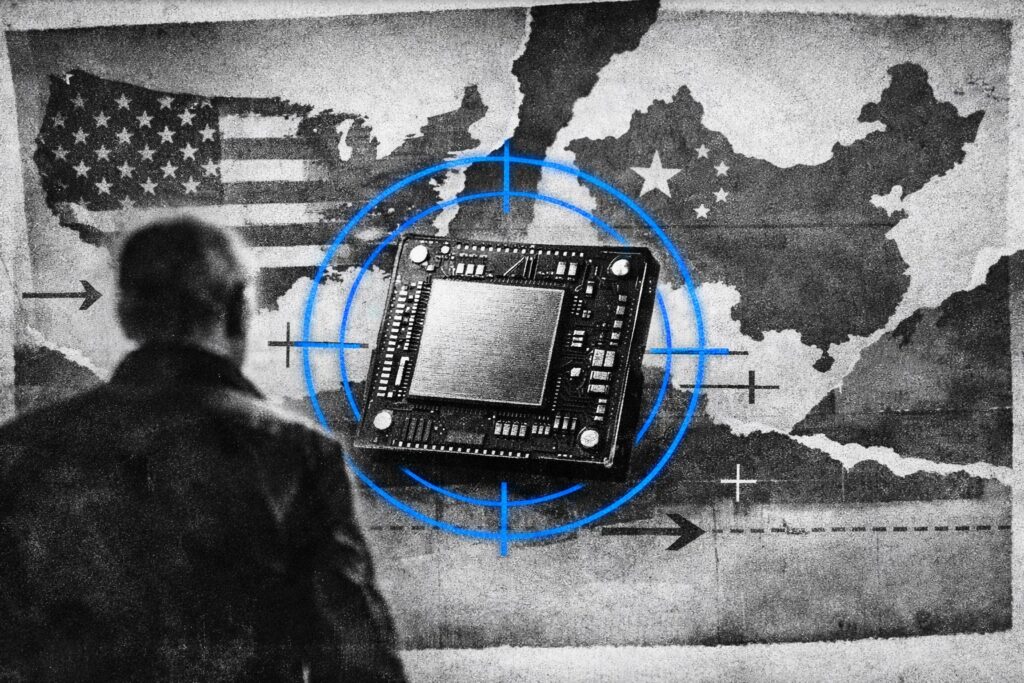
US Eases Export Restrictions on Nvidia H200 Chips; China Responds with Import Curbs
U.S. authorities have released the restrictions on exporting Nvidia’s H200 chips to China, allowing limited access under strict conditions. In response, Beijing is imposing import limitations that will only permit exceptions for specific cases, highlighting the delicate balance between commercial openness and strategic control amid ongoing global technological rivalry.
The announcement from the U.S. Department of Commerce, reported on January 13, 2026, by Reuters and Bloomberg, marks a significant shift in the export policy concerning artificial intelligence technologies. Once banned, the H200 chips from Nvidia—some of the most advanced processors for intensive computing—can now be exported, but each licensing request will be assessed on a case-by-case basis, with heightened scrutiny regarding risks and the declared end use. This development follows months of uncertainty, with the restrictions implemented in 2023 and 2024 abruptly halting shipments of strategic components to China, severely impacting the local AI infrastructure market.
The approval conditions are stringent, requiring verification by third-party labs, precise knowledge of end customers, a cap on shipments not to exceed 50% of volumes delivered to the U.S., and the exclusion of military applications. Nvidia has clarified that it has not requested full upfront payment from its Chinese clients and that transactions will proceed under regular terms. This clarification comes as Chinese companies, facing quotas and increased competition, seek to secure access to the latest generation of GPUs essential for training and deploying large AI models.
U.S. Flexibility vs. Chinese Restrictions
The U.S. decision reflects a desire to maintain a strategic edge in advanced AI technologies while also protecting the commercial interests of American industry. China represents a significant market for Nvidia; estimates suggest that up to 25% of its professional GPU sales are captured annually by Chinese players in cloud computing, academic research, and digital services. For Washington, the goal is to avoid excessive economic dependence on American suppliers while retaining the ability to monitor and trace sensitive technology flows. This hybrid strategy involves additional administrative safeguards, strengthened contractual agreements, and regular audits of foreign customers’ reported uses.
From the Chinese perspective, the official reaction has involved announcing national restrictions on the importation and acquisition of H200 chips, now limited to “special circumstances” such as academic research projects or initiatives deemed non-strategic. This measure aims to prevent large state-owned enterprises or private groups from bulk purchasing the available stock to gain a competitive advantage. It also signals a commitment by authorities to foster national technological independence, promote the development of domestic solutions, and reduce reliance on American supply chains amidst intensified rivalry over AI and high-performance computing.
Global Market Under Pressure, Sector Under Scrutiny
The implications extend beyond Nvidia. The semiconductor sector focused on artificial intelligence has seen rapid restructuring over the past two years due to reciprocal restrictions, export controls from the U.S., EU, and Japan, and a race for production capacity among leading global foundries. According to Gartner, global demand for GPUs and AI accelerators surged by 40% in 2025, driven by the proliferation of data centers, increasing industrial AI applications, and the widespread adoption of large-scale generative models. Supply tensions, exacerbated by bans on Russia and Iran, have further heightened the strategic value of export licenses, turning them into instruments of technological diplomacy for Washington.
In this context, China’s AI chip industry is striving to bridge the technological gap by mobilizing local champions (Biren, Cambricon, Huawei Ascend) and implementing massive state investment plans. However, the actual performance of domestic alternatives remains 20% to 30% lower for training large models, according to independent benchmarks published in 2025. This technological shortfall sustains robust demand for Nvidia products, even in the face of geopolitical risks and uncertainties about the stability of regulatory access. Analysts foresee continued volatility in the AI accelerator segment across the Asia-Pacific region, characterizing a constant balancing act between regulatory compliance and industrial competitiveness.



