

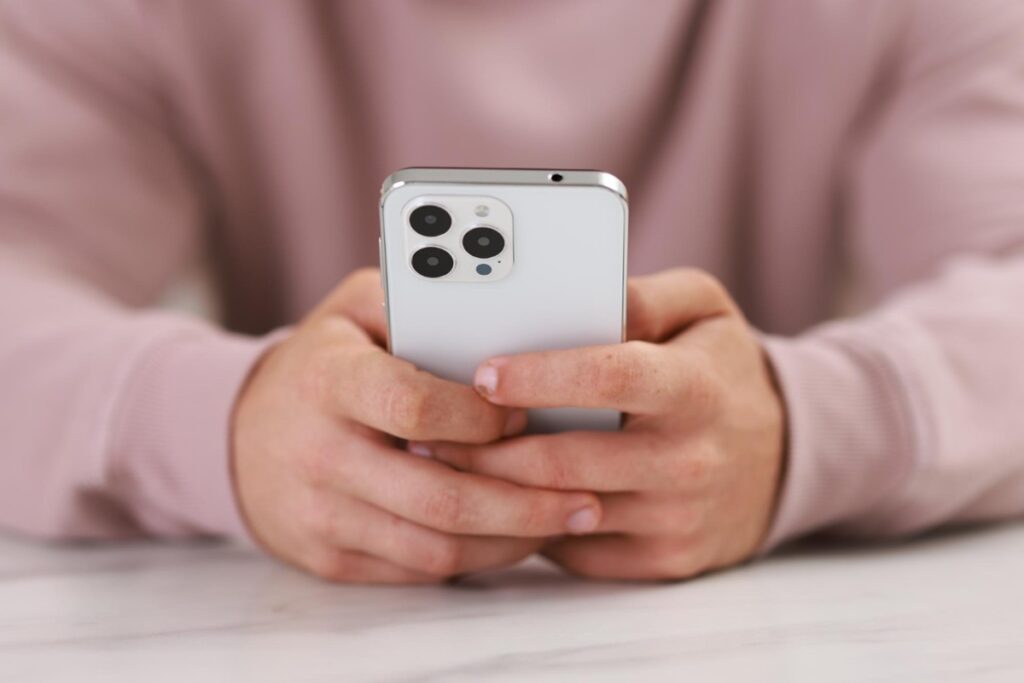
Even as prices rise everywhere, Apple is preparing to accomplish something few expected: overtaking Samsung in global sales volume. The company’s momentum is driven by the iPhone 17, proving one thing very clearly: for Apple, high prices are not a barrier.
In fact, it might even be a powerful psychological strategy.
Apple may be heading toward an exceptional year in 2025. Every year it’s the same story: people complain about how expensive the new iPhones are, they criticize the pricing of the “Pro” models, and yet… they buy them. And 2025 is no exception.
According to recent projections, Apple could become the world leader in smartphone sales, surpassing Samsung for the first time over a full year since 2011.
This shift is supported by strong numbers reported by Bloomberg and based on Counterpoint Research data: Apple could capture 19.4% of the global market thanks to a 10% sales increase, while Samsung would remain at 4.6%.
But why are millions of users buying devices that cost more than a full month’s salary for many people around the world, especially during economic uncertainty? The explanation isn’t just in the iPhone 17’s specs, but in consumer psychology.
The Veblen effect
This paradox is one of Apple CEO Tim Cook’s greatest strengths. Economists call it the Veblen effect, or snob effect. For certain products, demand can rise as prices rise.
Everyone knows it: the iPhone is not a smartphone like the others. Owning an Apple device is a social marker, a piece of technology people display proudly.
Apple understands perfectly that for a significant share of its customers, a high price is a reassuring sign of quality and exclusivity. By maintaining premium pricing, Apple sends a clear message: you’re not just buying a phone, you’re investing in the “very best”.
If the iPhone 17 were sold for $400, it would paradoxically lose part of its prestige and desirability. This unconscious mechanism pushes buyers to justify the expense, convincing themselves that “if it’s that expensive, it must be for a reason.”
Apple’s use of the decoy effect
Apple’s second strategic advantage lies in how it structures its product lineup. The standard iPhone 17 suddenly looks “affordable” next to the Pro Max version. This is the decoy effect, also known as the attraction effect or asymmetric dominance.
The idea is simple: present three carefully designed options to subtly guide customers toward the most expensive one.
This year, Apple emphasized technical differences to justify the price gaps. The iPhone 17 Pro includes the powerful A19 Pro chip and a new vapor chamber cooling system, creating a significant performance gap with the base model. As a result, the rational customer ends up thinking that adding “just” a few hundred dollars offers access to a high-end, long-lasting device.
The iPhone Air plays the role of the design innovator. Even if it isn’t the top seller, it reinforces the idea that Apple is always pushing boundaries, strengthening the premium aura of the entire lineup. In many ways, the iPhone Air acts as a decoy that nudges people toward the higher tier.
A simple mathematical reality?
Here’s how Yang Wang, analyst at Counterpoint Research, describes this massive upgrade cycle:
“Consumers who bought smartphones during the COVID-19 boom are now entering their upgrade phase. In addition, 358 million used iPhones were sold between 2023 and the second quarter of 2025. These users are also likely to move to a new iPhone in the coming years.”
But this alone doesn’t explain Apple’s unique momentum. A general increase in smartphone purchases is one thing, but it doesn’t fully explain Apple’s particular advantage.
Another explanation is purely mathematical: resale value. Paying more than $1300 for an iPhone 17 Pro becomes easier when you know you can resell it at a good price three years later, something far less common with most Android phones. This “investment” logic convinces many buyers.
The ecosystem as a golden cage
Finally, another reason people accept these prices is that leaving Apple’s ecosystem becomes extremely complicated once you’ve entered it. With an Apple Watch on your wrist, AirPods in your ears, and photos backed up on iCloud, switching to another brand becomes a logistical and emotional nightmare.
It’s generally easier to move from Android to iOS than the reverse, and over time, that makes a big difference.
Apple has no intention of slowing down. To maintain its momentum and keep its lead over Samsung, 2026 already looks packed. The highly anticipated folding iPhone expected in the fall could redefine the ultra-premium segment, while the upcoming iPhone 17e (a more affordable version planned for early 2026) may attract users still resisting Apple’s premium offerings.
Add to that a new AI-powered version of Siri, potentially using Google’s Gemini, and Apple has the perfect formula to keep price as a secondary detail, once again.



