

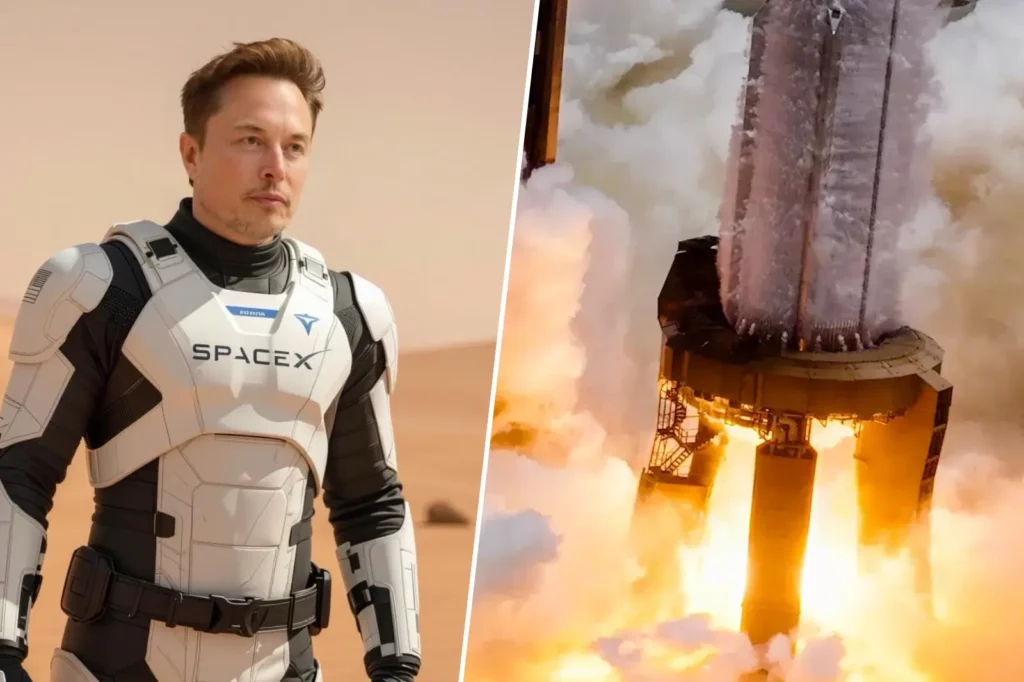
When Elon Musk decides to merge everything, it’s never just a simple game of Lego. What he aims to build goes far beyond a classic industrial project: it’s an extraordinary gamble, as fascinating as it is potentially explosive. A new piece has just been added to the puzzle, and it could change everything.
The SpaceX-xAI Merger: How Elon Musk Aims to Create a Technological Superstructure
Imagine a single company capable of colonizing Mars, operating constellations of satellites, and developing artificial intelligences like Grok. This ambition, Elon Musk is attempting to realize by merging SpaceX and xAI. In fact, two companies established in Nevada are already initiating the first moves.
Essentially, this merger would yield a unique entity, combining space infrastructure, digital services, and generative AI. As a result, Starlink, Grok, X.com (formerly Twitter), and the Starship rockets would all come under one roof. This new organization aims to launch an IPO by 2026, with a massive valuation of $1.5 trillion.
Beyond industrial boldness, this represents an unprecedented consolidation strategy. By absorbing xAI, SpaceX positions itself as the linchpin of a sprawling private ecosystem entirely driven by Musk. For investors, this offers a unique gateway into the billionaire’s digital, orbital, and algorithmic universe.
Redirecting Cash Flow to Fund AI: A Double-Edged Strategy
It’s not just technical complementarity that drives this merger. While one might envision a Starship piloted by an AI or giant servers in space, the stark reality is much more grounded: money. The costs associated with training models like Grok are astronomical. Hence, the revenues from Starlink and space contracts can provide a much-needed lifeline.
By uniting these entities, Musk decreases his dependency on external investors. He creates a closed ecosystem, where the profits of one offset the losses of the other. Is this a savvy strategy? Perhaps. But it also represents a risky bet that could intensify tensions and jeopardize the entire structure if any one component falters.
Tesla Marginalized, Governance Fragmented: The Shadows of Mega-Merger
There’s an elephant in the room: Tesla. The company, once set to embody Musk’s AI vision with its autopilot and Optimus robot, now seems to be pushed aside. By focusing on SpaceX and xAI, Musk sends a confusing message to his shareholders: the future of artificial intelligence may not unfold where they anticipated.
Furthermore, this strategy raises a governance concern. SpaceX’s investors, driven by the quest for space exploration, now find themselves entangled in the unpredictability of X.com’s moderation or conflicts among chatbots. This constitutes an imposed diversification, resembling financial consolidation more than a coherent vision.
When Musk’s Empire Becomes a Sovereignty Issue for NASA and Beyond
We arrive at a tipping point. Can we entrust crewed missions to an entity whose priorities appear so volatile? The NASA, among others, will have to make a decision. If Musk succeeds in his gamble, he will command an empire capable of shaping the media narrative, the digital space, and terrestrial orbits.
Genius dream or ticking time bomb? The answer may soon emerge from the financial markets, which are quick to reward innovation as well as to penalize excessive power. Or perhaps it will stem from the next malfunction of an orbital chatbot, exposing the limitations of a technological empire whose foundations rest on a balance as fragile as it is centralized.



