

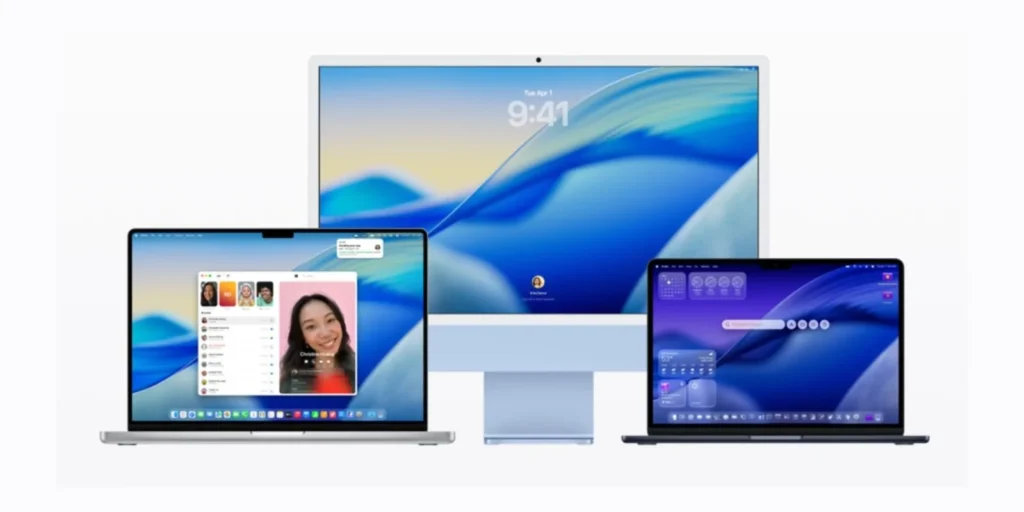
macOS 27: rumors, expected new features, and how the end of Intel Macs will change things in 2026
As we approach the WWDC scheduled for June 2026, macOS enters its favorite phase: a time when clues accumulate, leaks abound, and Apple strategically maintains silence to build anticipation.
Internally, the upcoming version is already being tracked as macOS 27 — and indications suggest that Apple is aiming to make it a pivotal update: less flashy in demos but more foundational in its trajectory.
macOS 27: A Classic Timeline… and a Still-Mysterious Name
According to MacRumors, Apple is expected to follow its usual timeline: developer beta at WWDC (June), public beta in July, with a public release in the fall. However, the marketing name has not yet been leaked.
This is a subtle but telling detail: Apple knows that the focus in 2026 won’t be on a new “California location.” Instead, it will center on what macOS accomplishes—especially regarding how it enables Apple Intelligence to evolve on the Mac.
The Intel Transition is Confirmed: macOS 27 May Be “Apple Silicon Only”
The strongest point in this discussion isn’t a concept of icons or a “visionOS vibes” mockup. It’s a platform decision.
Apple has announced that macOS Tahoe (macOS 26) is the last major version to support Intel Macs. In other words: macOS 27 will logically become the first version exclusively for Apple Silicon, with the implications this holds for performance, maintenance, and innovation speed.
Additionally, a domino effect is anticipated: a gradual reduction in reliance on Rosetta (the translation layer for Intel apps). This withdrawal trajectory is unfolding across macOS versions 26 and 27.
Design: The “visionOS” Temptation Exists, But Real Signals Come Elsewhere
There has been a noticeable desire for visual coherence across Apple platforms (iPhone, Mac, Vision Pro) for months. However, in 2026, one factor is complicating (or hastening) this narrative: Alan Dye, a key figure in Apple’s interface design, left the company at the end of 2025.
This isn’t definitive proof of a redesign, but it provides context: a change in leadership, a rise in AI “within the OS,” and the need for a more readable UI for increasingly conversational and contextual interactions. Even a “modest” redesign could have a significant impact on user perception.
Apple Intelligence: macOS 27 as a Launchpad for a “Chatbot” Siri
On the AI front, the chatter is more tangible: Apple is reportedly preparing a major transformation of Siri into a form of integrated chatbot. Siri is expected to evolve significantly toward a more conversational and “intelligent” framework overall.
Apple is also laying the groundwork politically: Tim Cook has indicated intentions to open up Apple Intelligence to broader AI integrations beyond initial collaborations, paving the way for a more “multi-model” and less monolithic future.
This could mean for Mac:
- A Siri that doesn’t just respond but engages in context, follow-ups, and actions;
- Enhanced use of automations and app intents;
- A more useful AI for productivity tasks (summaries, sorting, preparation, creative assistance), especially on larger screens.
While all of this remains speculative regarding specifics, the overall direction is increasingly clear.
Productivity: The Opportunity to “Fix” Mac Multitasking
Mac multitasking remains a recurring issue: sufficient for most but frustrating for advanced users, to the point where third-party tools have become nearly standard. XDA encapsulates this tension, highlighting how window management on macOS drives many towards dedicated apps.
In a landscape where Apple wants to market the Mac as both a professional machine and an AI machine, macOS 27 has an opportunity: to transform “small frictions” (windows, spaces, multi-screens) into a structural advantage.
What We Know So Far: macOS 27 Could Be a “Snow Leopard” Version, But Enhanced with AI
Recent analyses—especially those regarding Mark Gurman’s insights relayed by the Apple press—depict a release where Apple aims for quality, performance, and foundational improvements rather than an excess of new features.
This makes sense: severing ties with Intel, simplifying the base, solidifying AI, and preparing for a new generation of devices. In 2026, “less flashy” may be precisely what Apple needs to succeed.
What to Remember Before WWDC
macOS 27 remains a realm of rumors, but three key points have already emerged:
- The end of Intel is no longer a hypothesis; it is a declared trajectory.
- Siri/Apple Intelligence are set to become the narrative core of Apple’s operating systems in 2026.
- The next significant evolution of macOS may be less of a “wow” redesign and more of an “invisible” improvement: faster, more cohesive, and more proactive.
The WWDC will reveal whether Apple opts for flashy highlights or effective enhancements. One thing is certain: macOS 27 already appears to be a transitional version—and transitions at Apple often prove to be the most impactful.



