M5 Pro and M5 Max: Apple unveils the revolution ‘Fusion Architecture’
Apple has today unveiled its two new professional chips, the M5 Pro and the M5 Max, designed for the latest MacBook Pro models. Beyond the usual increase in clock speed, this generation represents a significant architectural evolution with the introduction of Fusion Architecture, an innovative internal design that transforms how Apple constructs its most powerful System on a Chip (SoC).
Fusion Architecture: Two Integrated Circuits, One Chip
This is the key structural innovation of this generation. Instead of etching all components onto a single silicon chip, Apple now connects two 3-nanometer (third-generation) integrated circuits within a single SoC, featuring a high-bandwidth, low-latency link.
Each integrated circuit contains its own CPU, GPU, Media Engine, memory controller, Neural Engine, and Thunderbolt 5 support. This design allows Apple to scale up without the usual size-related compromises of a single integrated circuit while maintaining the founding principles of its architecture: unified memory, energy efficiency, and consistent performance.
A Completely Revamped CPU: ‘Super Cores’ and ‘Performance Cores’
Both the M5 Pro and M5 Max feature an 18-core CPU made up of two distinct types. The first six are ‘super cores’, a term Apple now uses across the entire M5 lineup — these correspond to the high-performance cores introduced in the standard M5 and provide the best single-core performance available on the market, according to Apple.
The remaining twelve are entirely new ‘performance cores’, optimized for multithreaded workloads while keeping consumption in check. Together, they deliver, according to Apple, up to 30% higher performance on professional workloads compared to the M4 Pro, and up to 2.5 times more than the M1 Pro and M1 Max in multithreading.
M5 Pro: Power for Demanding Daily Workflows
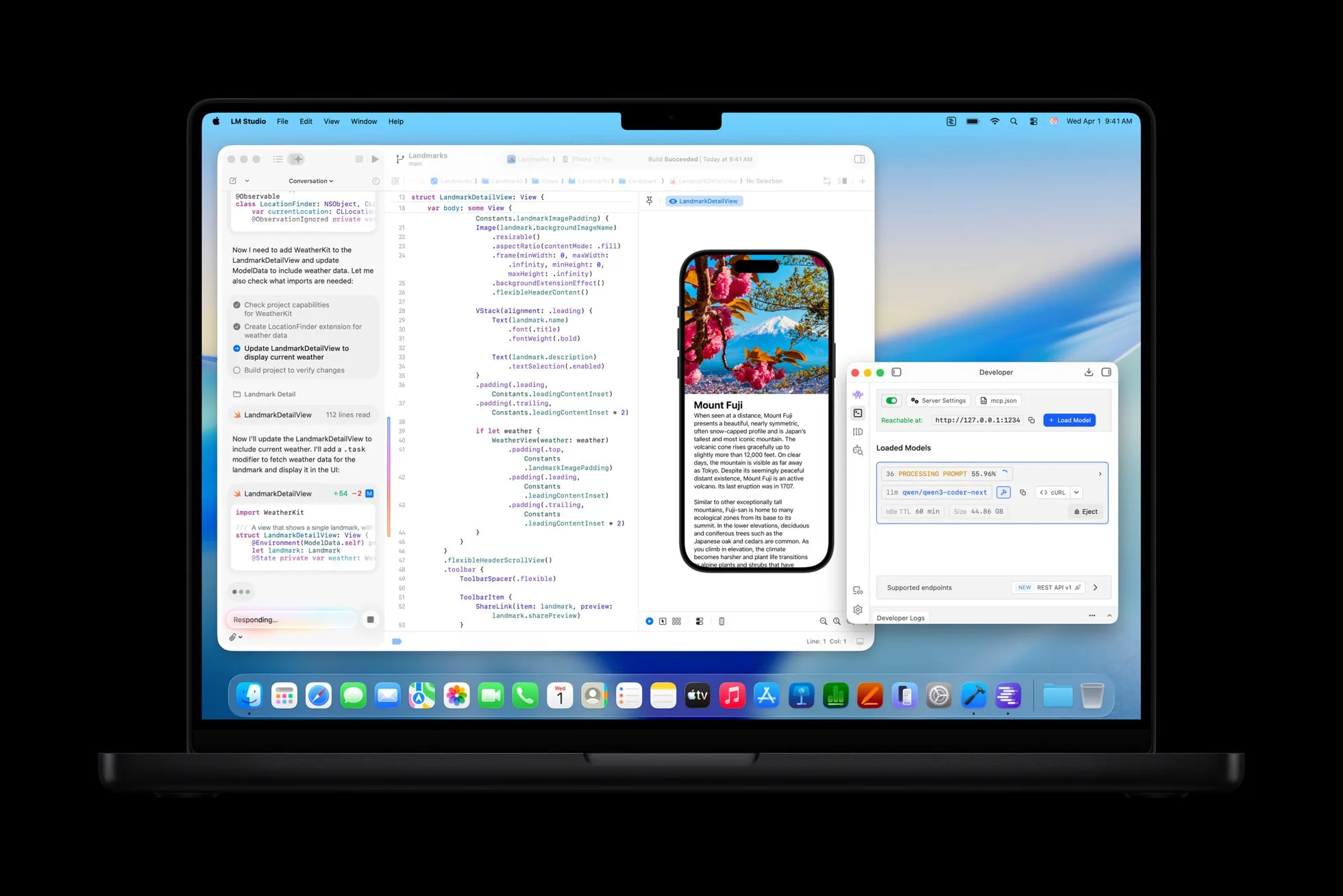
The M5 Pro targets users who need robust GPU performance and generous unified memory without reaching the extremes of the Max. It pairs the 18-core CPU with a GPU of up to 20 cores, with each GPU core featuring a dedicated Neural Accelerator. Memory bandwidth reaches 307 GB/s, with a maximum configuration of 64 GB of unified memory.
In terms of graphics, performance increases by 20% compared to the M4 Pro and is 2.2 times better than the M1 Pro. For applications utilizing ray tracing—such as 3D rendering and advanced visual effects—the performance gain is 35% over the M4 Pro thanks to Apple’s third-generation ray tracing engine. Regarding AI computation via the GPU, Apple claims more than four times the peak performance of the M4 Pro and over six times that of the M1 Pro.
M5 Max: For the Most Intensive Workloads
The M5 Max doubles the GPU configuration of the Pro to reach up to 40 cores, using the same core architecture. Memory bandwidth increases to an impressive 614 GB/s, and unified memory can be configured up to 128 GB. This memory ceiling and bandwidth are particularly appealing to 3D animators working on complex scenes, AI developers running large language models locally, or researchers handling massive datasets.
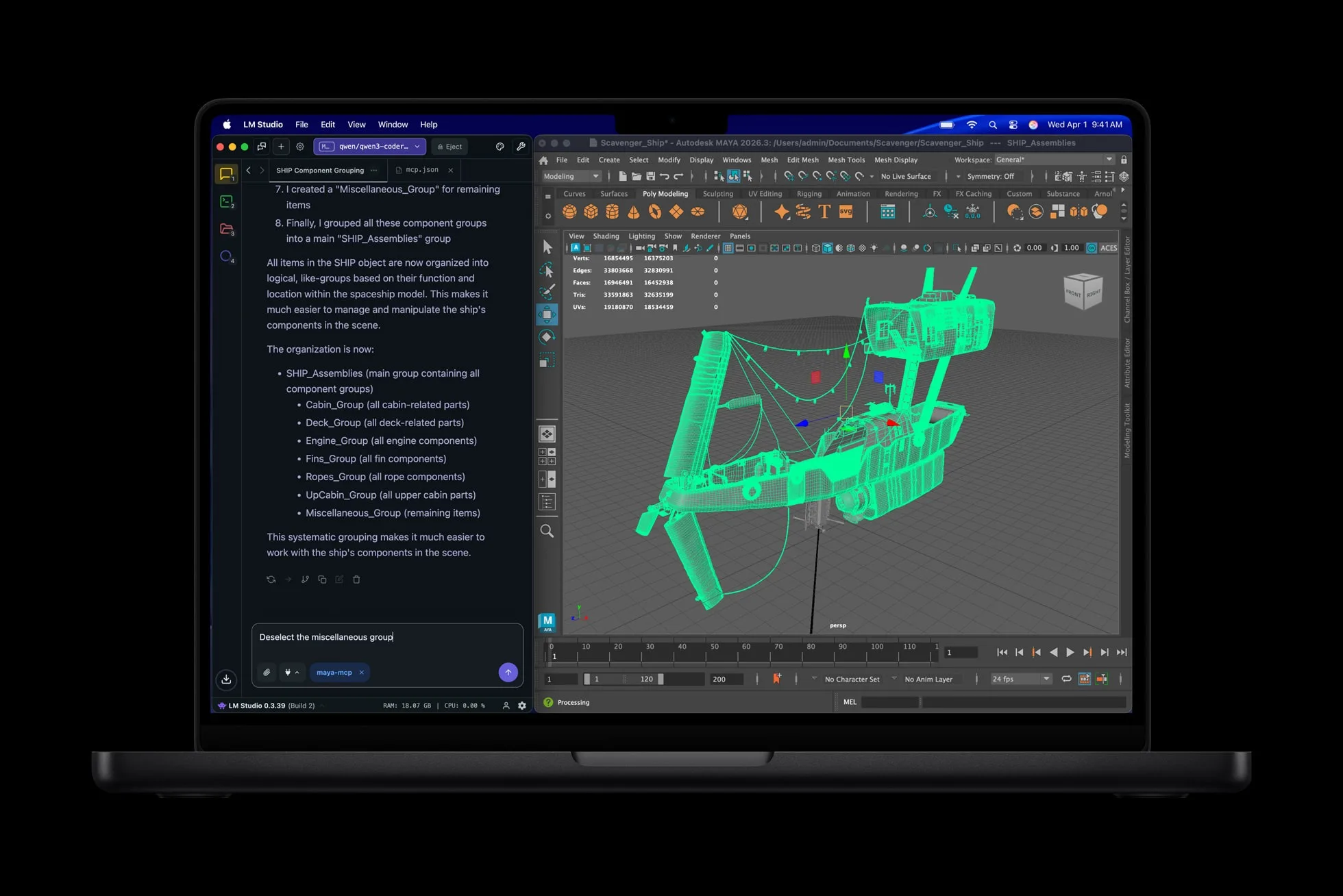
Graphical gains are consistent with the Pro: +20% compared to the M4 Max, +30% on ray tracing, and more than four times the AI GPU performance of the previous generation. In CPU multithreading, the improvement is 15% over the M4 Max.
Thunderbolt 5, Neural Engine, and Cross-Functional Innovations
Both chips share several notable common technologies. The Neural Engine has been upgraded to 16 cores with a higher bandwidth memory connection, which directly benefits Apple intelligence features. Thunderbolt 5 support is integrated directly onto the chip with a dedicated controller for each port—Apple claims to provide the most comprehensive implementation of the standard on the market. The Media Engine is also present, supporting ProRes encoding and decoding, AV1 decoding, and hardware-accelerated H.264 and HEVC.
Apple also introduces Memory Integrity Enforcement, described as an industry first: an active memory protection feature that does not impact device performance.
The Fusion Architecture is the main highlight of this announcement. It’s not just about a faster chip—it’s a new approach for Apple to build its most powerful SoCs, connecting two dies to exceed the physical limitations of a single die while retaining the advantages of unified memory. The performance figures announced are substantial, especially in AI tasks and ray tracing, two areas increasingly prominent in creative and technical workflows. The M5 Pro and M5 Max MacBook Pros will be available starting March 11, with pre-orders opening on March 4.