

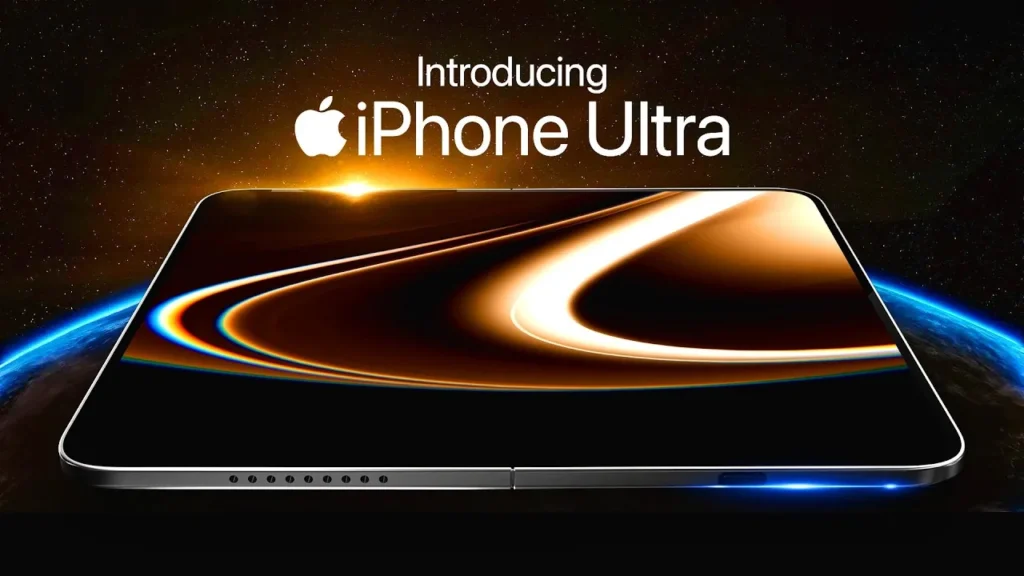
iPhone Ultra: Why Apple Will Win the Foldable War (Without Being the First)?
Apple has yet to launch its first foldable iPhone… yet it may already emerge as the big winner. Recent market analyses suggest that the upcoming “iPhone Ultra” (or iPhone Fold) could capture a significant share of the segment, even against technically superior competitors.
A Technical Duel… Already Unbalanced?
According to leaks, the future iPhone Ultra would take a different approach to foldables, featuring a “sandwich” structure that combines ultra-thin glass (UTG) and flexible glass (UFG), potentially enhanced with self-healing technology.
In contrast, the OPPO Find N6 would focus on an almost invisible fold and ultra-compact design — an area where OPPO already seems to have an edge.
On paper, OPPO will offer better fold management and a more mature design, while Apple will bring durability and a different engineering approach. However, the competition extends beyond just these features.

Battery, Design: Apple Focuses on Balance
Rumors suggest that the iPhone Ultra will have a battery around 5,800 mAh, compared to approximately 6,000 mAh for OPPO.
This is not a huge difference, but it reflects two philosophies:
- OPPO emphasizes raw performance
- Apple prioritizes overall optimization (hardware + software)
This is a classic strategy for Apple… but often effective.
The Real Advantage of Apple: Global Distribution
This is where everything changes. Even if OPPO presents a better product in some respects, the Find N6 may remain limited to specific markets. In contrast, Apple will almost certainly launch its foldable on a global scale.
In consumer tech, availability can sometimes outweigh technical superiority.
Immediate Impact on the Foldable Market
According to TrendForce, Apple could capture 19.3% of the foldable smartphone market by 2026. This is an impressive figure for a first generation device. Meanwhile, Samsung’s dominance is expected to diminish, from over 75% in 2022 to around 30% in 2026.
This is a gradual shift… accelerated by Apple’s entry.
Samsung Caught Between Two Dynamics
The Galaxy Z range has long held dominance, but it now suffers from perceived incremental improvements, a steady increase in prices, and of course more aggressive Chinese competition.
The result: Samsung remains a leader… but no longer sets the pace.
A High Price… But Not Deterrent
Estimates suggest a price exceeding $2,000 for the iPhone Ultra. Yet again, Apple plays by its own rules with a high price for a clearly defined premium positioning and demand fueled by curiosity and its ecosystem.
The price may be a barrier… but it won’t necessarily stop consumers.
Apple Is Not Trying to Win on Specs Alone
What these leaks and analyses reveal is a familiar pattern. Apple does not necessarily aim for the best screen, best battery, or the most invisible fold. Instead, Apple targets the most desirable product, the best-distributed, and the most integrated.
In a still-young foldable market, this approach may be sufficient to gain an edge.
The paradox is that while OPPO might offer the best foldable in technical terms and Samsung remains the market pioneer, Apple could capture the majority of attention… and sales. A victory that is less about technology and more about strategy.



