

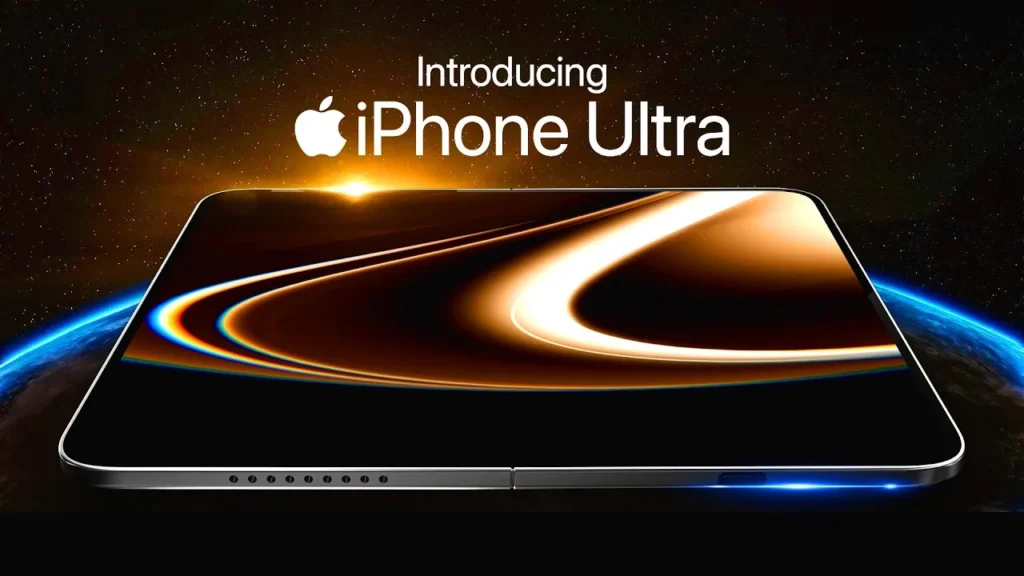
iPhone Ultra: Why Apple Sacrifices Face ID for Slimness?
The upcoming foldable iPhone from Apple is gradually taking shape, and one of the latest rumors is more revealing than it may seem. While the device is designed to be extremely thin, Apple is reportedly choosing to integrate a camera control button — a detail that may seem contradictory at first glance but actually reflects a very specific vision of user experience.
iPhone Ultra: A Foldable iPhone Designed Under Constraints
According to numerous reports from recent days, the foldable iPhone — often referred to as the “iPhone Ultra” in rumors — will feature a particularly slim book-style format, necessitating the sacrifice of Face ID. Earlier reports indicated that the device would instead utilize Touch ID integrated into the side button, due to insufficient space to house the TrueDepth system within such a compact chassis.
This detail is significant, as it shows that Apple is not treating its foldable as a mere premium iteration of the classic iPhone. The company is already willing to accept some engineering compromises in order to maintain the product’s slimness — a choice consistent with other leaks suggesting that the device will be even thinner than an iPhone Air when opened, though this aspect should be taken cautiously.
The Camera Control Button as a Solution to a Real User Issue
Today’s rumor claims that Apple will still include a camera control button on the iPhone Ultra. The rationale is straightforward: to facilitate one-handed photo and video capture when the device is opened. With a foldable smartphone, taking pictures in the unfolded state may quickly become less intuitive, as the wider format often leads to using both hands.
This is precisely where Apple’s choice makes sense. By retaining a physical control for zooming, triggering, or adjusting certain settings, the company aims to make its foldable more practical on a daily basis, rather than merely more spectacular in terms of design.
A Different Approach Than Competitors
This direction is intriguing because it does not merely seek to replicate existing Android foldable smartphones. Many competing models focus on screen size, multitasking, or thinness, but photographing in the unfolded mode is often a less fluid experience than with a classic smartphone. Apple seems to want to turn this constraint into a selling point, using physical controls as an ergonomic lever.
The rest of the positioning aligns with this strategy. Rumors speak of a wider format, similar to that of a passport when closed, an internal screen measuring around 7.8 inches, and software features inspired by the iPad for multitasking. In other words, Apple is not simply preparing a folding iPhone but rather a hybrid product where both hardware and interface must together justify the new form.
The Real Challenge Will Not Be the Button, but the Experience
We must proceed with caution: Apple has not officially confirmed anything, and the very name “iPhone Ultra” is not guaranteed. However, if this information holds true, the Camera Control button already reveals something essential about the company’s strategy. Apple does not merely want to enter the foldable market; it seeks to address certain user frustrations even before the launch.
Ultimately, this is likely where the difference will lie. The design will generate buzz, the slimness will impress, but the success of a foldable iPhone will depend primarily on its ability to remain easy to use. And in this regard, a simple button can sometimes say far more than an entire technical specification sheet.



