

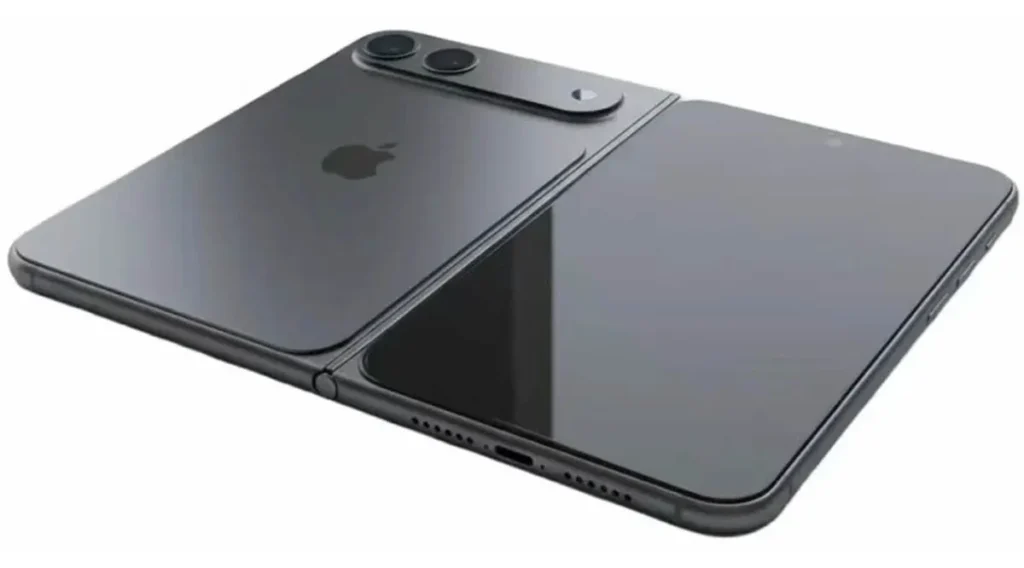
iPhone Fold: Why Apple Will Still Hold Its September Keynote?
For a few hours, the narrative seemed set: Apple had stumbled just as its first foldable iPhone was nearing the home stretch. A report from Nikkei Asia hinted at engineering challenges that could disrupt mass production.
However, Mark Gurman at Bloomberg calmed the waters: according to his information, the iPhone Fold is still on track for a September 2026 unveiling, alongside the iPhone 18 Pro.
iPhone Fold: A Real Alert, but Likely Less Dramatic Than Announced
The key point is the nuance. Apple’s foldable has indeed faced setbacks during its engineering testing phase, causing doubts about the industrial timeline. Yet, at the same time, Bloomberg asserts that the product is still slated for the usual iPhone launch window in September.
In other words, Apple doesn’t appear to be facing a project collapse, but rather the typical challenges that any complex first-generation product encounters: a tense developmental phase, overly scrutinized.
This is precisely what makes this scenario intriguing. In the Apple ecosystem, any noise surrounding such a symbolic product quickly escalates into overblown proportions. As of now, the most reliable sources do not describe an abandonment or a confirmed shift to 2027, but instead a credible launch still expected in 2026, albeit with some concerns about ramp-up.
September for the Announcement, But Not Necessarily Frictionless Availability
The current scenario is quite clear: Apple aims for a presentation in September, potentially coinciding with the iPhone 18 Pro and iPhone 18 Pro Max, with a release around the same time or shortly afterward.
However, several sources agree on one point: initial volumes may be limited, as a foldable is far more complex to produce than a classic iPhone.
This distinction between “announcing on time” and “delivering in mass on time” is crucial. Apple can certainly hold its September keynote while proceeding more cautiously regarding actual availability, especially for a device designed to debut a new category in its lineup. This is an approach the company has followed in its history with products more complex to industrialize. This is a matter of analysis.
A More Status-Oriented Product Than a Mainstream One
The future foldable iPhone — whether it ultimately ends up being called the iPhone Fold or iPhone Ultra is still up in the air — will not simply be a more experimental version of the iPhone. According to recent reports, Apple aims to deliver a device priced over $2,000, with a clearly ultra-premium positioning. This pricing places it less in a democratization approach and more in the realm of a flagship product, showcasing Apple’s hardware prowess as much as generating revenue from the upper end of the market.
And this is probably the real issue. Even if this foldable remains a niche product initially, it could help elevate the average selling price of the iPhone, a strategic lever for Apple at a time when premium smartphones continue to represent one of its most robust financial engines.
Why Apple Cannot Afford to Miss This Launch?
Apple’s foldable is not just another variation in an already packed catalog. It represents one of the most significant design changes in years and, arguably, the most visible test of Apple’s ability to enter a segment late while appearing more “mature” than its competitors. Gurman also notes that Apple believes it has improved upon two historical weaknesses of competing foldables: perceived screen quality and durability, with a less visible crease once the device is opened.
This is where the rumors of delays hit a sensitive nerve. Apple can afford to arrive late to the foldable market. However, it cannot afford to seem hesitant upon arrival. If the September timeline holds, the company will preserve the essential: the image of a controlled, ambitious, almost inevitable launch. If inventory remains tight, it will be easier to forgive than a significant project delay.
At this stage, Apple’s foldable does not appear to be experiencing the crisis some had hoped to portray. Instead, it is navigating what one would expect from such a complex product: a normal turbulence zone, amplified by the unwarranted attention it attracts. The best summary today can be captured in a simple phrase: September 2026 remains the most credible announcement scenario, but availability could be tighter than that of a classic iPhone.
Ultimately, this may be the true nature of Apple’s first foldable iPhone: not an immediate mass-market product, but a prestigious object, highly anticipated, costly, and sufficiently important that Apple cannot rush or miss it.



