

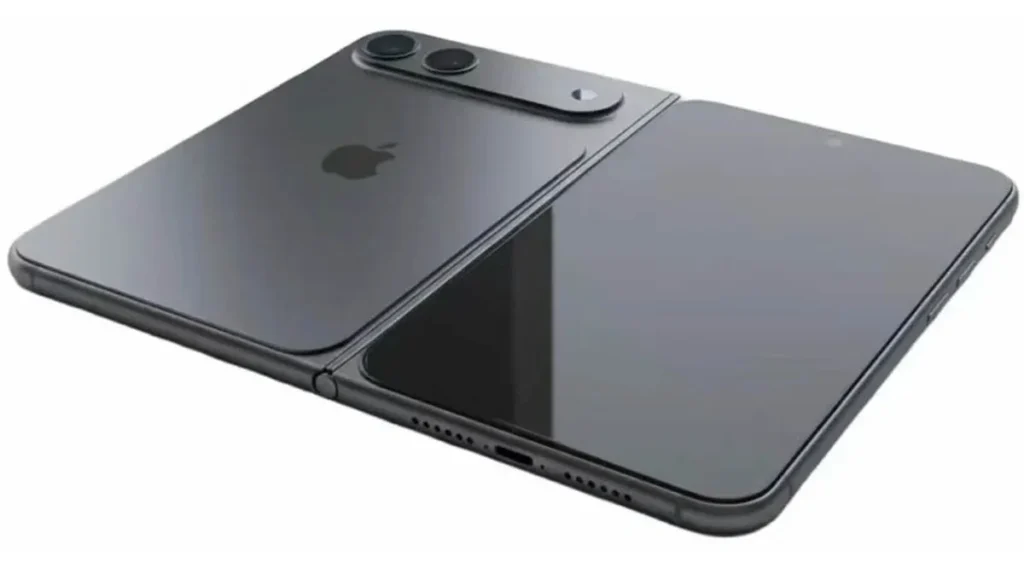
iPhone Fold: Samsung Display to start mass production of displays in May 2026
The first foldable iPhone, known as the iPhone Fold, has yet to be officially announced, but signs indicate that Apple is moving into a much more concrete phase. According to several supply chain sources, Samsung Display is set to begin mass production of OLED panels as early as May 2026, which is sooner than expected.
Previously, rumors had suggested a start date around July.
This shift in schedule is significant. It suggests that Apple and Samsung want to secure one of the most critical components of the upcoming device: its foldable screen.
Notably, Samsung Display is reportedly the sole supplier chosen for this first generation, significantly ahead of LG Display and BOE, which have been mentioned but are absent from the latest credible reports.
Samsung is manufacturing not only for Apple but also for its own competition
What makes this situation particularly intriguing is Samsung’s own industrial timeline. The Korean brand is expected to launch its new foldable devices during its usual summer window, with the Galaxy Z Fold 8 anticipated around July 2026, if it maintains its recent release cadence.
In this context, starting production of Apple’s screens earlier could be interpreted in several ways. The simplest explanation: to free up production lines earlier in order to prepare for Samsung’s own foldable models. The second, more strategic interpretation: to avoid disruptions to both Apple’s and Galaxy Z’s volume production from such a complex component. This is all the more plausible considering that the entire industry is now working on displays that are better controlled in terms of folding, and some with nearly invisible creases.
Apple appears to be locking down the most critical part of its product
The future foldable iPhone is now described by Bloomberg as a device designed for use closer to an iPad once opened, featuring expanded layouts and side-by-side multitasking. Various rumor summaries also suggest an internal screen of 7.8 inches, an external screen of 5.5 inches, and a premium positioning around $2,000.
In other words, Apple is not just preparing a foldable iPhone; it is creating a new category of device that sits between a smartphone and a mini-tablet. In this context, the screen becomes the centerpiece of the project. The decision to push its production forward reinforces the notion that Cupertino aims to minimize risk on the most challenging component to industrialize.
The real signal: Apple’s foldable is moving from fantasy to reality
However, caution is warranted: neither Apple nor Samsung has officially confirmed this change in schedule. As always with supply chain matters, an earlier production start does not guarantee final volume or exact release dates. Yet this movement is consistent with other recent information, particularly that Apple intends to launch its foldable alongside the iPhone 18 Pro in fall 2026.
In clear terms, this project is no longer in the realm of renders and abstract speculation. When an exclusive supplier begins ramping up production on such a strategic component, it typically indicates that a product is nearing an industrial point of no return.
And perhaps that is the most important takeaway. Even before its announcement, the foldable iPhone is already beginning to shift Samsung Display’s priorities — in other words, it is starting to influence the market even before it officially exists.



