

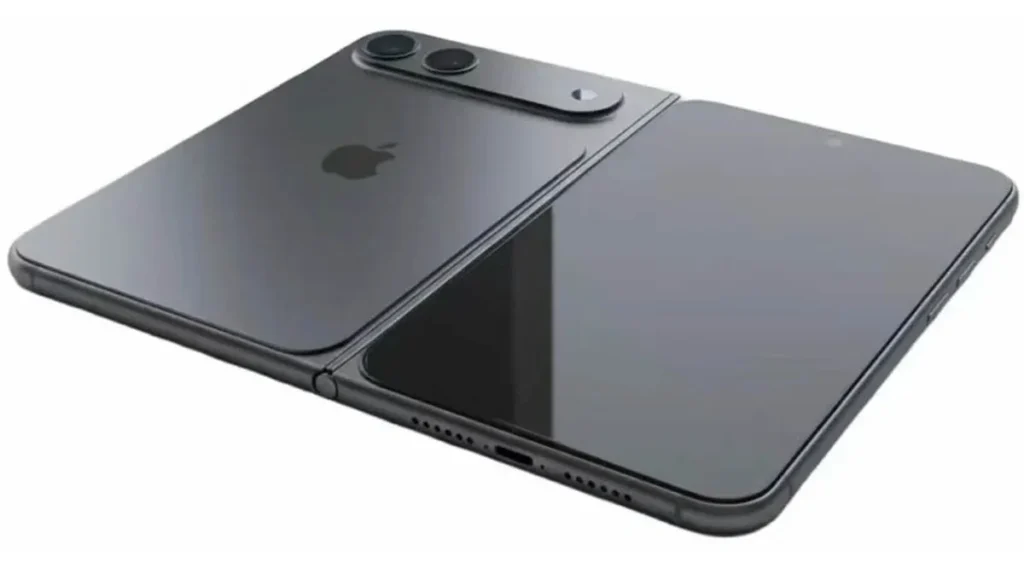
iPhone Fold: A record battery of 5,500 mAh to dominate the foldable market?
The first iPhone foldable has long been discussed as a design and mechanical exercise. However, as leaks become clearer, another competition emerges: the battle for battery life. In this arena, Apple seems poised to make a significant impact — potentially integrating the largest battery ever seen in an iPhone, according to a Chinese leaker.
A Leak of 5,500 mAh… To be Taken as a Signal, Not a Specifications Sheet
According to Weibo, leaker Instant Digital reports a figure: 5,500 mAh for the iPhone Fold — which would make it, mechanically, the best-equipped iPhone in terms of raw capacity.
The interesting point is that this figure falls within a range that has been circulating for some time: several rumors suggested a battery between 5,000 and 5,500 mAh for a foldable iPhone, with the simple idea that a dual display (or a large internal screen) necessitates a more substantial energy reserve.
A foldable iPhone isn’t just “an iPhone with a hinge.” It features a larger display area (thus more energy-consuming), internal volume constraints (hinges, reinforcements, component stacking), and a typically more intense usage pattern (multitasking, media consumption, productivity).
In this context, a larger battery becomes a structural argument, not just a bonus. Moreover, the industry is gradually shifting towards denser chemistries (often mentioned: silicon-carbon), precisely to gain mAh without endlessly thickening devices. And in the Android foldable market, this trend is already visible: some models reach impressive battery capacities.
Does Apple Aim to Outlast Samsung and Google?
This is where the rumor takes on a strategic aspect: if the iPhone Fold settles around 5,500 mAh, Apple would be targeting a tangible advantage over market benchmarks:
- Samsung Galaxy Z Fold 7: 4,400 mAh
- Google Pixel 10 Pro Fold: 5,015 mAh
- Vivo X Fold 5: 6,000 mAh
In short: Apple may not be pushing for an absolute record but rather aiming for the “premium sweet spot”: high enough to dominate large Western markets without becoming cumbersome.
Timing: A Premium Launch First, with the Fold as the Centerpiece
Another element that brings depth to this battery rumor: multiple reports suggest that Apple may prioritize its premium models toward the end of 2026, including the Pro models and a foldable, while the “base” model could be delayed.
In this scenario, the Fold must excel in the fundamentals of a product priced over 2,000 euros: battery life, reliability, and consistency. A bigger battery is both an assurance and a message: “This is not just a concept; it’s a daily-use device.”
Yes, 5,500 mAh is still a rumor. However, it aligns with a highly coherent product logic: Apple cannot afford to present a “fragile” first generation, and battery life is one of the classic pitfalls of foldable devices. If the iPhone Fold aims to set the premium standard, it must succeed where compromises are most noticeable: lasting the day or more without anxiety about recharging.



