

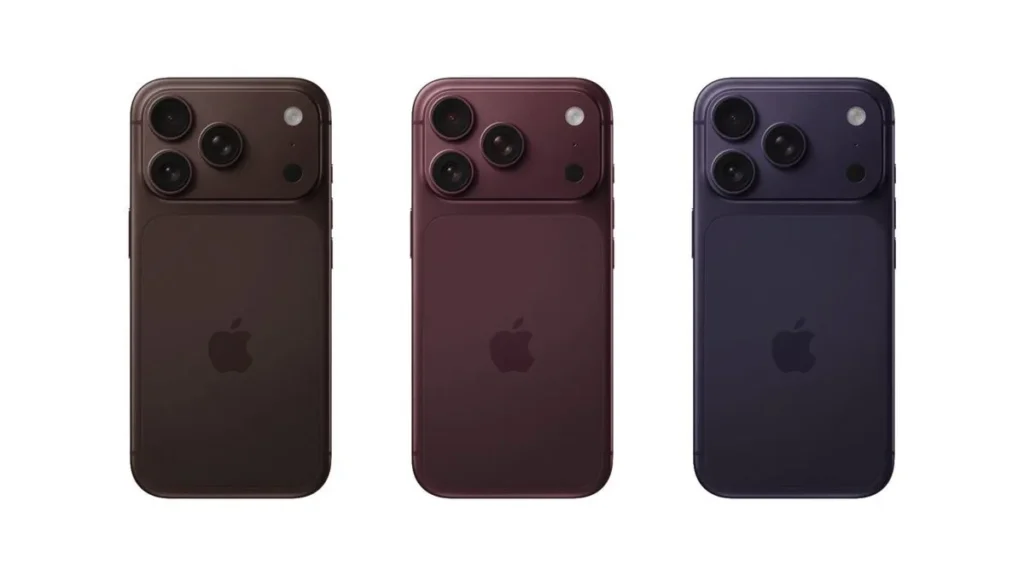
iPhone 18: Why the standard model will (almost) not change in 2026?
All attention is focused on the iPhone 18 Pro, the iPhone Fold, and the big visual changes coming. Meanwhile, the more affordable models tell a different story: one of almost assumed continuity.
According to new leaks from Weibo, the standard iPhone 18 and the iPhone Air 2 will rely primarily on modest adjustments, far from the expected upheavals seen in the high-end models.
An iPhone 18 almost identical to the iPhone 17
The leaker Fixed Focus Digital claims that the base iPhone 18 will maintain a design very similar to that of the iPhone 17, with at best a slight size variation.

The main visual change for the iPhone 18 generation may come from new colors, rather than a significant material overhaul.
In other words, Apple would reserve most of its visible upgrades for the Pro models. This wouldn’t be entirely surprising, as the company increasingly segments its range, contrasting stable “classic” iPhones with premium versions embodying innovation.
The little Dynamic Island may not be for everyone
One of the most discussed details was about the Dynamic Island. Some rumors suggested that the entire iPhone 18 series could feature a more compact version of the Dynamic Island. However, recent insights from Fixed Focus Digital indicate the opposite: the reduction of the Dynamic Island would be exclusive to the iPhone 18 Pro.
If confirmed, this sends a clear message: on the standard iPhone 18, Apple would prioritize stability. For users, the change could be so subtle that it would primarily be noticed when purchasing a new case if the dimensions change slightly.
The iPhone Air 2 remains a point of contention
The real point of friction is the iPhone Air 2. Fixed Focus Digital has maintained since January that Apple would aim to launch it in the fall of 2026, following the normal iPhone cycle.

However, other reputable sources disagree, suggesting a release in spring 2027. At this point, one must be cautious: there is no solid consensus on the precise timing of the iPhone Air 2. The most honest assessment is that two scenarios are still possible.
What changes the understanding of this situation are the first signs of adoption of the iPhone Air. According to network usage data from Ookla, the iPhone Air is approximately twice as popular as the iPhone 16 Plus over a comparable period post-launch. While these are not official sales figures from Apple, they suggest that the Air model is performing better than the Plus it replaced.
This alone does not guarantee the longevity of the range. However, it is enough to make it plausible that Apple might offer a second generation, even if it is quite measured. Again, the most frequently mentioned scenario indicates a routine update, with mainly internal changes rather than a visible transformation.
Meanwhile, the Pro and the iPhone Fold dominate the narrative
This contrast becomes even clearer when looking at the rest of the lineup. The iPhone 18 Pro is associated with a reduced Dynamic Island and other aesthetic changes, while the iPhone Fold continues to fuel rumors of a late 2026 launch, although some have indicated that the project may still face engineering challenges that could impact the production timeline.
Against these more spectacular products, the standard iPhone 18 and the iPhone Air 2 seem to play almost the opposite role: that of continuity models, designed to evolve the lineup without disrupting its existing base. While it may be less exciting, it is likely very Apple in its execution.
Apple seems to be further solidifying the separation between “base” and “premium”
Ultimately, these leaks outline an increasingly hierarchical iPhone lineup. The most visible innovations would be directed towards the Pro and the Fold, while the standard models would maintain a familiar silhouette with more discreet internal changes. The iPhone Air 2 could serve as a bridge: a device with its own identity, but without major material revolutions.
In simple terms, the more subdued iPhone 18s might also be the most telling: Apple no longer aims to refresh everything annually but rather to distribute innovation with an increasingly strict discipline.



