

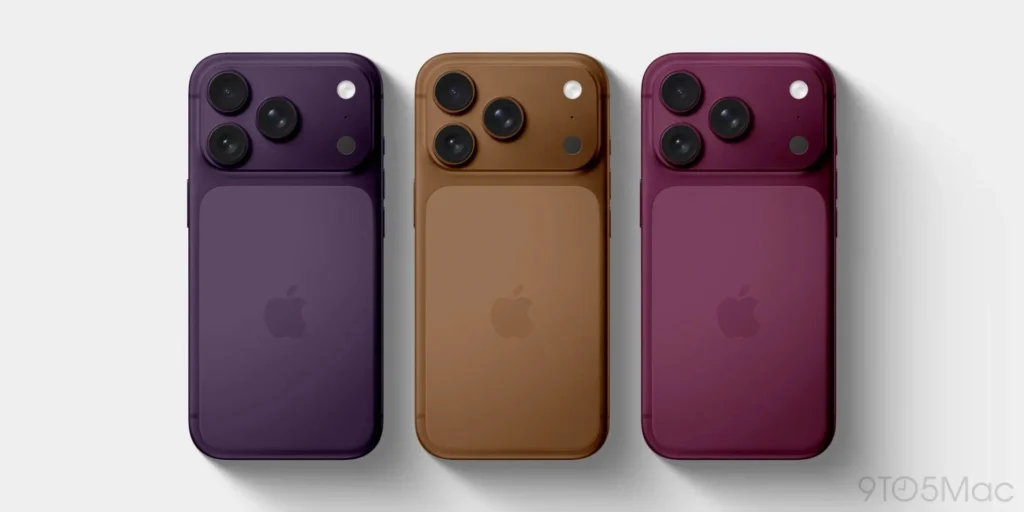
iPhone 18 Pro: Why Apple Will Not Raise Prices in 2026?
The upcoming iPhone 18 Pro is not expected to be an “affordable” smartphone. Instead, it may become one of Apple’s most strategically significant products in 2026 for a more subtle reason: in a time where costs are skyrocketing elsewhere, stable pricing could become a competitive weapon.
On the surface, the context is well documented: DRAM and NAND prices are rising in 2026 due to the demand for memory driven by AI servers and broader supply chain tensions. TrendForce indicates that smartphone brands will face increasing NAND Flash prices this year, while other industry analyses suggest a tighter overall market for memory components.
In other words, Apple is not immune to this pressure. However, the intriguing point lies elsewhere: multiple reports suggest that Apple is looking to avoid raising the price of the iPhone 18 Pro as much as possible, despite the inflation of components.
Jeff Pu even estimates that Apple aims to maintain starting prices similar to those of the iPhone 17 Pro generation, while Ming-Chi Kuo has also explained that Apple is trying to avoid any price hikes “as much as possible.”
iPhone 18 Pro: Apple Isn’t Trying to Be Cheaper, But to Appear More Disciplined
This is where the strategy becomes fascinating. Apple does not need to slash prices to pressure the competition. It simply needs to maintain relative stability while the rest of the premium market continues to climb.
This interpretation is credible because the cost increase is not limited to Apple. The memory tension affects the entire smartphone industry, and several analyses are already mentioning potential increases or risks of increases in different segments of the mobile market in 2026.
In this context, an iPhone 18 Pro that remains close to the current price would not be a “great deal” in the traditional sense. Instead, it would be a product that appears to hold its value better against Android competitors pushed upwards by component costs.
Why This Could Squeeze Android Manufacturers
Premium Android brands often have less margin than Apple to sustainably absorb such shocks. Apple enjoys massive purchasing power, a global logistical advantage, and a services division that supports its margins in a way that its competitors cannot replicate at the same level.
If this scenario unfolds, the conversation in the high-end segment shifts quickly. At 1,200, 1,300, or 1,400 euros, the discussion is no longer just about “which phone is the most powerful?”, but rather “which one still seems reasonable given the market?”. This is precisely where Apple could become a threat without making any significant moves.
The iPhone 18 Pro Could Turn Inertia Into Advantage
There is a paradox in this sequence: Apple might turn the absence of price disruption into a competitive advantage. Not because the iPhone 18 Pro is suddenly “cheap,” but because the rest of the market might become more uncomfortable.
This is very much in line with Apple’s logic. When the industry enters a phase of rising costs, the Cupertino company doesn’t necessarily need to dominate on specifications or surprise on price. It can simply focus on continuity, clarity, and the perception of control.
If current rumors are accurate, the iPhone 18 Pro could thus become one of Apple’s most effective products next year — not by disrupting the market, but by making others appear more expensive.



