

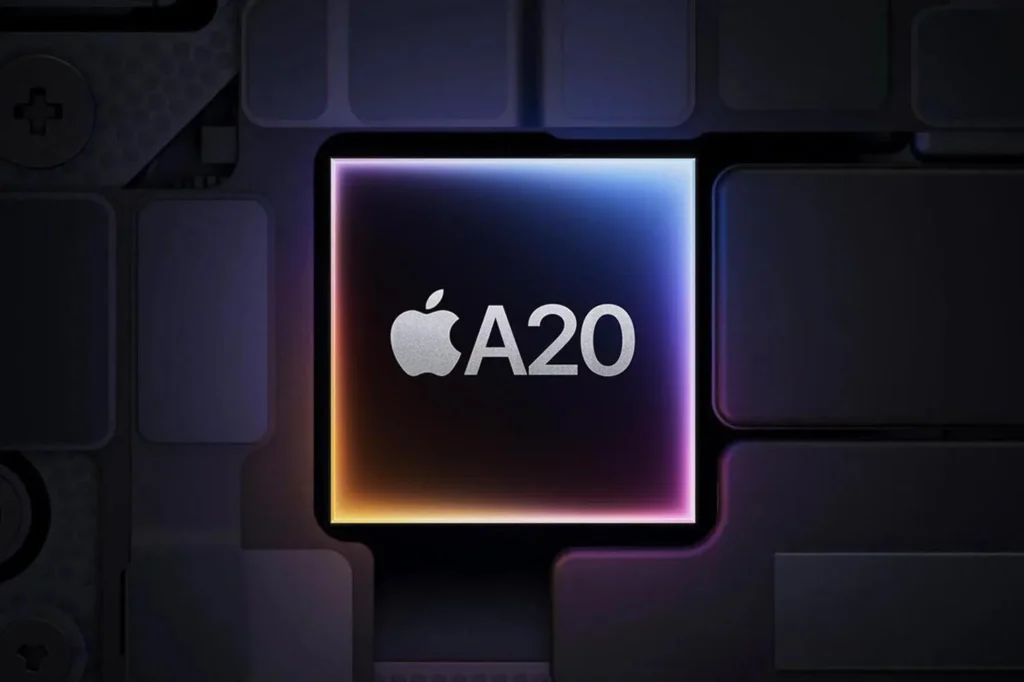
iPhone 18 Pro: The A20 Pro chip in 2 nm could change everything
The iPhone 18 Pro may not drastically change the design of the iPhone, but underneath the surface, Apple is reportedly preparing a significant evolution with the A20 Pro chip, expected to be the first iPhone chip manufactured using 2 nm technology.
Apple A20 Pro: A 2 nm Chip for More Power and Efficiency
According to rumors, the Apple A20 Pro will shift to TSMC’s 2 nm process, compared to the 3 nm used in recent generations. This transition would allow for more transistors to be integrated, resulting in anticipated improvements in performance, battery life, and thermal management.
Apple is also expected to adopt a Wafer-Level Multi-Chip Module (WMCM) packaging approach. This technology would bring the SoC and memory closer together at the wafer level, enhancing internal communication, reducing energy loss, and improving thermal dissipation.
For users, this could particularly manifest during demanding tasks such as gaming, video playback, multitasking, photo processing, and executing Apple Intelligence functions directly on the device.
AI as a New Driving Force for the iPhone
The A20 Pro appears to be designed for a generation of iPhones where local AI becomes essential. With increased memory bandwidth and enhanced efficiency, Apple could enable more intelligent functions to operate without relying heavily on the cloud.
This is where the iPhone 18 Pro could truly stand out: not through a radically new exterior, but through a stronger technical foundation for Siri, Apple Intelligence, and future personal assistants.
A Subtle Yet Strategic Turning Point
If these leaks are confirmed, the A20 Pro will not merely be an annual update. It could become one of Apple’s most significant chips since the transition to Apple Silicon—faster, more efficient, and better equipped for the era of mobile AI.



