

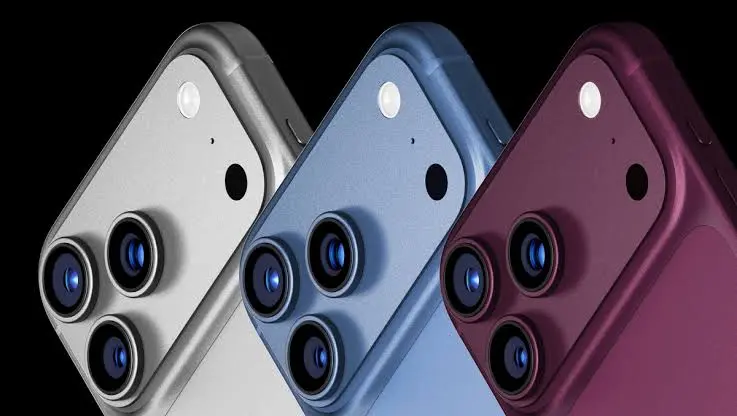
After years of dominance in computational photography, Apple may be taking a significant hardware leap with the iPhone 18 Pro Max. According to new leaks reported by Notebookcheck, the upcoming high-end smartphone will feature, for the first time, a main lens with a variable aperture, a technology already adopted by some premium Android manufacturers.
If confirmed, this would be one of the most significant upgrades to the iPhone’s camera in several generations.
A leak from internal documents
The information comes from a diagnostic journal presented by Notebookcheck, which claims it originated from internal files attributed to Tata Electronics, a manufacturing partner of Apple. These documents were reportedly released by the ransomware group World Leaks.
At this point, Apple has neither confirmed the authenticity of the files nor commented on these revelations, so this information should be approached with caution.
The primary change would involve the main camera sensor. The documents mention a Sony IMX905 sensor, along with references to a variable aperture mechanism capable of physically adjusting the lens diameter. Unlike purely software solutions, this system would allow for the adaptation of light entering the sensor based on shooting conditions.
With a wider aperture, the iPhone could capture more light in low-light situations, produce a more natural background blur, and enhance nighttime photography performance. Conversely, a smaller aperture would provide greater depth of field, improved control in very bright environments, and increased sharpness across the scene.
This technology would complement Apple’s photographic processing rather than replace it.
An evolution already seen in some competitors
While this feature would be a first for the iPhone, it is not unheard of in the Android space. Manufacturers like Huawei have already implemented variable apertures in some of their premium models, such as the Pura 90s Pro series, to offer greater flexibility during shooting.
Apple appears to be following a trend that emphasizes a return to certain hardware innovations after several years where advancements relied primarily on artificial intelligence and software image processing.
Other camera components likely to see little change
According to the documents analyzed by Notebookcheck, the other camera modules will remain very similar to those expected on the iPhone 17 Pro Max. The smartphone will reportedly retain a telephoto lens using a Sony IMX973 sensor, an ultra-wide angle lens with a Sony IMX972 sensor, a LiDAR sensor with a Sony IMX591, and a front-facing camera using a Sony IMX914.
The three-axis gimbal-type optical image stabilization system will also be carried over.
In other words, the variable aperture would be the main hardware evolution of this generation.
An innovation that could come with a price increase
However, this enhancement could come at a cost. According to other industry rumors, the iPhone 18 Pro Max may see its price rise by around $200 due to the increasing costs of photo components and memory.
No official information currently confirms this potential price increase.
Apple continues to evolve its mobile photography
For several years, Apple has focused much of its photographic innovations on software processing, with features like Smart HDR, the Photonic Engine, and improvements enabled by Apple Intelligence.
The introduction of a variable aperture lens would signify an interesting shift. Rather than relying solely on artificial intelligence to enhance images, Apple would also be enhancing the physical capabilities of its camera system.
This approach reflects a broader evolution in the premium smartphone market. After focusing heavily on computational photography, manufacturers are gradually returning to optical innovations that can provide better image quality right from the capture stage.
The real question now is whether this information will be validated in the coming months. If so, the iPhone 18 Pro Max could usher in a new generation of Apple cameras where hardware and artificial intelligence work more closely than ever.



