

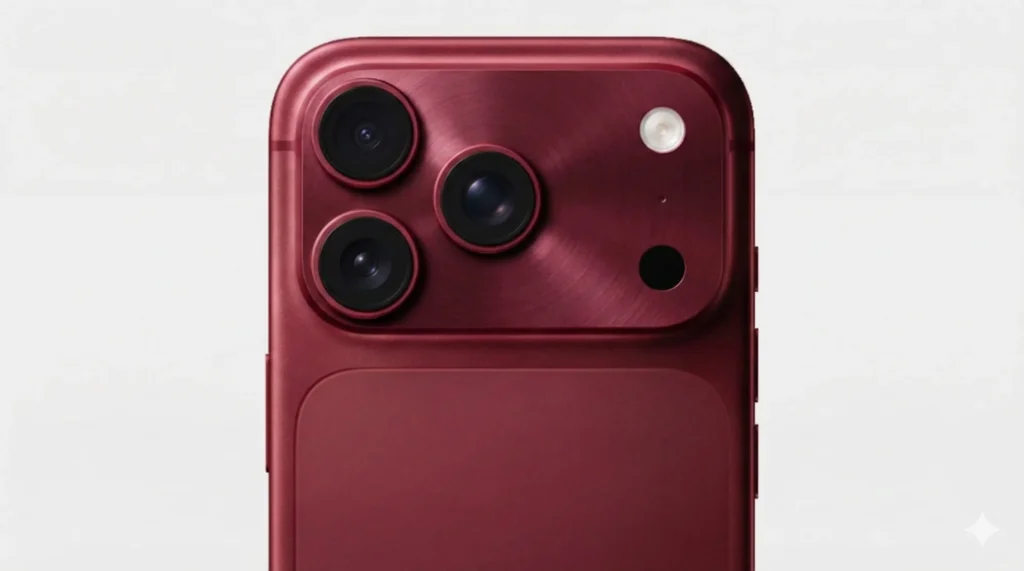
iPhone 18 Pro: Apple may be preparing a larger sensor and a variable aperture
While the market’s focus is still on the current generation of iPhone, initial details regarding the iPhone 18 Pro are beginning to outline a significant evolution.
According to various sources from the supply chain and specialized analysts, Apple is apparently preparing a significant hardware leap in mobile photography. The plan includes a larger main sensor, a variable aperture system, and a noticeably larger camera module.
This approach indicates a clear strategy: to complement the power of computational photography with tangible optical improvements.
iPhone 18 Pro: A larger camera module
The latest industrial mock-ups surfacing on Asian networks suggest a notable increase in the size of the rear camera module.
According to available information, the total thickness of the device, including the lenses, may increase from approximately 12.9 mm on the iPhone 17 Pro to nearly 13.8 mm on the iPhone 18 Pro. The camera block itself will also grow by several millimeters.
At first glance, this evolution might be surprising in an industry that typically seeks to reduce device thickness.
However, behind this choice lies a much grander technical ambition.

Variable Aperture Finally Expected on iPhone
For several years, high-end Android smartphones have been experimenting with different forms of advanced optical control. Apple now seems ready to take this leap.
The main innovation mentioned is the introduction of a variable aperture on the main sensor. Currently, Pro models use a fixed aperture of f/1.78.
With a variable system, the lens could physically adjust its aperture based on shooting conditions.
Specifically, a wider aperture would allow for more light capture, while a narrower aperture would improve overall sharpness, depth of field would be more controllable, and bright scenes could benefit from better optical rendering.
This technology would bring the photography experience closer to that of a traditional camera.
A Larger Sensor for Better Light Capture
The other major evolution concerns the main sensor itself. Apple is reportedly testing a new 48-megapixel sensor in a 1/1.12-inch format, significantly larger than the one currently used.
This increase in surface area offers several advantages:
- Improved light capture.
- Reduced digital noise.
- Enhanced dynamic range.
- Improved quality in challenging environments.
As smartphones reach certain physical limits, increasing sensor size remains one of the most effective ways to enhance image quality.
Apple Looks to Reduce Its Dependency on Computational Photography
One of the historical strengths of the iPhone lies in its ability to compensate for certain hardware limitations through exceptionally sophisticated software processing.
Night Mode, Smart HDR, or Deep Fusion have long allowed Apple to compete with rivals equipped with more ambitious sensors. However, the market is evolving.
Chinese manufacturers are increasingly collaborating with optical specialists and betting on larger components. The introduction of a larger sensor paired with a variable aperture suggests that Apple aims to rebalance the formula. The goal is no longer just to improve algorithms, but also to enhance the quality of the raw image captured by the sensor.
A More Creative Experience for Photographers
The variable aperture could also transform certain uses. Currently, depth-of-field effects on smartphones largely rely on software processing.
With a more sophisticated optical system, Apple could provide more natural background blur, better creative control, more realistic subject separation, and aesthetics closer to hybrid or DSLR cameras.
This evolution would be particularly interesting for content creators, mobile videographers, and discerning photographers.
Some Technical Challenges to Overcome
However, this upgrade comes with challenges. Larger sensors typically have a naturally shallower depth of field, which can complicate close-up focusing.
Recent iPhones already show some limitations with very close subjects. The addition of a mechanical variable aperture could further complicate the optical system.
Therefore, Apple will need to strike a balance between photographic performance, autofocus speed, and ease of use. As is often the case with the brand, the challenge will be to mask the technical complexity behind a smooth user experience.
A More Expensive but Strategic Component
According to several analysts specializing in the Asian supply chain, the new optical system will represent a production cost significantly higher than the current one. Initial estimates suggest an increase of up to 50% for some components related to the main lens.
This significant investment further confirms the strategic importance placed on photography in the next generation of iPhone.
While artificial intelligence becomes a major marketing argument, photo quality remains one of the key buying criteria in the premium segment.
The iPhone 18 Pro Could Mark a Turning Point
If the information reported by several recognized sources is confirmed, the iPhone 18 Pro will not merely be another annual evolution. The combined arrival of a larger sensor, a variable aperture, and a rethought camera module would signify one of the most significant hardware transformations in several generations.
Apple seems eager to return to a more ambitious approach to mobile photography, where software advancements amplify hardware capabilities rather than replace them.
This strategy could enable the iPhone to regain a competitive edge in one of the most competitive areas of the mobile industry.



