

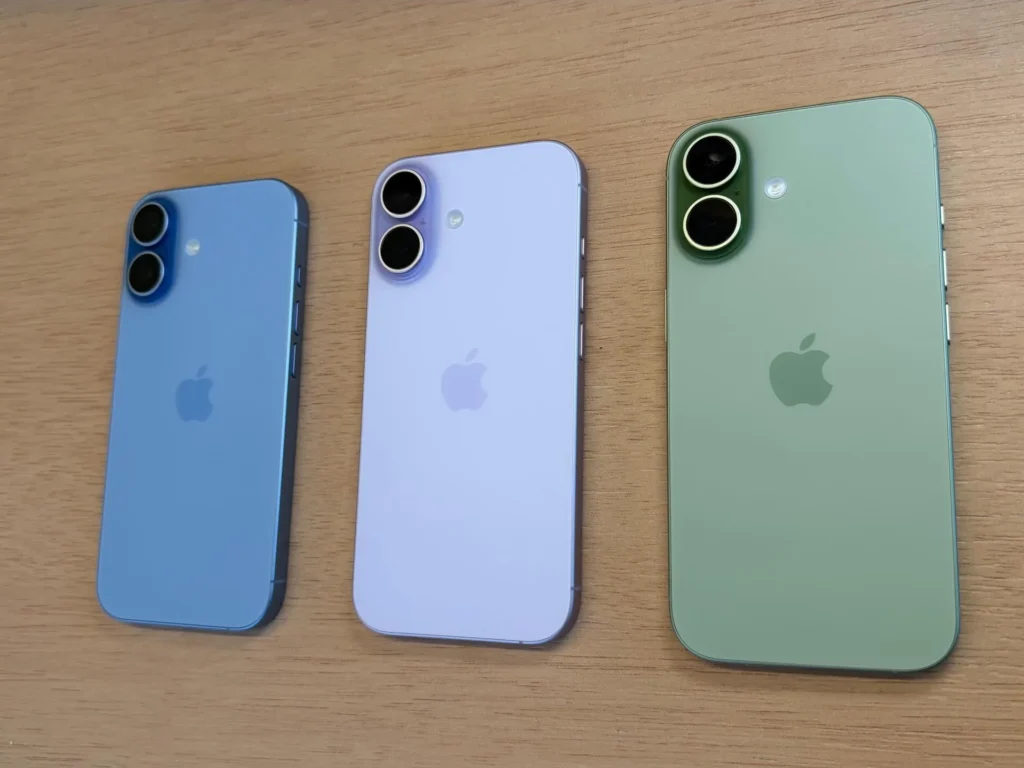
iPhone 18: Apple may sacrifice some features to reduce costs
Apple may be redefining the balance of its iPhone lineup. Amid rumors surrounding the iPhone 18, a notion emerges: to offer a more accessible standard model… at the cost of some hardware concessions.
iPhone 18: A Delayed Release to Better Segment the Lineup
According to several leaks, Apple is considering delaying the launch of the “mainstream” models — including the standard iPhone 18 and a potential “e” version — until spring 2027. This represents a significant departure from the brand’s usual schedule.
Meanwhile, the September keynote will continue to showcase premium models: Pro, Pro Max, and potentially an “Ultra” variant or even a foldable iPhone. This strategy would allow Apple to concentrate attention—and profits—on its most lucrative products from the outset.
Technical Compromises to Control Costs
At the heart of this reflection is the ongoing increase in DRAM memory prices. This structural factor is prompting Apple to revise its approach. According to leaker Fixed Focus Digital, the company may technically align the standard iPhone 18 closer to its “e” counterpart. Specifically, some distinguishing features may be eliminated or downgraded:
- A slightly less powerful chip (reduced GPU)
- Removal of a dedicated camera button
- A less advanced front camera
- Slower wireless charging
The retention of a 120 Hz OLED display is expected to remain, as reverting to 60 Hz would be difficult to justify in 2027, even for a more affordable model.

Apple Refines Its Product Hierarchy
This potential repositioning is not trivial. For several generations, Apple has sought to widen the gap between its standard and Pro models, but without entirely compromising the user experience on the “classic” versions.
With the iPhone 18, the brand may take a significant step forward. By aligning the standard model with the “e” version, Apple would clarify its range:
- On one side, accessible iPhones that are more streamlined
- On the other side, Pro models that have become true technological showcases
This logic mirrors what has been observed with MacBooks and iPads, where entry-level versions coexist with decidedly more ambitious products.
Toward a Redefinition of the “Standard” iPhone?
A central question remains: how far can Apple reduce the technical specifications without degrading the perceived value?
Because if these compromises become too visible, the standard iPhone could lose what has made it strong — a delicate balance between innovation and accessibility. Conversely, if executed well, this strategy could enhance the appeal of Pro models while maintaining a credible entry point into the Apple ecosystem.
In a smartphone market that has reached maturity, where each generation provides incremental evolutions, Apple seems to be searching for a new lever: not only to innovate but to segment more finely.
And in this equation, the iPhone 18 could mark a turning point.



