


Internet in 2025 according to Cloudflare: +19% global traffic, but a Web dominated by bots and AI
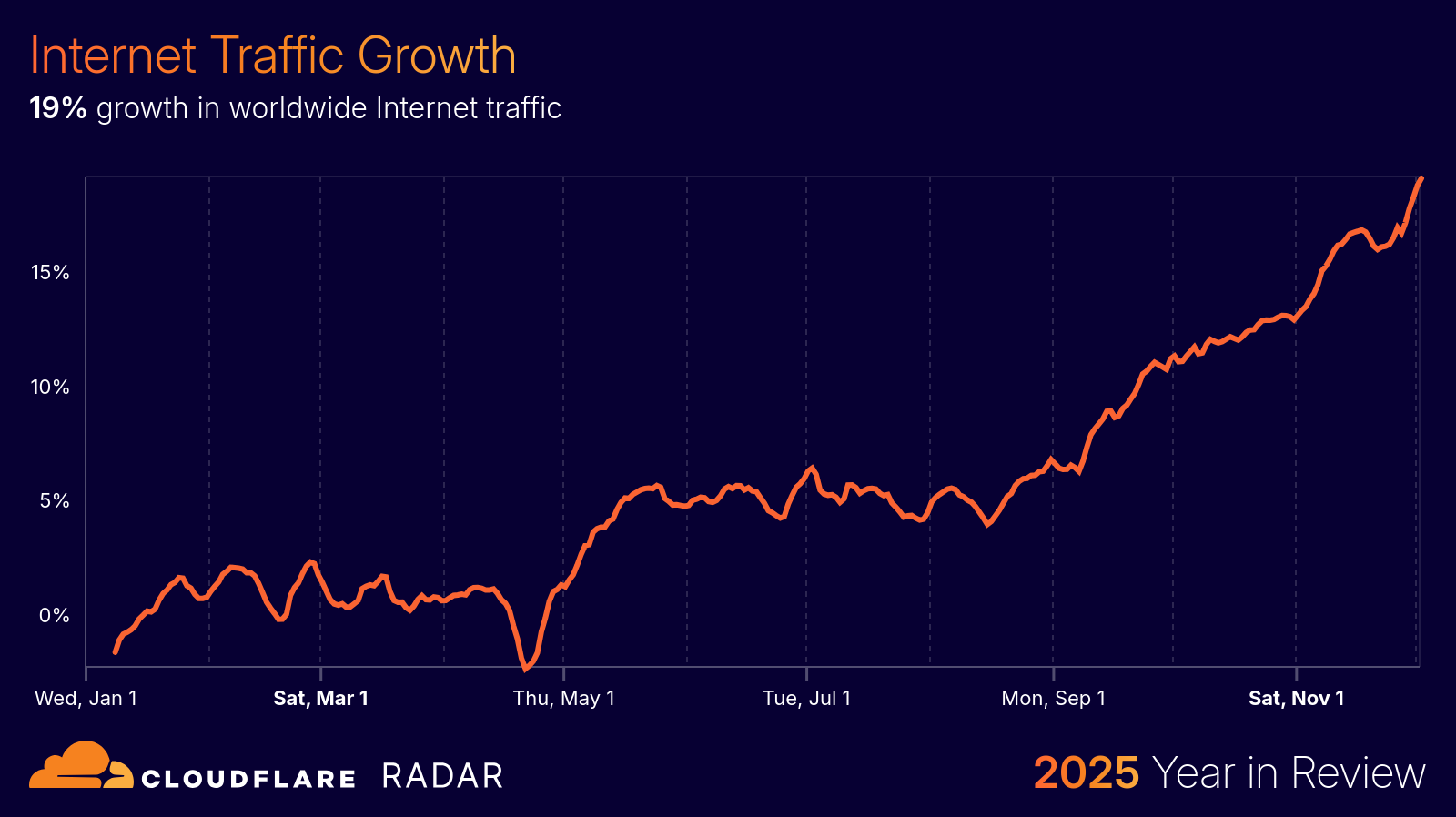
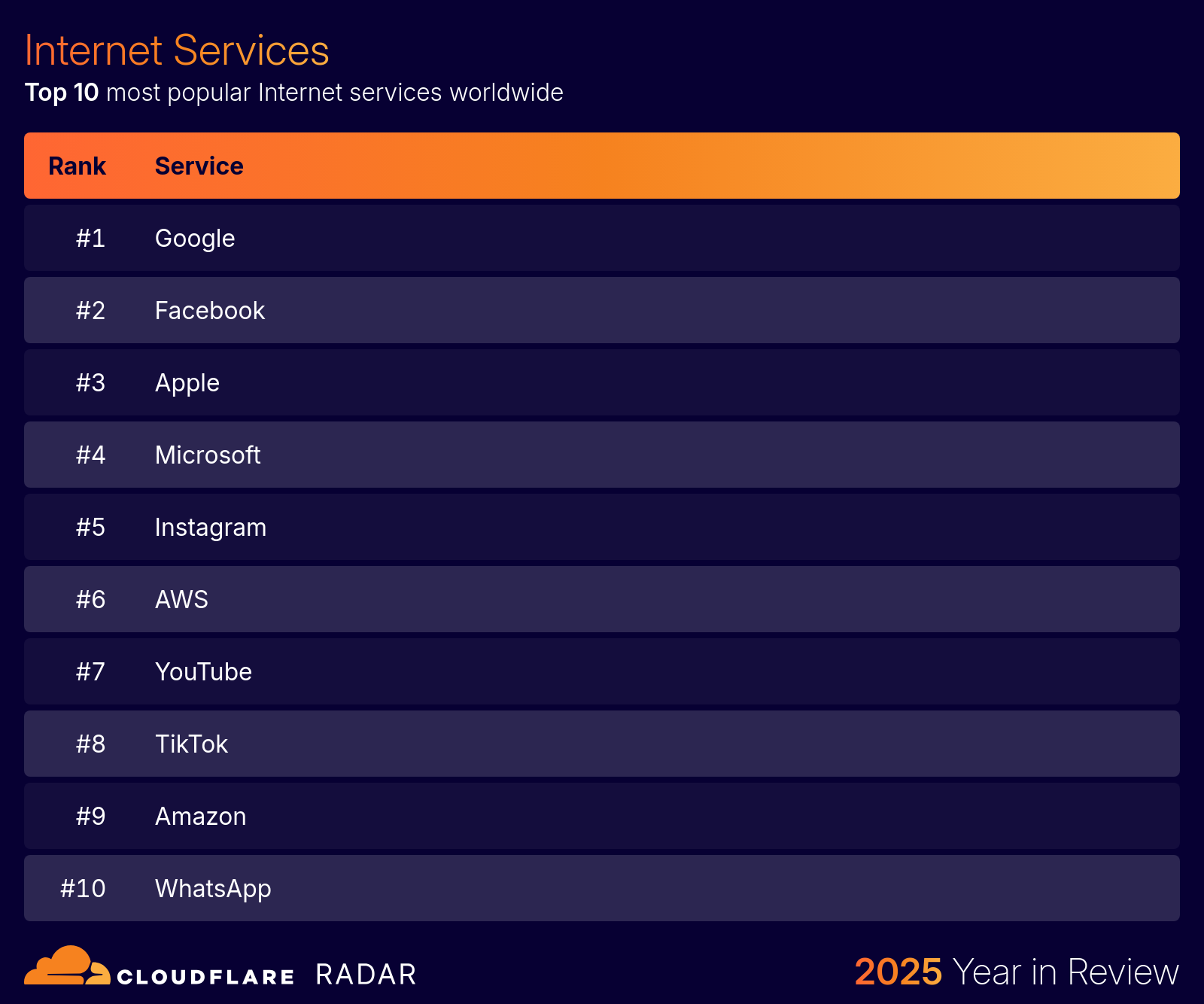
The global Internet traffic surged by 19% in 2025, confirming a strong trend toward increased digital usage. Unsurprisingly, Google and Facebook maintained their positions as the most visited websites worldwide for the fourth consecutive year, according to Cloudflare’s 2025 Top Internet Trends report.
However, behind this dramatic growth lies a much deeper—and more concerning—transformation in how the Web operates.
A Major Turning Point in Summer 2025
Cloudflare noted a clear inflection point around August 2025, when global traffic began to rise at a notably accelerated pace. This increase does not merely reflect a growing number of human internet users but indicates a significant shift in the nature of traffic.
The Internet of 2025 is more automated, more scrutinized, and more exploited—and not always for the benefit of content creators.
AI Dominates… But Captures Attention
In the realm of artificial intelligence services, OpenAI has emerged as the world’s most visited platform, surpassing Anthropic, Perplexity, and Google Gemini. Conversely, Grok (xAI) struggles to gain traction, falling to ninth place, outpaced by Character.AI, Windsurf AI, and QuillBot.
This hierarchy confirms a reality: generative AI is now a central use of the Web, rather than just an emerging phenomenon.
The Real Winner of 2025: Bots
Perhaps the most striking statistic from the report is that in 2025, AI bots averaged 4.2% of HTML requests, with Googlebot alone exceeding this figure, reaching 4.5% as it extensively crawls the Web for training and indexing models.
The structural issue is that this traffic does not direct users to the source sites.
For publishers, media, and creators, this means one very concrete thing: their content is consumed, analyzed, and exploited… without generating human visits in return.
Non-AI Bots: An Even More Massive Threat
While AI bots are concerning, “classic” bots are even more pervasive.
In 2025, they generated nearly 50% of HTML requests, or 7% more than human traffic, and at certain times of the year, up to 25% more.
In other words, the Internet is now predominantly traversed by machines—not by people.
Security: Attacks on an Unprecedented Scale
This automation is accompanied by an explosion of threats.
Cloudflare states that it mitigated 6% of the global traffic passing through its network, with 3.3% identified as DDoS attacks, implementing protection measures on over 10% of traffic from more than 30 countries.
These figures reflect a harsh reality: cyberattacks are now more frequent, more sophisticated, and often driven by AI.
A Web in Reconfiguration
Matthew Prince, CEO and co-founder of Cloudflare, aptly summarizes the situation: “The Internet is not just changing; it is fundamentally being reconfigured. With AI, increasingly creative malicious actors, and growing complexity, every day is different.”
He adds: “This year, we celebrated several important milestones for the Web, but we also blocked attacks that redefine what the word ‘scale’ means, while observing the traditional economic model of content creation facing unprecedented challenges.”
A Growth That Raises More Questions Than It Answers
Yes, the Internet is growing. Rapidly. However, this growth no longer automatically benefits humans or the creators who fuel it.
Between the massive capture of content by AI, the dominance of automated traffic, and the intensification of attacks, the Web of 2025 resembles less and less a fair exchange space—and more and more an infrastructure exploited by autonomous systems.



