

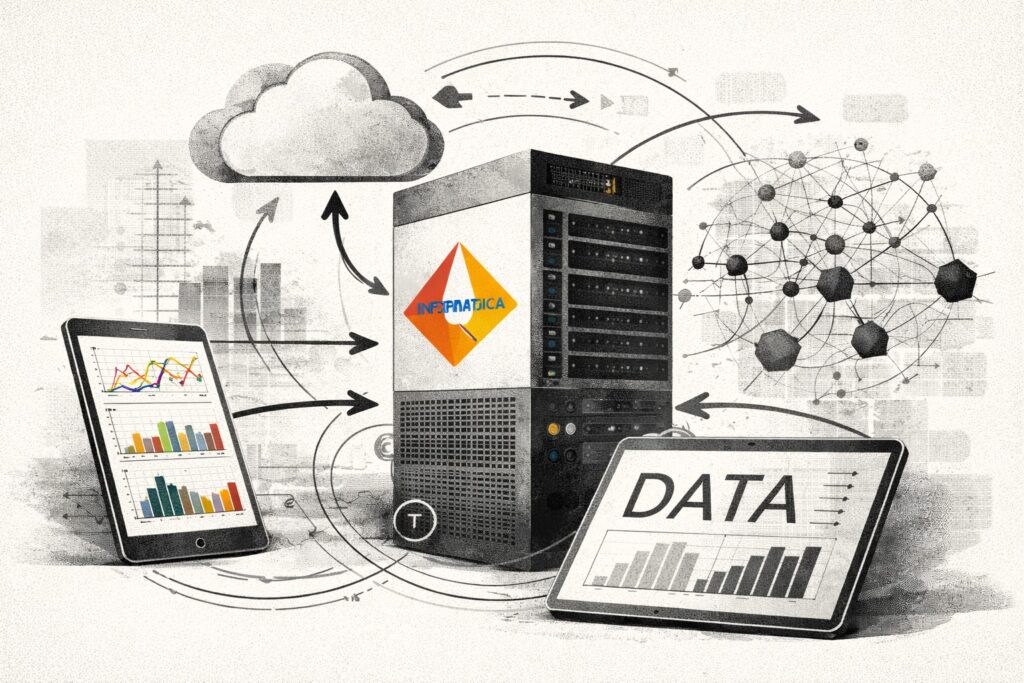
Informatica’s Transformation: Proving Technology’s Value Through Self-Implementation
Applying the same principles one recommends to clients is often cited as the most effective way to validate the strength of a technology solution. This mantra rings especially true for Informatica, a Salesforce subsidiary and a longstanding player in enterprise data management, as it embarks on its own digital transformation leveraging its Intelligent Data Management Cloud (IDMC) and Customer 360 SaaS application.
Informatica’s migration from traditional on-premises software to a cloud-based SaaS model demanded a thorough overhaul of customer data processing, internal repositories, and document governance. The company faced significant challenges due to data fragmentation spread across systems such as Salesforce, Oracle ERP, and Adobe, among others. The critical task was to centralize these diverse data sources to create a single foundation capable of supporting evolving business processes and enhancing customer relationship management operations.
The initiative began with the unification of over eight primary data repositories, resulting in a consolidated database housing 500,000 customer accounts. By employing artificial intelligence through IDMC’s integrated Claire tool, Informatica was able to effectively clean and deduplicate data, cutting the number of contact records from nine million down to 3.7 million. This achievement stemmed from systematically detecting duplicates and correcting inconsistencies, tasks that would have been unmanageable without automation. The consolidation not only improved visibility into business operations but also enabled deeper analysis of interactions with individual customers.
Data enrichment within Salesforce, along with the automatic suggestion of existing accounts, is facilitated through a native integration between Customer 360 SaaS and other systems within the organization. This process significantly reduced the need for manual intervention during qualification and update operations, allowing teams to concentrate their efforts on quality control and validating priority business use cases. Real-time synchronization further enhanced the ability to quickly identify discrepancies between data repositories, bolstering the reliability of customer relationship tracking.
Cost Savings Realized: A 20% Reduction
Following the implementation of Master Data Management and the AI-powered Claire, lead identification rates experienced a dramatic increase, jumping from 50% to 85%, which translates to a 1.7-fold improvement in the ability to match leads with existing accounts. Concurrently, the volume of data processed decreased, minimizing statistical noise and facilitating more effective prioritization of sales efforts. Automated software license management, rolled out for the company’s 5,200 employees, utilizes AI-assisted categorization to identify duplicates and streamline the supplier portfolio. Informatica has publicly stated its goal of achieving cost savings of up to 50% in certain areas, leveraging enhanced visibility into real usage and tighter control over acquisitions.
Automated reporting generation, monitoring of data flows, and the deployment of AI agents for recurring tasks led to a reported 20% decline in costs across relevant sectors. This evolution aligns with an operational load-reduction initiative that avoids adding more steps or outsourcing, relying instead on the transparency provided by IDMC integrations across all supporting processes.
Balancing Automation with Human Oversight
The shift to a SaaS model necessitated a redefined sales cycle, improved collaboration among teams, and standardized access to customer information. Access to certified data and prioritization of business use cases helped curtail redundant initiatives and refocused projects on measurable outcomes. The interplay between technical automation and human judgment proved essential in accelerating change management while upholding a high standard for data quality.
This approach also enabled cross-functional performance analysis, integrating marketing campaign management, customer experience, license management, and resource optimization within a single data platform. Such a unified framework rapid identification of improvement areas and the prompt escalation of alerts regarding data quality or availability issues.
Data as a Strategic Asset
Informatica’s experiences highlight the necessity of treating data as a strategic asset while underscoring the challenges of undertaking a large-scale transformation without solid governance and shared progress metrics. Key takeaways emphasize the importance of structuring repositories in advance, continuously measuring operational gains, and maintaining a consistent balance between automation and human oversight. Any attempt at a SaaS migration without prior unification risks creating fragmented efforts and escalating costs. Conversely, scrutinizing the impacts on data quality, sales productivity, and licensing savings offers an objective evaluation framework for similar projects.
For IT leaders and professionals engaged in digital transformation, Informatica’s case serves as a quantified and contextualized learning experience, centered on success factors and points of consideration. The ability to manage data, measure its impact on the organization, and ensure transparency in data flows has emerged as a market imperative. The tangible results achieved by Informatica illustrate the value of an approach rooted in the convergence of governance, automation, and practical data usage.



