

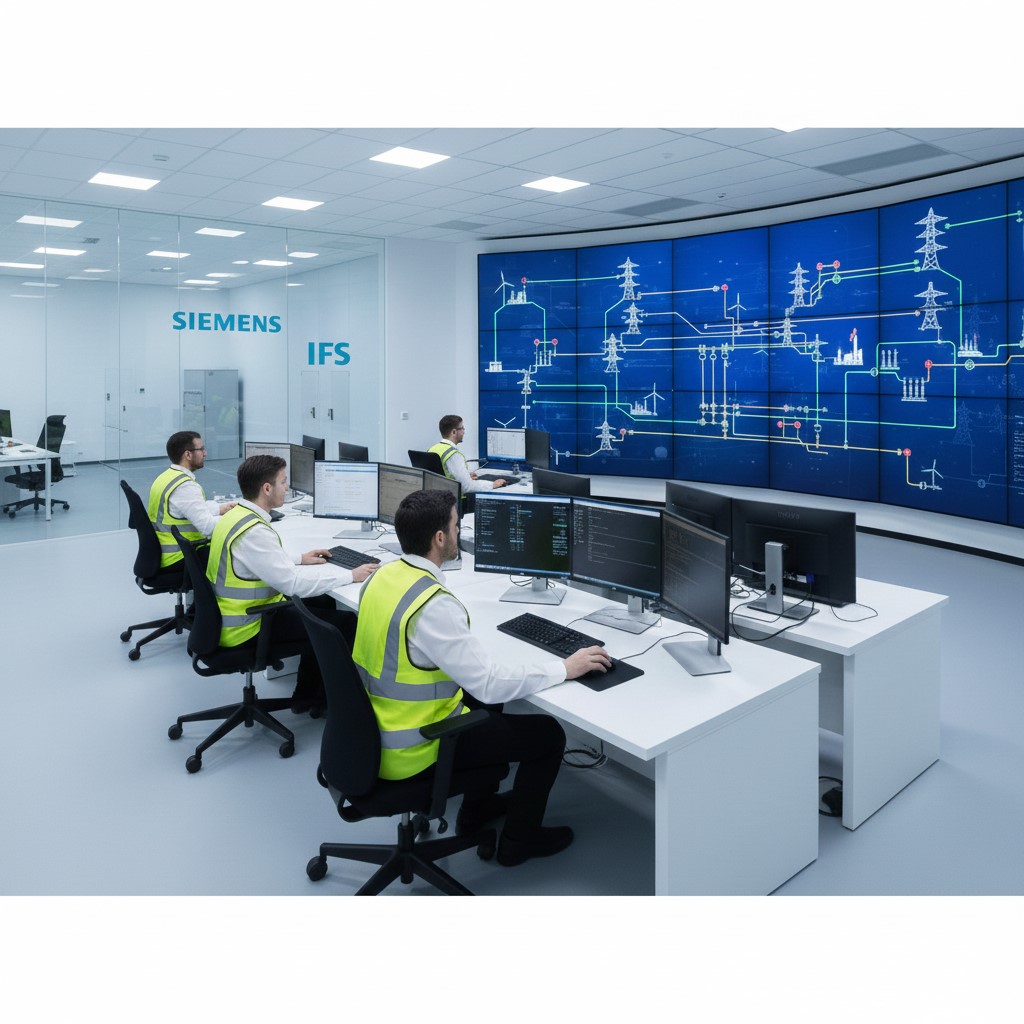
IFS and Siemens Forge Alliance for Smart Electrical Grid Management
IFS has partnered with Siemens to enhance the way electrical grids are managed, highlighting a significant convergence between industrial asset management, operational intelligence, and the ongoing energy transition. This collaboration indicates an accelerating trend of partnerships in a competitive landscape where organizations must now demonstrate their ability to manage critical infrastructure in an automated, connected, and resilient manner.
The partnership between IFS and Siemens will introduce a modular and integrated solution aimed at transforming electrical grid management without necessitating a complete overhaul of existing legacy systems. IFS contributes its expertise in enterprise asset management, advanced field service management, and asset investment planning. Meanwhile, Siemens leverages its strengths in network planning, electrification, smart infrastructure, and its Gridscale X platform. Together, they aim to tackle challenges such as aging infrastructures, supply chain pressures, skill shortages, and the integration of renewable energy sources.
The joint solution seeks to advance the transformation of networks into autonomous architectures that can optimize in real-time, accommodate the variability of renewable resources, and support the expansion of connected assets. It operates on a cloud-ready and modular model, designed to integrate seamlessly into complex environments without disrupting existing systems. According to available information, the combined platform will manage the entire asset lifecycle—from strategic planning to operational execution—while strengthening the bridge between operational technologies (OT) and information systems (IT).
Addressing Energy Sector Transformation Challenges
The integration of IFS modules into Siemens’ Xcelerator marketplace paves the way for rapid innovation sharing and widespread deployment of components within the industrial fabric. The partnership emphasizes decentralized management, network resilience, and operational cost reduction, with a shared goal of enhancing the availability and sustainability of infrastructures. However, key details remain to be clarified, such as the specifics of software interfaces, governance of the solution, the integration process with existing systems, and the training and support provided to field teams.
In parallel, IFS’s recognition as a leader in Gartner’s 2025 Magic Quadrant for product-focused cloud ERP systems affirms the robustness of its technological roadmap and industrial positioning. Gartner highlights IFS’s strategy centered on industrial AI, predictive maintenance, and automated operations orchestration, which align with the expectations of asset-intensive businesses, government entities, and service providers. This leadership, bolstered by the alliance with Siemens, places IFS in direct competition with major players like SAP, Oracle, and Microsoft in the realm of cloud platforms dedicated to critical infrastructures.
For industrial clients, these announcements signal the arrival of new automation and optimization levers: intelligent asset management, real-time monitoring, measurable operational cost reductions, and enhanced operational resilience. However, the success of this model will hinge on companies’ ability to integrate these solutions smoothly, adapt their governance structures, and build expertise in AI technologies and cloud environments. The IFS-Siemens alliance thus emerges as a strategic pivot for the digitization of networks, while leaving open questions regarding the practical execution on the ground and the tangible operational gains in the short term.



