

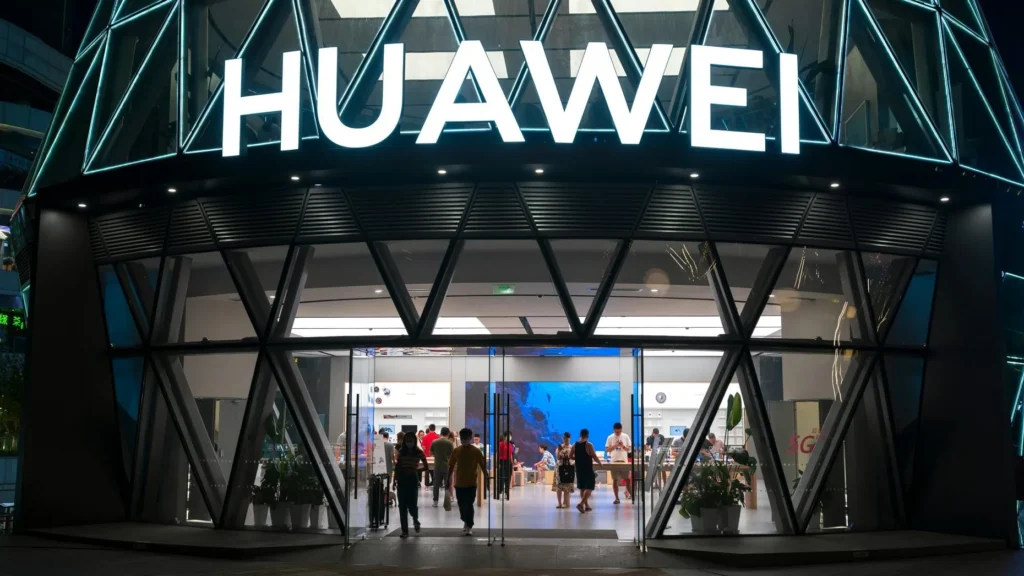
Huawei n°1 en Chine : Le géant détrône Apple au terme d’une année 2025 historique
Five years after losing its crown, Huawei has reclaimed the top spot in the world’s largest smartphone market—China— after a nail-biting year in 2025.
This ranking is backed by a compelling industrial narrative: a giant recovering from sanctions, reinvigorated by its “Made in China” supply chain.
Huawei Takes the Lead, Apple Follows Closely
According to figures compiled by IDC, Huawei shipped 46.7 million smartphones in China in 2025, representing 16.4% market share, surpassing Apple’s 46.2 million and 16.2%.
Vivo, Xiaomi, and OPPO completed the top 5—with Honor falling off this year.
This return to the summit is symbolic: it marks the first full year in which Huawei has finished as number one since 2020, in a market where every fraction of a percentage point holds strategic significance.

Technical Factors: 5G, Kirin, and Localized Production
The most compelling insight isn’t just commercial; it’s industrial. Huawei benefits from a rare alignment between product and local manufacturing capacity, boosted by the resurgence of its Kirin SoCs and the gradual improvements in domestic production—elements highlighted by market analyses as key to its rebound.
In terms of product range, Huawei has strengthened its premium positioning with its Mate (performance, “business” use) and Pura (image, design) families—two lines often utilized as technological showcases and profit generators.
Crucially, advancements in “in-house” chips remain the key battleground: the Kirin 9030 in the Mate 80 series has reportedly been manufactured by SMIC using an enhanced 7 nm process—still lagging behind market leaders but sufficiently credible to support premium volumes in China.
A Premium Showdown, but a Contracting Market
The other takeaway from 2025 is that the battle is won at the top. Apple has held its ground thanks to strong momentum around the iPhone 17—and even achieved notable monthly performance in China last autumn. However, this rivalry unfolds in a less favorable environment: the Chinese market shrank by 0.6% over the year, totaling approximately 285 million units shipped.
In other words, Huawei reclaims the crown in a kingdom that is no longer expanding. This shifts the nature of competition: less conquest by expansion and more transfer of market shares, ecosystems, and loyalty.
2026: The Crown Will Be Heavier to Bear
The biggest risk isn’t innovation, but the economics of hardware. IDC and other firms are already highlighting increased pressure in 2026, particularly from rising costs—especially memory—which could push prices up and slow down upgrades.
For Huawei, defending the top position will require more than just a solid lineup; it will necessitate maintaining an industrial cadence (chips, modems, critical components) while avoiding margin erosion in the face of competition from Vivo, Xiaomi, and OPPO, who excel in volume… and execution speed.
In 2025, Huawei demonstrated that it could make a comeback. In 2026, it must prove it can sustain its position.



