

HP Unveils Integrated Cloud Platform for AEC Sector at UIA World Congress 2026
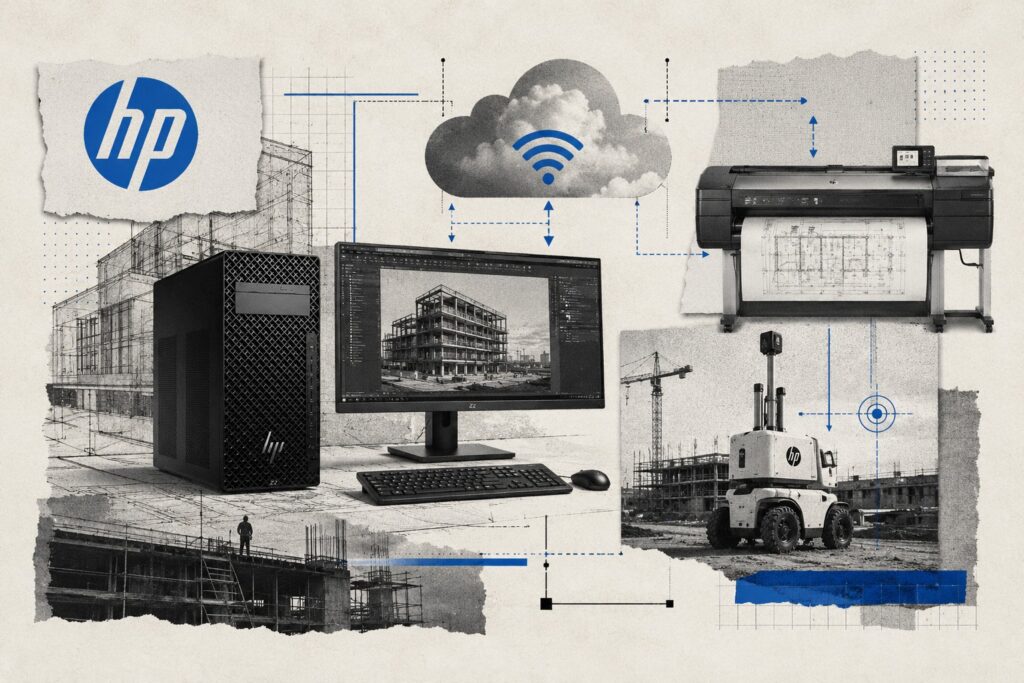
HP is bringing together its large-format printers, workstations, and construction site tracing robot under a unified cloud platform known as HP Build Workspace, aimed at the architecture, engineering, and construction (AEC) sector. This new offering was revealed on July 1st during the UIA World Congress of Architects in Barcelona, designed to streamline workflow for professionals in these industries.
The company has launched a comprehensive solution tailored for the AEC industry, consolidating previously separate products: its DesignJet large-format printers, HP Z workstations, and SitePrint robot tracing system. All these tools are now interconnected via the HP Build Workspace cloud platform, which synchronizes both digital and printed plans while maintaining version control to prevent teams from working off outdated documents.
This initiative responds to the ongoing digital transformation within the construction sector, where the focus is shifting from isolated tools to a seamless flow of data across various disciplines. Effective design, calculation, documentation, and execution on-site require that all teams operate off the same reference version, bridging the gap between paper plans and their digital counterparts—an area where existing software platforms have traditionally fallen short.
From Standalone Equipment to Connected Workflows
At the heart of this offering is the HP Build Workspace platform, which serves as a centralized repository for managing plans and their versions. Complementing this is the DesignJet T2600 Build Connected printer, announced on June 22, which links printed plans to cloud workflows, utilizing QR code version control to attach each print to the most current digital version. Meanwhile, the HP Z workstations provide the computational power necessary for local modeling and rendering, thereby granting project teams control over their data.
HP’s strategy aims to transform individual devices into components of a cohesive workflow chain. The printed plan evolves from a static document into a dynamic link to the cloud. For HP, the dual advantage lies in extending the lifespan of its large-format printers, which have been experiencing long-term decline, and in bolstering the relevance of its workstations in an era increasingly dominated by cloud-based rendering services—all while enhancing overall costs.
SitePrint: A Leap Towards Construction Tech
One of the standout components of this initiative is the HP SitePrint, a groundbreaking robot that transfers digital layouts directly onto construction sites by automating what was previously a manual tracing process. HP claims that automation in this phase reduces delays, errors, and rework—crucial benefits at critical project moments. This advancement also positions HP further along the construction value chain, moving from printing to site automation and construction services.
“Building the cities of tomorrow will no longer be merely a matter of design but will require smarter, better-connected workflows,” states Daniel Martinez, President of HP’s Large Format Division. This shift signals a transition from focusing on print products to orchestrating the entire project workflow, enhancing the flow of data from concept to execution.
Retention and Vertical Integration Strategy
On the market front, HP positions itself as a connective layer alongside established software platforms such as Autodesk Construction Cloud, Bentley, Trimble, and Procore. Rather than competing directly in modeling, HP addresses a key gap in the industry—the bridge between physical and digital realms. By zoning in on a specific sector instead of adopting a more general office-oriented narrative, HP aims to protect its margins by solving end-to-end business challenges.
However, this strategy does come with a caveat for buyers. Embracing the HP ecosystem introduces a reliance on a proprietary framework, whose value lies in the integration of its components.
Considerations for CIOs
HP Build Workspace is a cloud service from a U.S. provider. For European firms working on sensitive infrastructures or public market projects, concerns surrounding the Cloud Act and project data location become significant. These are critical considerations for any data entrusted to a hosting provider subject to extraterritorial law. The actual degree of data sovereignty depends on factual elements like the provider, jurisdiction, and data localization.
The second issue pertains to interoperability. HP’s promised continuity will be especially beneficial for organizations already using HP equipment, but less so for those reliant on other modeling tools. An IT manager will therefore evaluate the real value of Build Workspace in relation to their existing foundations, weighing local calculations on HP Z workstations as a data control argument against complete cloud rendering.
With this initiative, HP reframes its design and printing hardware as a vertical workflow platform backed by the cloud and an automation bet for construction sites. This maneuver not only defends its hardware portfolio under pressure but also opens up a market for services. The real test will be measuring adoption rates among architecture firms and construction companies, and determining the role this proprietary foundation will play alongside established modeling platforms already in use.



