HarmonyOS 6 surpasses 70 million devices: Huawei accelerates its growth
Huawei continues to strengthen its software independence. Just weeks after the HDC 2026, HarmonyOS 6 reaches a new milestone with over 70 million devices equipped.
This rapid progress confirms the Chinese manufacturer’s ambitions to build a true ecosystem capable of competing with Android and iOS.
HarmonyOS 6 Reaches a New Milestone
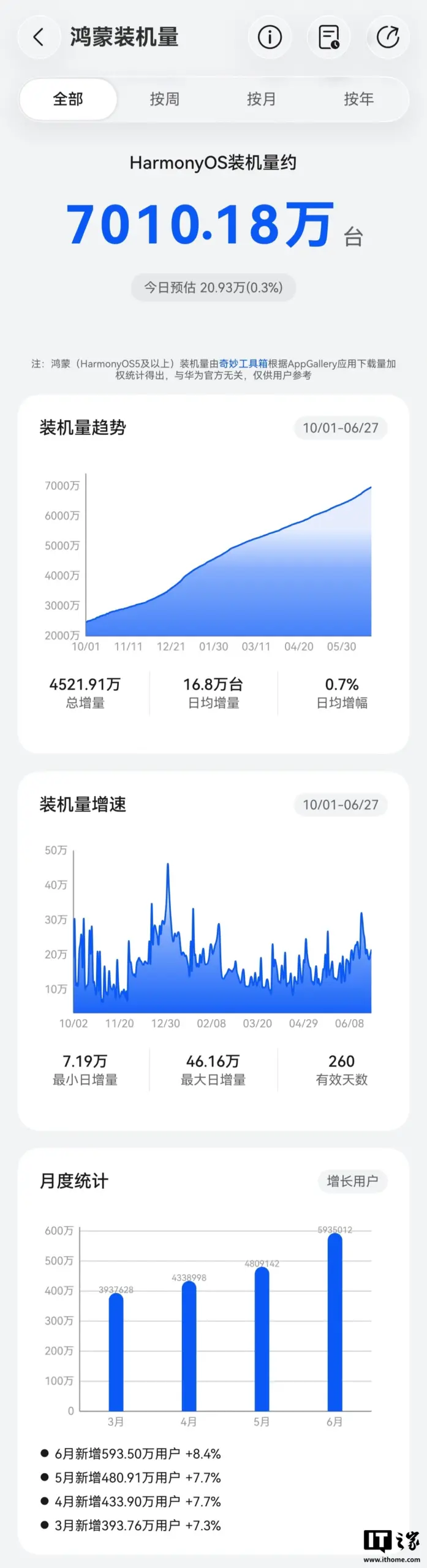
According to the latest data published by Wonder Toolbox, HarmonyOS 6 is now installed on over 70.1 million devices. This fast progression is noteworthy. During the Huawei Developer Conference (HDC 2026) held on June 12, Yu Chengdong, the executive director of Huawei and president of Terminal BG, mentioned that 66 million devices were already equipped with this version of the operating system.
In just a few weeks, several million more users have adopted HarmonyOS 6.
An Ecosystem That Now Exceeds 1.3 Billion Devices
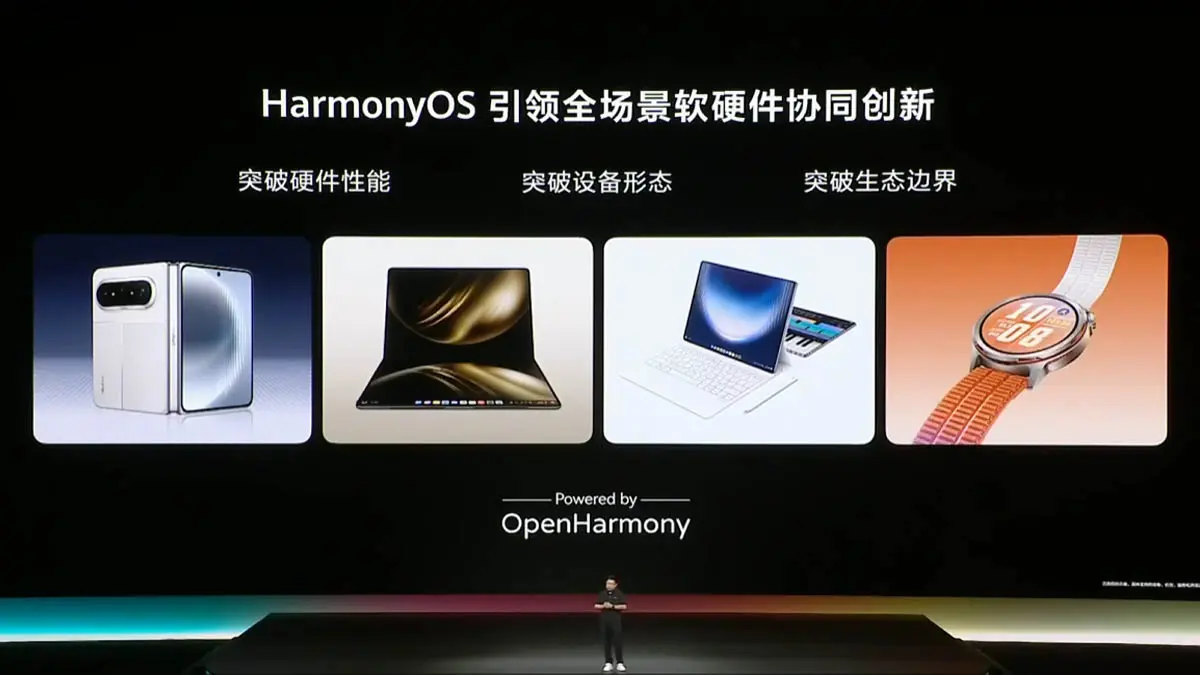
Beyond just version 6, Huawei is primarily highlighting the growth of its ecosystem. During the HDC 2026 conference, the company announced that the entire HarmonyOS Open Source ecosystem now exceeds 1.3 billion devices.
This figure includes a wide variety of products: smartphones, tablets, computers, smartwatches, connected devices, home automation equipment, connected vehicles, and IoT devices.
This strategy clearly illustrates Huawei’s intention to make HarmonyOS a unified platform capable of connecting all its products.
A Direct Response to American Sanctions
The rise of HarmonyOS is not solely a product strategy. Following the American sanctions that deprived Huawei of Google services, the Chinese manufacturer has been heavily investing in its own software ecosystem to reduce its dependence on Western technologies.
This transformation has accelerated with HarmonyOS Next, a major evolution that gradually abandons compatibility with Android to rely on a completely Huawei-developed architecture.
The goal is clear: to build a fully autonomous system for both users and developers.
Artificial Intelligence at the Heart of HarmonyOS 7
During the HDC 2026, Huawei did not limit itself to HarmonyOS 6. The company also showcased an early glimpse of HarmonyOS 7, which aims to place artificial intelligence at the center of the user experience.
The initial demonstrations particularly emphasize:
- AI agents capable of performing complex tasks
- Deeper integration between devices
- Development of spatial computing features
- An increasingly seamless experience between smartphones, PCs, smartwatches, and smart devices.
Huawei appears determined to make its operating system much more than just an alternative to Android.
Adoption Continues to Accelerate
Analysts attribute this growth to several factors: high user satisfaction, an increasing number of developers investing in the platform, a progressively enriching catalog of applications, and particularly strong integration between Huawei hardware and software.
In China, HarmonyOS is now establishing itself as the second mobile operating system according to various market indicators.
Huawei now hopes to replicate this momentum internationally, although deployment outside China remains limited by the absence of many Western services.
Huawei Confirms Its Long-Term Strategy
Surpassing the 70 million devices mark with HarmonyOS 6 is much more than just a popularity indicator. It confirms that Huawei is gradually transforming a geopolitical constraint into a technological opportunity. By developing its own operating system, its own application ecosystem, and now its own artificial intelligence experiences, the manufacturer is pursuing a vertical integration strategy akin to that of Apple, but tailored for the Chinese market.
The real question now is whether this momentum can extend beyond its borders. If Huawei succeeds in convincing more international developers and enriching its application catalog further, HarmonyOS could gradually establish itself as the third major mobile ecosystem worldwide.