

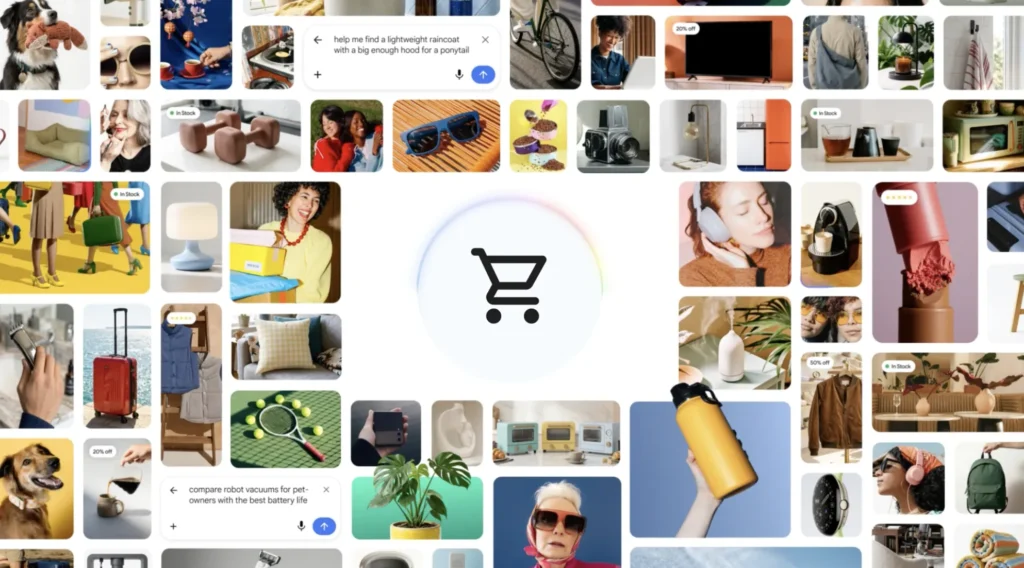
Google Universal Cart: AI Now Wants to Shop for You
Google is aiming for more than just helping you find a product. With Universal Cart, announced at Google I/O 2026, the company prepares for a new era of online shopping: a centralized smart cart capable of tracking your shopping preferences across Search, Gemini, YouTube, Gmail, and soon beyond.
A Unique Cart for the Entire Google Ecosystem
Universal Cart enables you to add products from multiple Google services, track price drops, restocks, price history, and available offers. The AI can also compare items and flag incompatibilities, such as between PC components.
The launch will begin in the United States, starting with the Gemini app this summer, followed by YouTube and Gmail. Google is also expanding its Universal Commerce Protocol to other sectors like hospitality and local delivery, with plans to roll it out in Canada, Australia, and then the UK.
AP2: When the AI Agent Heads to Checkout
The most sensitive aspect involves the Agent Payments Protocol. With AP2, Google aims to allow AI agents to make purchases automatically for users, within pre-established limits: brand, product, budget, or specific conditions.
On paper, the system relies on verifiable permissions, encryption, and an audit trail for disputes or returns. However, the implications go beyond technology: granting an AI the power to make payments, even under supervision, demands a new level of trust.
Google Aims to Be the Intermediary of Purchases
Universal Cart primarily reveals Google’s ambition to have greater control over the entire journey, from discovery to decision-making, and then to payment. For users, this could lead to a smoother experience. For merchants, it raises a strategic question: who truly owns the customer relationship when the purchase occurs through a Google agent?
This may represent the true turning point for agentic AI. After answering our questions, it is now ready to fill our carts—and soon, to finalize our purchases.



