

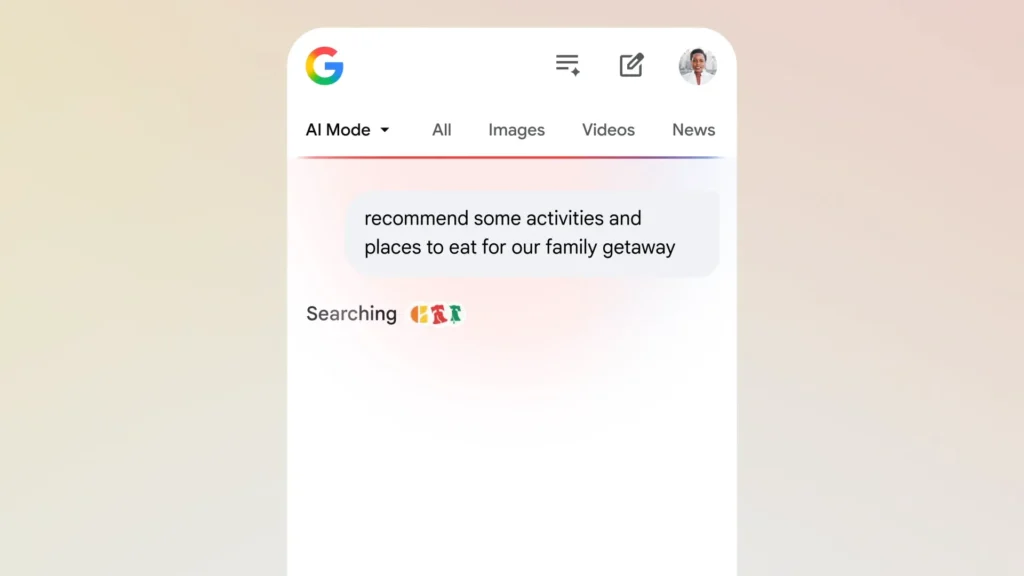
Google Search AI Mode: Your Emails and Photos Finally Join Your Searches
For years, Google has been the go-to place for searching the world. With AI Mode, Google aims to become the place where we search… ourselves: our reservations, habits, preferences, and photos.
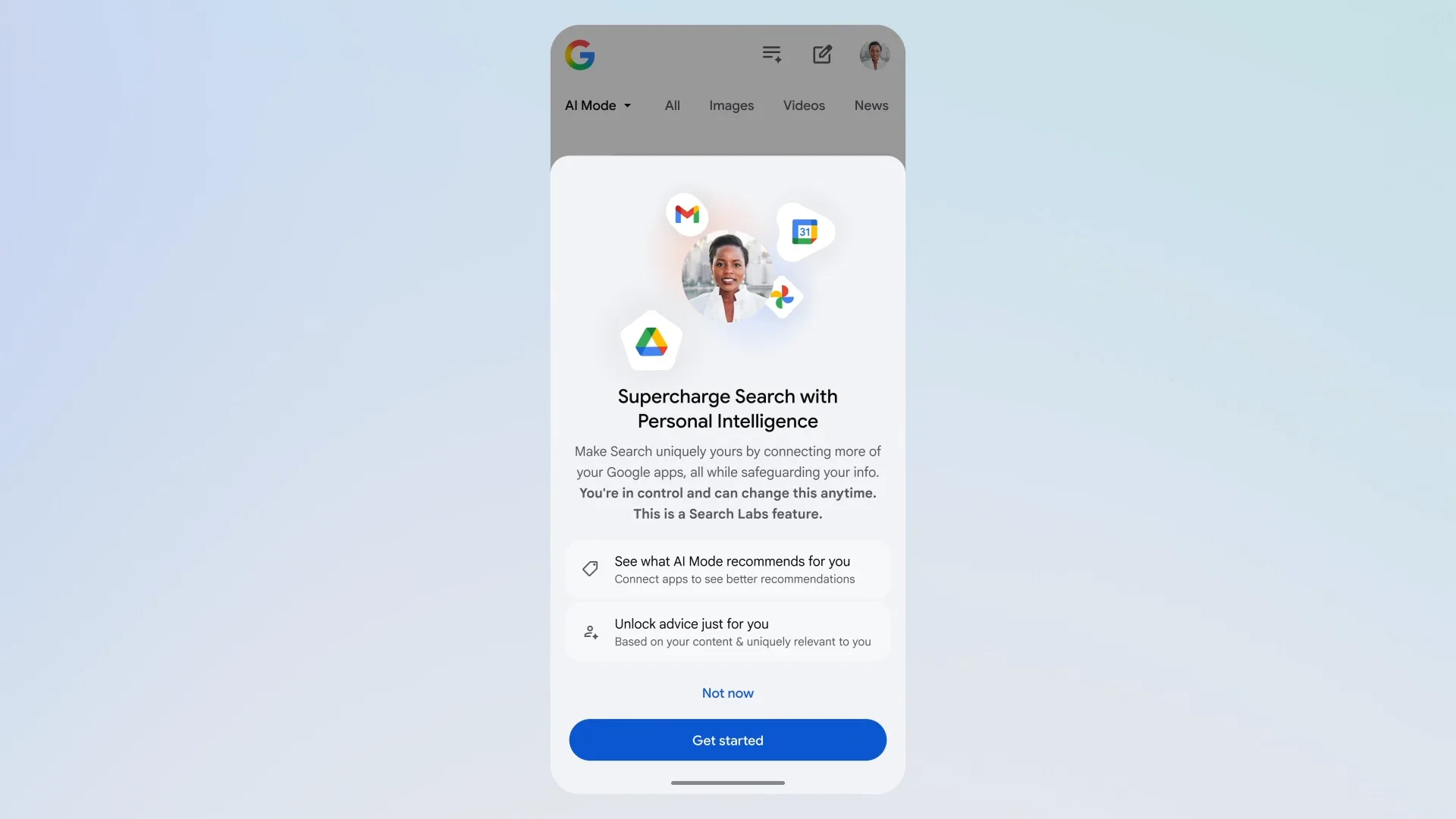
The new feature is called Personal Intelligence, and it has just arrived in Search, employing a straightforward mechanism: connecting (with consent) Gmail and Google Photos to deliver more personalized, contextual, and tailored responses.
Google Search Transitions from “Answers” to “Context”
Google is rolling out Personal Intelligence in AI Mode (Google Labs) in the United States, exclusively for Google AI Pro and AI Ultra subscribers, and only on personal accounts (not Workspace). The goal is to eliminate the need for users to manually configure the AI through preferences and settings by drawing directly from their digital lives.
This launch closely follows the introduction of Personal Intelligence in the Gemini app, where Google has already begun establishing an assistant that “connects the dots” between Gmail, Photos, Search, and YouTube.
A Google Search That “Remembers” for You
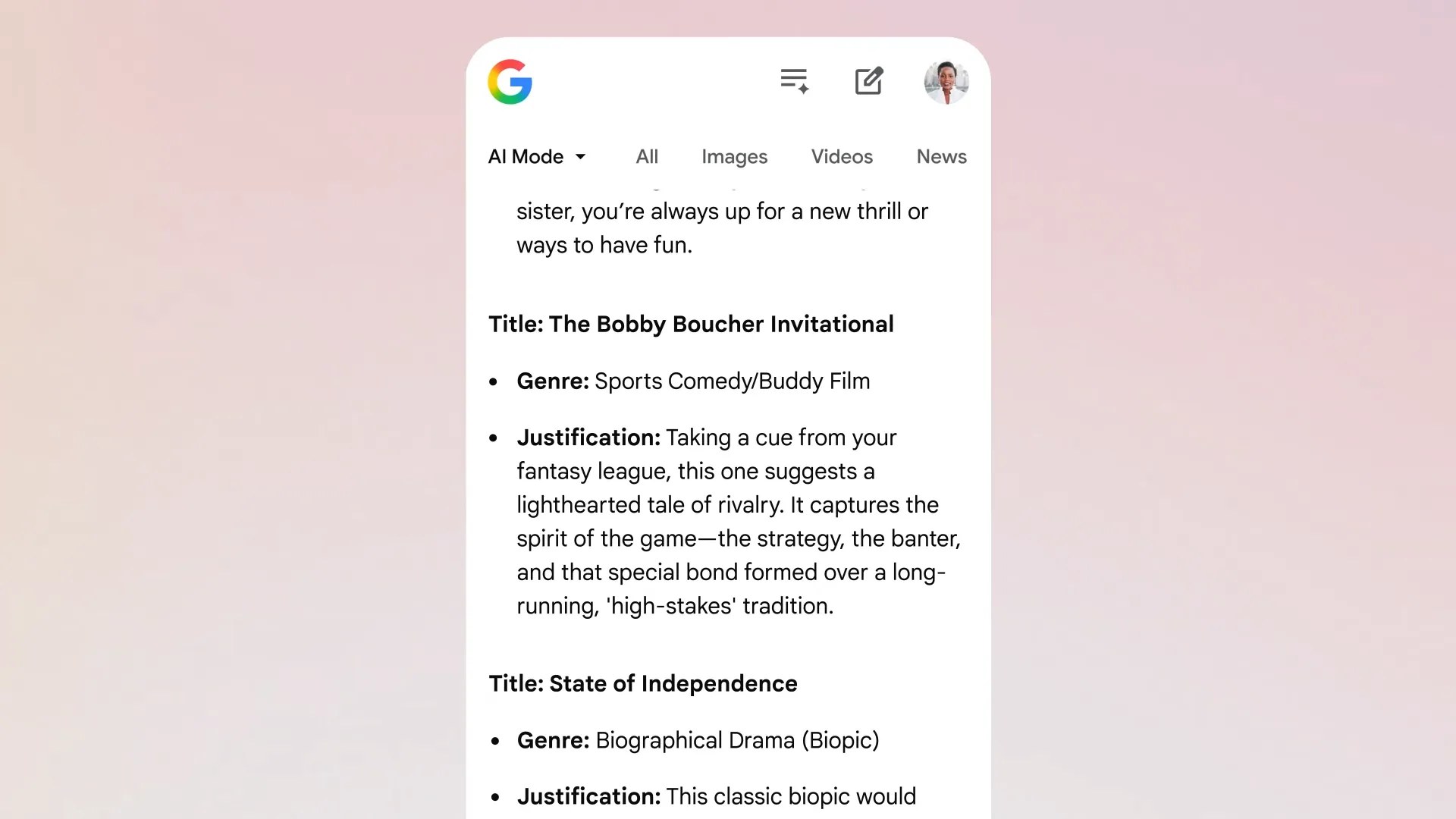
On paper, the examples are strikingly clear: AI Mode can suggest travel itineraries based on hotel bookings in Gmail and vacation photos in Google Photos; it can recommend ice cream shops if your photo library is filled with selfies featuring ice cream; and in shopping, it can prioritize products aligned with your usual brands and styles.
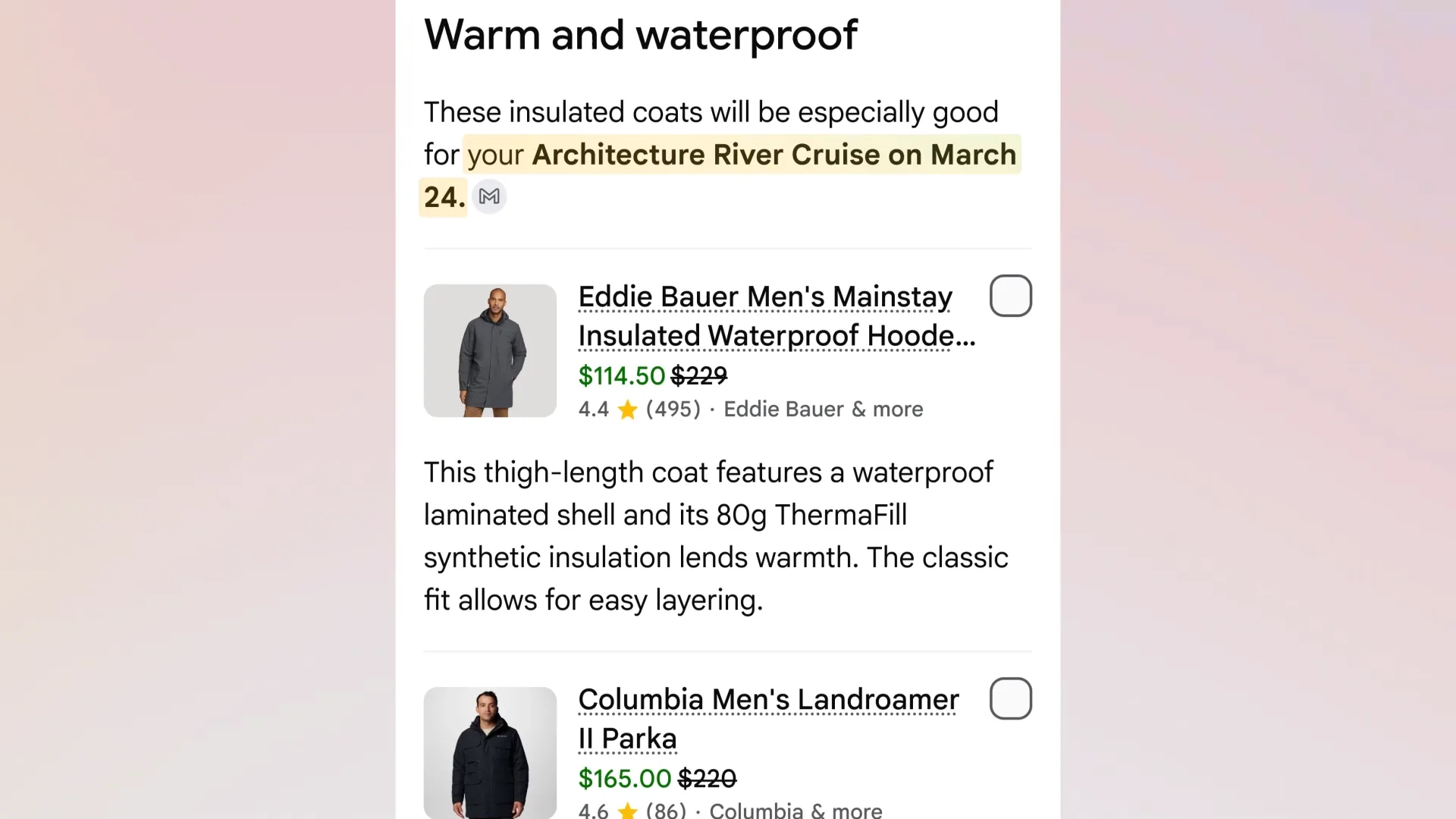
Google emphasizes that the AI utilizes “its most advanced model,” Gemini 3, and that users maintain control: consent is necessary, with options for corrections through feedback, as noted by Robby Stein, since errors may occur.
Privacy: Google Promises Personalization Without Intruding on Your Privacy
This is the most sensitive aspect—and Google is aware. Robby Stein states that AI Mode does not train directly on your Gmail inbox or Google Photos library. Instead, Google claims improvements are made based on more limited information, such as your prompts in AI Mode and the model’s responses, to enhance the system over time.
This nuance is crucial: “not training on Gmail/Photos” is not the same as “no data is used.” In a climate where trust surrounding personal data has become a hot topic for Google, this clarification falls within a broader communication about what Gemini does (and does not do) with Gmail content.
Google’s True Bet Is to Transform Search into a “Personal Interface”
Personal Intelligence is not just a bonus feature. It is a strategic response to two pressures:
- Product Pressure: Chatbots have accustomed the public to conversations that “understand” context. For Search to maintain its central role, it must evolve beyond just an index; it needs to become an assistant.
- Competitive Pressure: In the face of ChatGPT and “proactive” assistants, Google is leveraging its main advantage: its ecosystem. No one has as many signals (emails, photos, history, services) — which is both its strength and its Achilles’ heel.
However, the risk is equally evident: when an AI uses your life as a contextual dataset, a mistake isn’t merely a “wrong answer”; it could be an incorrect inference about you—leading to a breach of trust. This is why emphasis is placed on opt-in, control, and correction mechanisms.
Underlying this, another question looms: if Search becomes “personal,” how will monetization integrate without seeming intrusive? Google has no interest in compromising the user experience now—but the history of Search shows that personalization and advertising will eventually intersect, sooner or later.



