

Google Images undergoes a complete transformation: a new homepage powered by AI is coming
For more than two decades, Google Images has adhered to the same format: a blank page, a search bar, and billions of indexed images. To celebrate the 25th anniversary of the service, Google is radically shifting its approach by transforming its homepage into a personalized feed designed to be explored before any search is performed.
This change aligns Google Images more closely with visual discovery networks like Pinterest, while reflecting a broader trend: search engines are increasingly becoming AI-powered recommendation platforms.
Google Images: A homepage that anticipates your interests
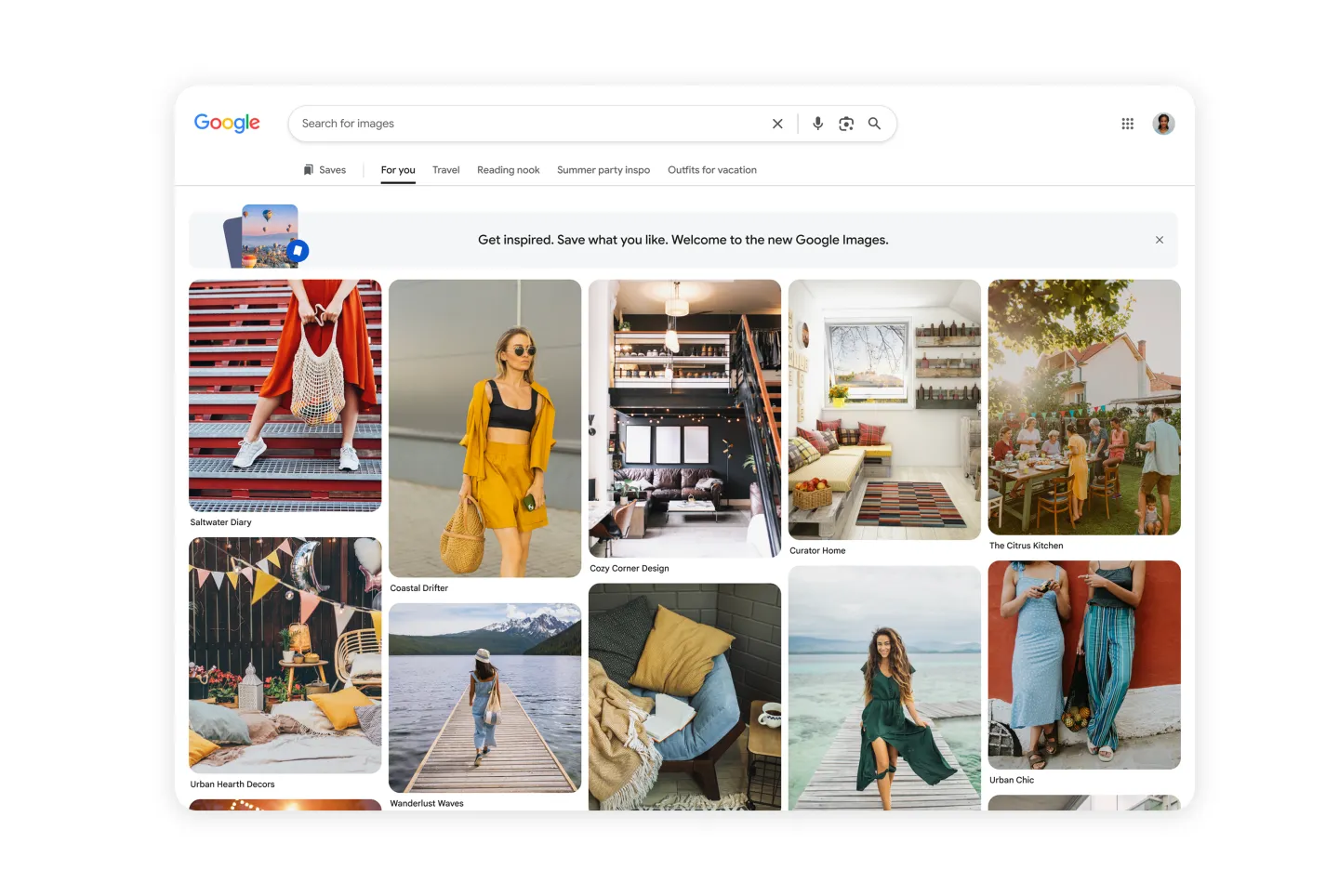
The new interface abandons the traditional empty page in favor of a constantly updated image gallery. According to Google, this new experience will offer an immersive and dynamic feed of web content curated based on the interests of each logged-in user.
Specifically, instead of starting with a search, users can simply scroll through recommended images, much like a visual social network.
Initial previews released by Google showcase a layout reminiscent of Pinterest or Imgur, with a mosaic of images designed to encourage discovery rather than direct searching.
Collections become the heart of the experience
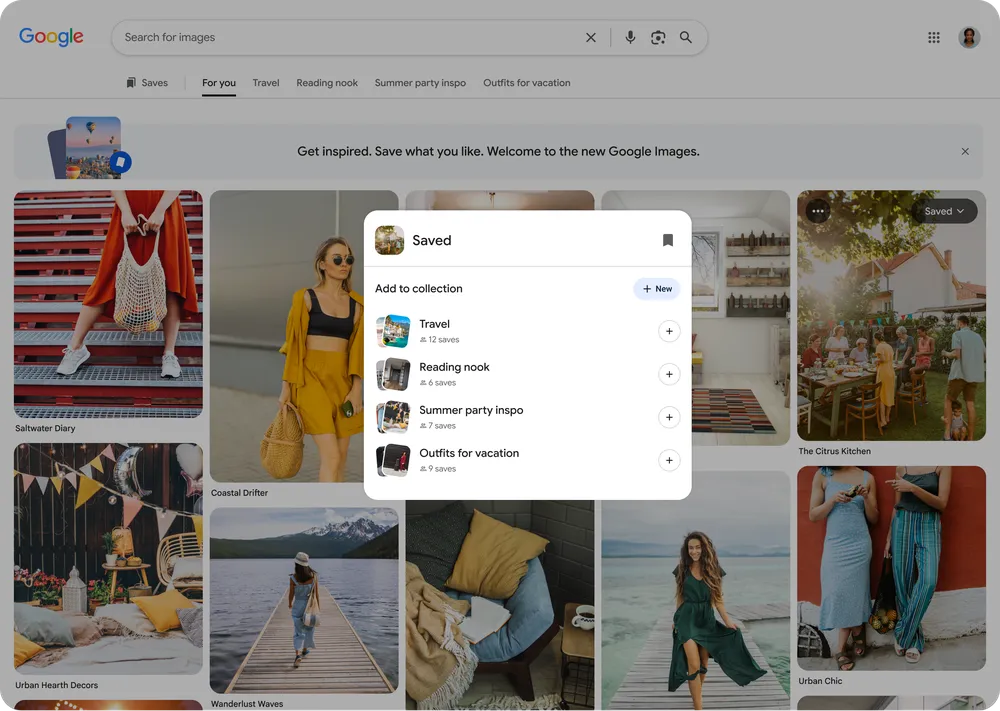
Google strengthens the Collections feature, which now plays a central role in the interface. Users will be able to save the images they are interested in for easy access later. These collections will appear as tabs directly above the main feed, facilitating the organization of personal projects, home decor ideas, travel plans, or creative inspirations.
The goal is clear: to transform Google Images into a space users return to regularly, rather than just when searching for a specific image.
Artificial intelligence also joins Google Images
This redesign comes with another significant development. Google announces that AI Overviews will soon be capable of directly generating images using the Nano Banana 2 Lite model. The idea is to allow users to quickly visualize an idea without leaving the search page.
Examples presented by Google include visualizing an interior design project, comparing various decor styles, or creating illustrations based on natural language requests.
Queries such as “help me visualize” or “create an image of…” could automatically trigger the generation of an illustration by artificial intelligence.
An evolution that raises questions
While this integration of AI opens up new possibilities, it also raises several concerns. Google has yet to clarify in which situations AI Overviews will decide to generate an image and what limits will be applied to prevent the creation of inappropriate content, particularly concerning current events or sensitive topics.
Managing these safeguards will be critical as AI-generated content becomes increasingly difficult to distinguish from real images.
Google gradually transforms its search engine
This overhaul goes far beyond a mere aesthetic redesign. For several months, Google has been evolving all its products towards a more recommendation- and AI-centered experience. Following AI Overviews, AI Mode, and the multimodal capabilities of Gemini, Google Images is becoming yet another proactive service capable of suggesting content even before a search begins.
This strategy is gradually drawing the search engine closer to social platforms, where discovery is more reliant on recommendation algorithms than on explicit queries.
The new Google Images will be gradually rolled out over the next few weeks for logged-in users in the United States using the English version of the service on desktop. A broader launch is expected to follow if the reception is positive.



