

Google Chrome Enters the Era of AI Agents: Gemini is Integrated into the Business Browser
Google is accelerating its vision of a web powered by artificial intelligence. During the Google Cloud Next event, the Mountain View giant unveiled a significant upgrade to Chrome: “agentic” capabilities that can act directly within the browser.
This ambitious promise aims to enhance productivity and establish a new layer of control for businesses.
A Browser That Understands and Acts
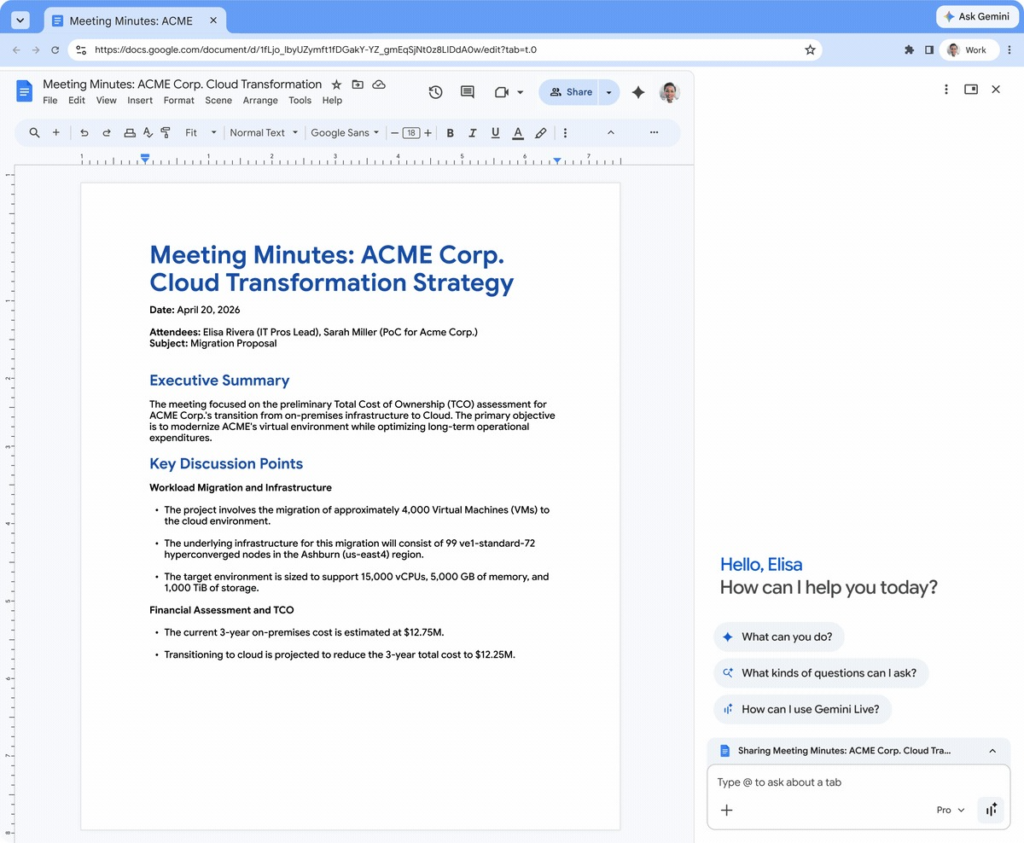
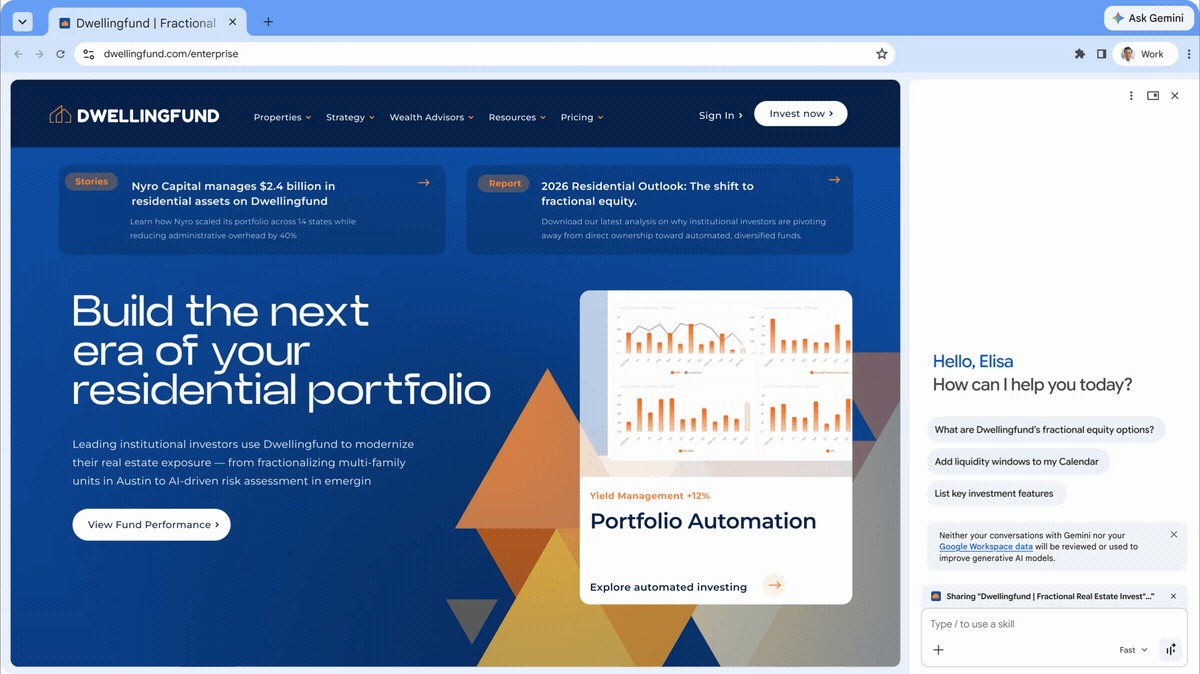
With this feature named “automatic browsing,” Google is transforming Google Chrome into a genuine operational assistant. The goal is to enable Gemini to understand the real-time context of open tabs in order to perform complex tasks.
Specifically, the AI can compare offers across multiple pages, automatically fill forms or CRMs, schedule meetings, analyze a portfolio before an interview, or extract data from a competitor’s site. The browser now serves not just to display information, but as an automated execution space, where web actions are orchestrated by AI.
Humans Remain in the Loop… For Now
Google emphasizes one key point: every action proposed by Gemini requires human validation. This is a crucial precaution to avoid errors and to provide reassurance against potential automation pitfalls. This “human in the loop” approach reflects a cautious strategy, allowing for the gradual introduction of agentic capabilities without fully relinquishing control—something still difficult for businesses to accept.
However, beneath this caution lies a more nuanced reality: while AI can accelerate repetitive tasks, it may also redefine productivity expectations. Fewer mechanical tasks… but potentially more pressure on deliverables.
“Skills”: Towards Standardized AI Workflows
Google also introduces “Skills,” automated workflows that users can save and reuse. Accessible through a simple “/” command or dedicated button, these routines allow users to execute sequences of actions in mere seconds.
This represents a structural evolution: transforming business procedures into AI scripts that are accessible to all. A democratization of automation that could eventually reduce reliance on specialized tools or technical teams.
Security: Google Strengthens Its Grip on Corporate IT
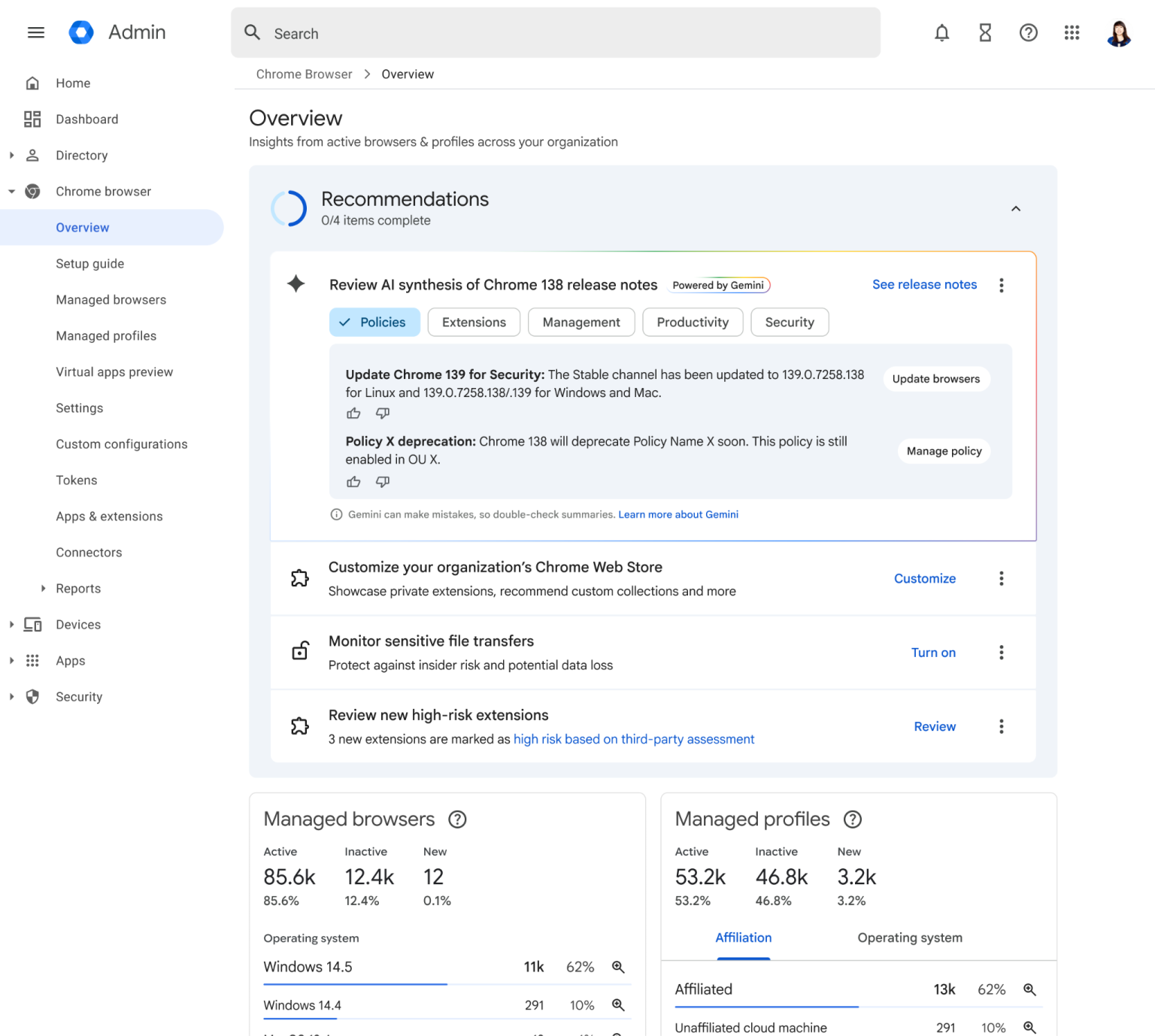
Simultaneously, Google is enhancing its security arsenal with Chrome Enterprise Premium. The objective is to detect unauthorized AI usage within companies—referred to as “Shadow IT.”
IT teams will now be able to identify compromised extensions, monitor suspicious AI agent behaviors, and analyze the use of unauthorized GenAI services.
Beneath the security argument lies a more strategic dynamic: Google is locking down the ecosystem to limit the emergence of competing agents. This approach mirrors the early days of cloud computing in enterprises, where tools adopted “in the shadows” ultimately reshaped standards.
Partnerships and Strategy: Towards a Fully Agentic Workplace
Google is also strengthening its collaboration with Okta to secure sessions and mitigate hacking risks. The integration with Microsoft’s protection policies (MIP) also showcases a desire for interoperability—a crucial point for hybrid environments.
Beyond the announcements, a clear vision is emerging: to make the browser the nerve center of digital work. Where applications once reigned, tomorrow, AI agents will orchestrate all tasks directly from the web interface.
An Attractive Yet Ambiguous Promise
Google’s ambition is clear: to transform saved time into strategic value. However, the recent history of AI in businesses calls for caution. Several studies suggest that rather than reducing workload, these tools tend to intensify it.
The question thus transcends technology—it becomes organizational. Who controls the agent? Who sets the pace? And, above all: what happens to human labor in an environment where execution is automated?
With Chrome and Gemini, Google is not merely offering a feature. It is outlining the contours of a new paradigm: one where navigating the web means taking action.



