

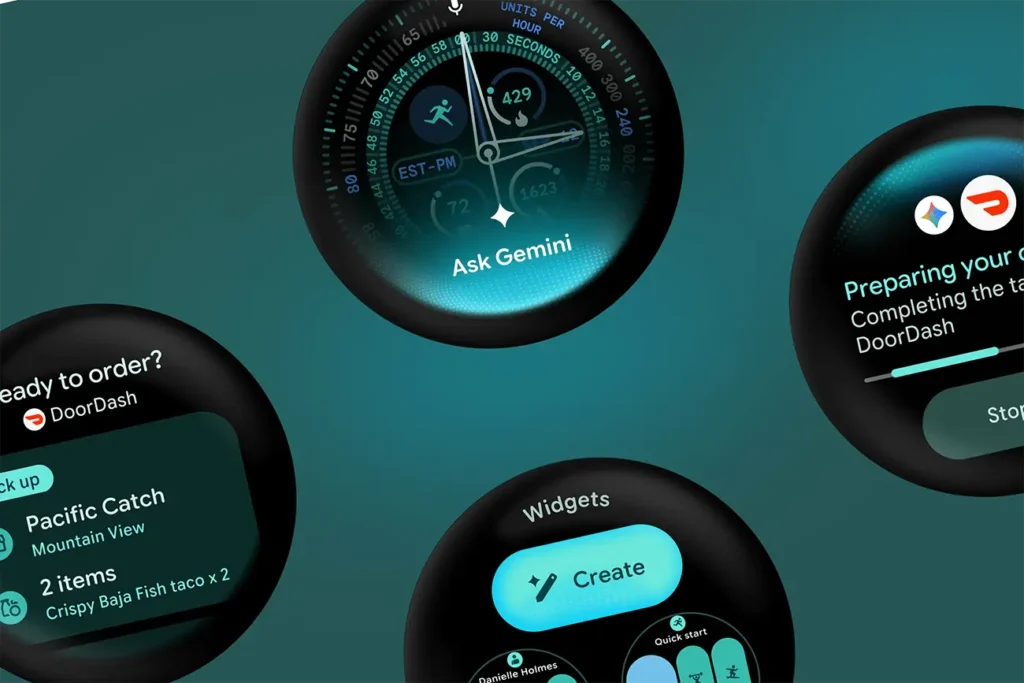
Gemini on Wear OS: Google rolls out a new Android-inspired interface
Google is continuing to unify its ecosystem around Gemini. After modernizing its assistant on Android with the visual language Neural Expressive, the company is now deploying this new interface on Wear OS. More than just a graphical refresh, this evolution brings the user experience closer between smartphones, tablets, and smartwatches.
The goal is clear: to make Gemini a coherent assistant capable of providing the same experience regardless of the device used.
A More Seamless Interface Directly on the Watch Face
Previously, invoking Gemini on a Wear OS watch opened the application in full screen. This functional approach, however, broke the fluidity experienced on Android smartphones.
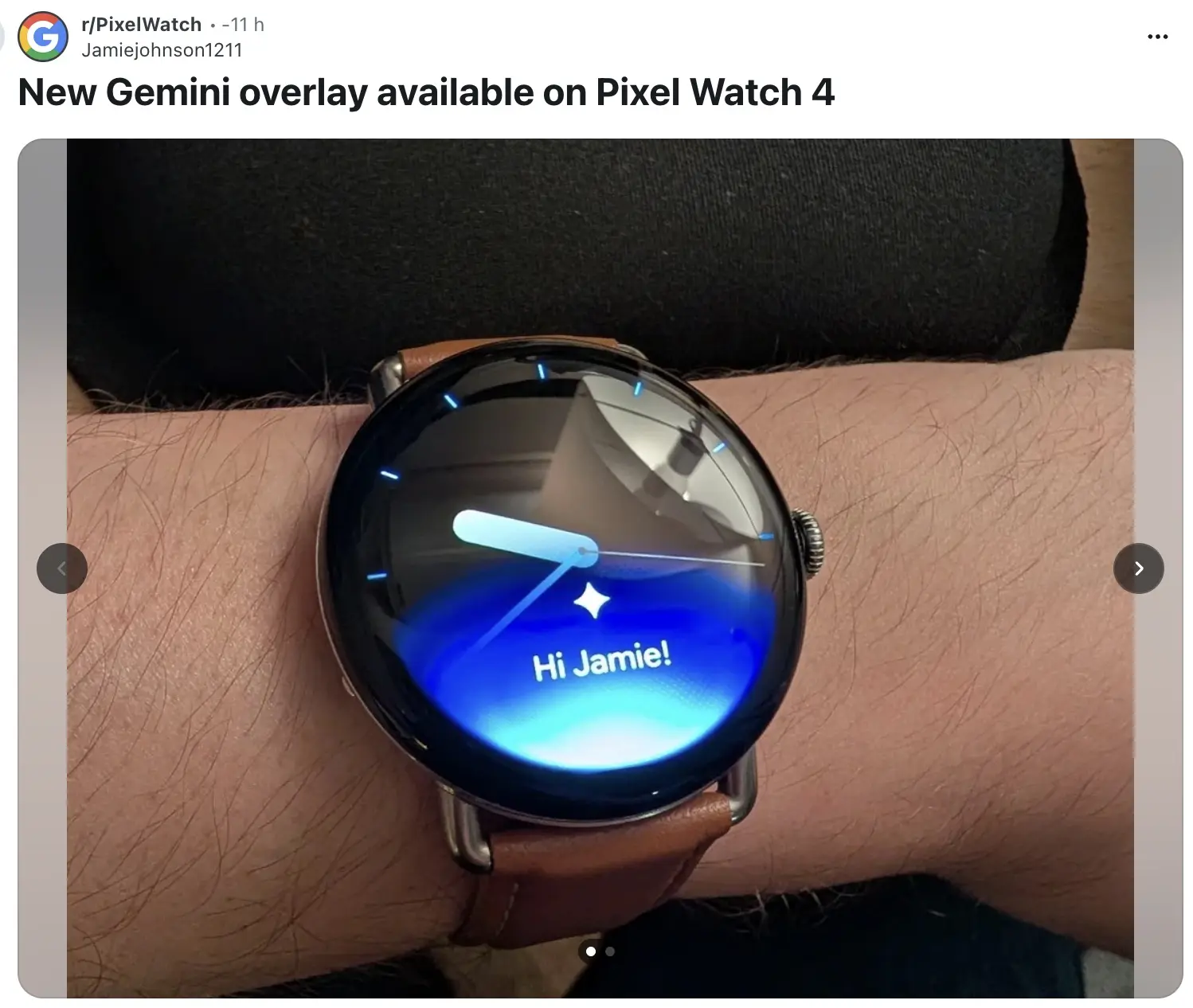
With this update, Google replaces this functionality with an overlay interface. When users activate Gemini, the assistant now appears directly over the watch face or the current application, without completely interrupting the experience.
This presentation faithfully retains the visual codes already present on Android:
- The animated Neural Expressive background
- The bright Gemini icon
- The now-familiar greeting message for assistant users
The overall interaction is more natural and gives the impression that Gemini is an integral part of the system.
More Transparent Interactions
Beyond aesthetics, Google is also enhancing the readability of interactions. Screenshots published on the Play Store now show a real-time transcript of voice requests. Users can follow what Gemini has understood before even receiving a response.
Once an action is executed—setting a timer, sending a message, or answering a question—a confirmation appears directly on the screen.
This approach reduces the “black box” effect often criticized in voice assistants and reinforces the feeling of a genuine dialogue between the user and the AI.
A Strategy to Unify the Gemini Ecosystem
This evolution goes far beyond simply redesigning an interface. For several months, Google has been implementing initiatives to make Gemini the single assistant for its ecosystem. Pixel smartphones, Android tablets, ChromeOS, Google Maps, and Wear OS are gradually adopting the same visual codes and interaction mechanisms.
This uniformity provides a strategic advantage: users no longer need to learn multiple ways to use the assistant depending on the device they own. The experience becomes immediately familiar as they switch from their phone to their watch or tablet.
In the face of Apple Intelligence and the rising influence of AI-powered assistants, this consistency could become a true differentiating factor.
Gradual Rollout on Pixel Watches
The new interface is currently being rolled out via the Google Play Store. The first users to benefit appear to be owners of the Pixel Watch 4, although the update is expected to gradually extend to other watches compatible with Wear OS 7 and Gemini.
Google has not provided a specific timeline, but the rollout is already underway on certain devices.
A Discreet Yet Strategic Evolution
At first glance, this new interface may seem merely an aesthetic change. However, it perfectly illustrates the direction Google is taking: eliminating the boundaries between its various devices.
By offering a consistent experience across smartphones, tablets, and smartwatches, Gemini is gradually transitioning from a simple application to a continuous presence within the Android ecosystem. This approach could prove essential as artificial intelligence becomes increasingly integrated into everyday use.



