

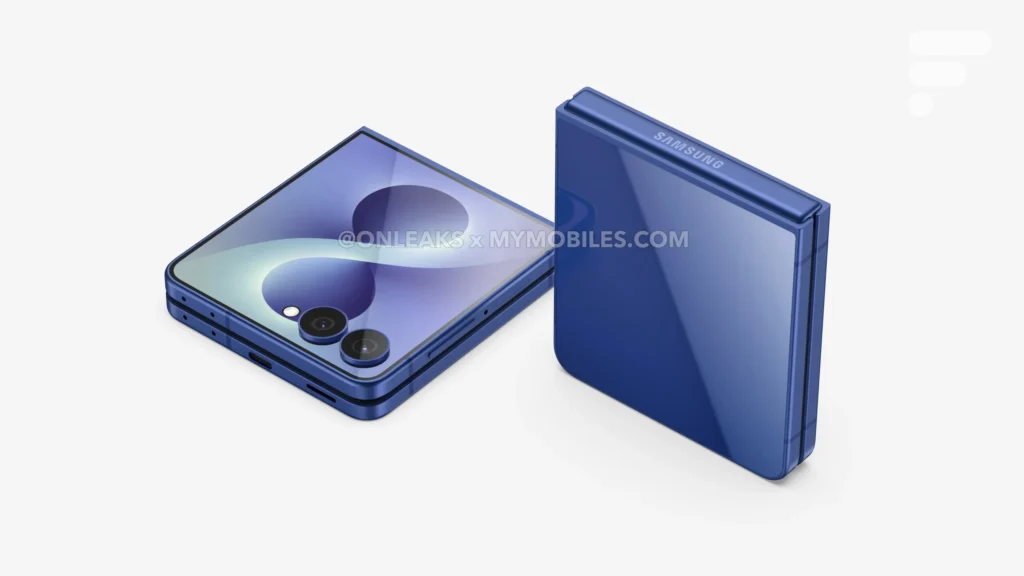
Galaxy Z Flip 8: Samsung’s Cautious Approach Risks Stagnation
As leaks become more pronounced, the upcoming Samsung Galaxy Z Flip 8 appears to follow a familiar trajectory—one of controlled evolution, perhaps too controlled. At the center of criticisms lies a persistent detail: the fast charging, still limited to 25 W.
A Stagnant Charging Cap
If the rumor holds true, Samsung is expected to maintain a wired charging capacity of 25 W for the Galaxy Z Flip 8, a figure that has become increasingly hard to justify in the premium segment.
The issue goes beyond technical limitations—it translates into real-world experience:
- Longer charging times in daily use
- Less flexibility under heavy usage
- A noticeable gap with current market standards
Today, various competitors easily surpass 80 W, even reaching 100 W. Against this backdrop, 25 W feels stagnated—especially for a device branded as innovative.
A Historic Compromise That Becomes More Apparent
Since its inception, the Samsung Galaxy Z Flip series has relied on a delicate balance of compact and iconic design, often sacrificing battery life and charging capabilities. Until now, Samsung managed to offset these compromises with the “wow” effect of the foldable format. However, by 2026, this differentiating factor has started to level off.
The result is that the compromises are becoming clearer and, thus, increasingly difficult to accept.
A Generation Lacking Disruption
Beyond charging, early leaks suggest a relatively subdued upgrade: targeted internal improvements without major advancements in camera technology or a radical overhaul of the design.
In other words, the Galaxy Z Flip 8 seems more like an iteration than a true generational leap. In a traditional product cycle, this might not be a concern. However, in the still-nascent foldable market, the anticipation for progress remains stronger.
The Cumulative Effect of “Small” Choices
What undermines this generation isn’t a single flaw but the accumulation of conservative decisions—unchanged charging, limited material advancements, and barely noticeable user benefits.
Individually, each point can be justified. However, together, they foster a sense of stagnation. And in a premium market, perception can weigh as heavily as technical specifications.
A Coherent Yet Risky Strategy
It’s also essential to understand Samsung’s rationale. Improving charging capabilities necessitates more complex thermal management, constraints on a compact foldable chassis, and potential impacts on battery lifespan. Samsung is likely prioritizing stability and durability over raw power. However, in light of more aggressive competitors, this caution might soon resemble a setback.
Should consumers wait or move on? At this juncture, it will hinge on two critical factors at the official announcement: real battery capacity and software optimization for longevity.
If Samsung compensates for slow charging with exceptional endurance, the compromise could remain acceptable. Otherwise, the Samsung Galaxy Z Flip 8 may come across as overly cautious in a market that is still yearning for bold innovation.



