

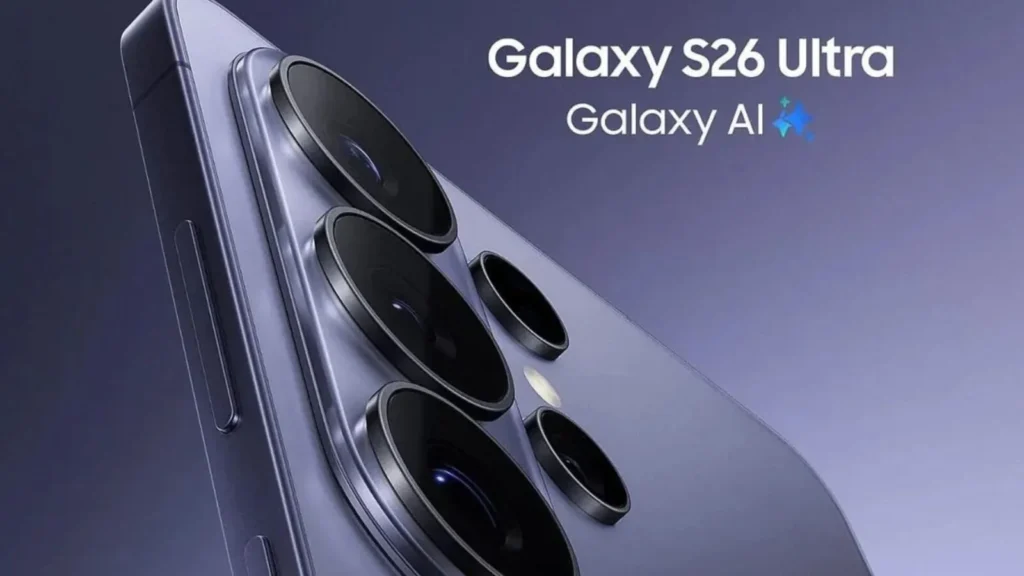
Galaxy S26 Ultra: Why f/1.4 Aperture Changes Everything for Night Video
At Samsung, the Ultra camera has long been about numbers and versatility. In 2026, the narrative appears to shift: less flashiness, more mastery. According to various credible leaks, the Galaxy S26 Ultra is set to introduce a series of enhancements for photo and video capabilities, with an unexpected highlight: 5x zoom video, often impressive on paper but sometimes frustrating in practice.
5x Video: The Promise of a Finally “Stable” and Usable Telephoto
Rumors have circulated since late January that the video quality of the 5x module would be “significantly improved” on the Galaxy S26 Ultra, as per a leak from Ice Universe.
I have some good news: the video recording quality of the 5x camera in the Galaxy S26 Ultra has been significantly improved.
— Ice Universe (@UniverseIce) January 30, 2026
Why is this important? Because the 5x zoom is often “the camera that matters” when filming: concerts, children, sports, travel… it’s the zoom that turns a smartphone into a credible capture tool. However, in previous generations, video quality with the telephoto lens suffered from minor shakes and sometimes erratic autofocus. The aim here would be to fix these annoyances instead of just adding another mode.
A Brighter Lens: The Return of the “Camera Block” Has a Reason
Another avenue being explored is that Samsung may be working on a wider aperture (rumored to be as wide as f/1.4), which could explain a thicker camera module despite a potentially slimmer chassis — a typical trade-off when trying to let in more light (thus reducing noise) without solely relying on processing.
If this logic also applies to the 5x telephoto, the impact could be very real: less grain in low light and a cleaner image when the scene is dark (this is where mid-range and high-end telephotos often struggle).
Camera Assistant: Towards More “Cinematic” Video Settings
The third anticipated enhancement takes place on the software side: indications suggest a more robust Camera Assistant, featuring controls for autofocus speed and sensitivity — dials reminiscent of dedicated cameras that can alter the aesthetic of a video (slow “cinematic” refocus vs. rapid “action” refocus).
Additionally, rumors point to options related to rendering (sharpness/processing) to avoid the overly sharpened effect that can make some videos appear too harsh, especially regarding skin textures.
Finally, multiple leaks suggest improvements aimed at lenses to reduce flare and unwanted reflections, along with a more natural color processing, particularly for skin tones. While not the most glamorous upgrade, this is often what separates a “very good” camera from a “reliable” camera in all situations.
Samsung Aims for Credibility, Not Spectacle
What’s emerging is a more mature strategy: enhancing what users truly encounter daily — video stability from the telephoto, controlled autofocus, and cleaner low-light performance — rather than merely chasing the latest marketing gimmick.
And the stakes are high: in a landscape dominated by the iPhone’s perception of “video” and Google capitalizing on post-processing, Samsung needs an Ultra that delivers zoom video without excuses. If these rumors hold true, the Galaxy S26 Ultra could become the model that finally reconciles zoom and video.



