

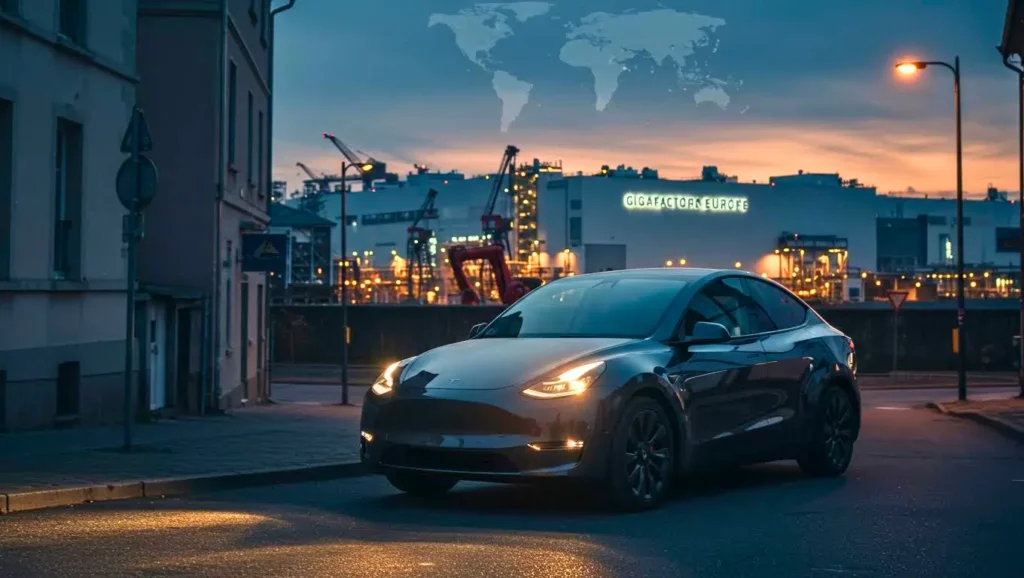
Each drop in results leads European media to predict the end of Tesla. Yet, the Californian company endures, reinvents itself, and inspires. This collective fantasy of an imminent collapse says more about the European perspective on failure than about the actual resilience of the American manufacturer.
A drop in sales does not signal the collapse of Tesla
In early 2025, amid controversies surrounding Elon Musk and a sales slowdown, many declared Tesla’s downfall. Some customers turned away from the brand, but the primary reason was a model refresh, particularly for the Model Y.
As often happens, temporary results were exaggerated. Yet, the same predictions of bankruptcy resurface with every dip in the numbers—a near ritual scenario in parts of the European press.
Tesla is frequently described as a company “on the brink of collapse” whenever a quarter disappoints. However, its global sales have never declined structurally. The company enjoys overall health that many traditional players would envy.
Between alarmist predictions and differing views among industry leaders
Carlos Tavares, former CEO of Stellantis, claims in his biography that Tesla is in a strategic deadlock. He argues that Musk will eventually leave the automotive sector, overtaken by Chinese giants, mentioning a company unable to reinvent itself in a constantly evolving industry.
However, Antonio Filosa, his successor, does not share this pessimism. During the auto sector day, he praised Tesla as “a source of inspiration,” highlighting its innovations in software, manufacturing, and electrification. This nuanced approach is likely more in tune with reality.
This divide illustrates the difficulty in objectively assessing a company that continues to challenge the status quo. Tesla both disturbs and inspires, especially in Europe, where its remarkable success sometimes irritates more than it charms.
The European mistake of judging Tesla solely on its numbers in the Old Continent
Yes, October was a poor month in Europe. However, Tesla sells in three-month cycles, with expected dips followed by delivery sprints. In September, the Model Y was the best-selling vehicle on the continent, putting the fluctuations in perspective.
Europe accounts for only about 20% of Tesla’s sales. The company primarily relies on the American and Chinese markets, which remain very dynamic. A decline in Europe does not indicate a global bankruptcy.
This European lens is misleading. It fosters a skewed interpretation of the brand’s actual performance and neglects the fact that Tesla remains a central player in the global electrification movement.
Tesla slows down, pivots, but remains at the heart of the automotive revolution
Tesla is no longer meeting its growth promises of 50% per year. The context has changed, competition is fierce, and Musk is now betting on AI and robotaxis to regain momentum. It’s a risky wager, but it aligns with his innovative DNA.
The company is seeking to initiate a new cycle. Even if its business model is critiqued, its technological choices—from software autonomy to mega-factories—are being closely monitored by the entire industry.
As long as its models dominate rankings and its factories operate at full capacity, talking about its end is purely fantasy. Tesla may no longer be the rising star, but it is certainly not a fallen star.



