End of Anonymous Sideloading on Android? Google Tightens the Rules
Google initiates a major evolution in the distribution of Android applications. With its new Android Developer verification framework, the company is gradually implementing a straightforward policy: to distribute an application on certified Android devices, it must be associated with a developer whose identity has been verified.
The deployment affects both the Play Console and the new Android Developer Console, designed for apps distributed outside the Play Store.
On the surface, this change appears to be administrative. In reality, it reflects Google’s new priority: maintaining the openness of Android while tightening control over the installation channels that are most susceptible to abuse. Google explains that the cases of malware are significantly higher in applications installed through sideloading than through Google Play.
A Verification That Does Not Undermine Android’s Openness, but Redefines Its Rules
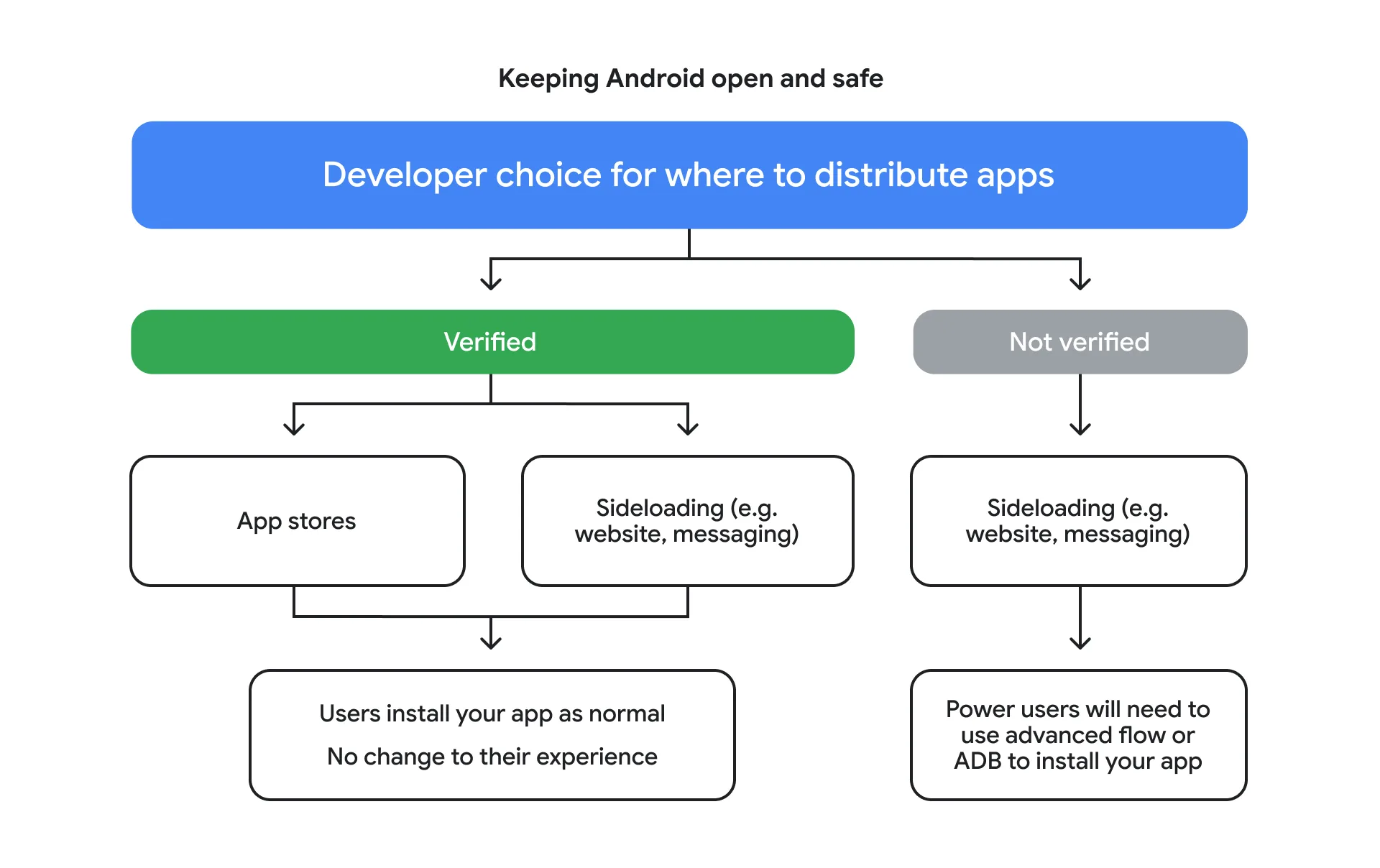
This balance is what Google aims to maintain. Android continues to officially allow two major distribution avenues: the Play Store on one side and sideloading on the other. Developers still have the choice of their channel. However, this freedom now comes with a new safety net: an application must be registered with a verified developer to be installed normally on a certified Android device when the requirement comes into effect.
This is where Google refines its strategy. The company is not closing the door on non-Play distribution; it simply requires that the app’s creator is no longer invisible.
Play Console and Android Developer Console: Two Gateways, One Trust Logic
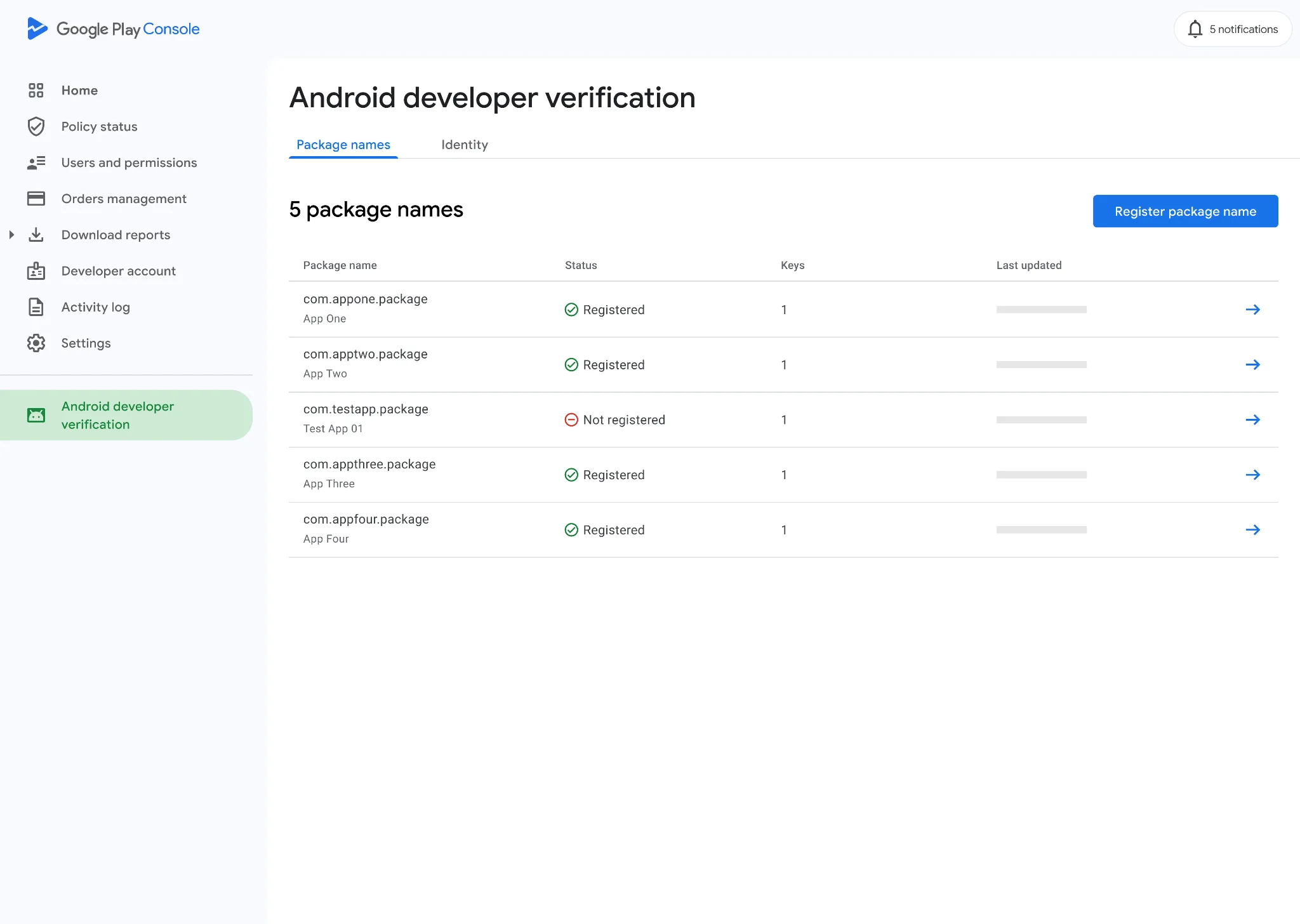
For developers already publishing on Google Play, the transition will be relatively smooth. Google indicates that existing Play apps will be automatically registered in the vast majority of cases when the rollout to all developers is in effect, with only a minority requiring manual intervention.
Google even estimates that 98% of the apps in the Play Store should be automatically registered.
For developers distributing solely outside of Google Play, Google highlights the Android Developer Console, a dedicated space for identity verification and signed package registration. This console allows for the extension of the trust framework beyond the Play Store without imposing a route through the official store.
Android Studio Joins the Process: Verification Becomes Part of the Workflow
Google is not just adding a regulatory requirement at the end of the process. The company is also integrating this verification into the development tools themselves. The official documentation states that the registration status of the application will be visible in Android Studio when generating a signed APK or App Bundle. In the Play Console, eligible applications will also be automatically registered for verified developers.
In other words, verification will not be an abstract control, separate from daily work. It will be seamlessly incorporated into the developer’s journey, indicating that Google intends to make it a structural layer of the Android ecosystem rather than a mere periodic warning.
A Limited Distribution Account for Students, Hobbyists, and Small Tests
Google is also introducing a distinct account type aimed at those not seeking to broadly distribute their apps. This limited distribution account is free, does not require government identification, and allows sharing with up to 20 explicitly approved devices by end-users. Google particularly targets students, hobbyists, and those in training.
This is an important detail, as it shows that Google aims to avoid a harsh locking effect. The company recognizes that Android must remain a playground for experimentation. Rather than imposing the same level of formality on everyone, it creates a lighter path for non-commercial or small-scale use.
Android Developer Verifier: Verification Goes System-Level
The visible core of this evolution is called the Android Developer Verifier. Google describes it as a system service responsible for verifying that an application is indeed registered with a verified developer. It will appear in the settings of Google System Services starting in April 2026.
The official timeline is now established. In April 2026, the service will start to appear in system settings. In June 2026, early access will begin for limited distribution accounts. In August 2026, these accounts will be globally launched, along with an advanced sideloading flow for experienced users.
Then, starting September 30, 2026, the verified developer requirement will begin to be enforced in an initial group of markets: Brazil, Indonesia, Singapore, and Thailand. Google then plans a global rollout in 2027.
No Immediate Disruption for Users, but a Real Shift in the Medium Term
Google clarifies that there are no immediate changes to the installation process at this time. However, after the regional implementation begins, apps not registered with a verified developer will no longer be able to be installed or normally updated on certified Android devices. They may still be installed via ADB or through the upcoming advanced sideloading flow, reserved for more advanced users.
This is where the true significance of this reform lies. Google is not eliminating the freedom to install apps outside the Play Store. Instead, it makes this freedom more explicit, more technical, and less transparent to the general public. Android remains open, but that openness is becoming more regulated, more traceable, and more institutionalized.
In this regard, developer verification is not just a security measure. It also redefines the implicit contract between Google, developers, and users: in a more mature Android, the identity of an app’s creator becomes almost as important as the app itself.