


DuckDuckGo blocks YouTube ads in its browser
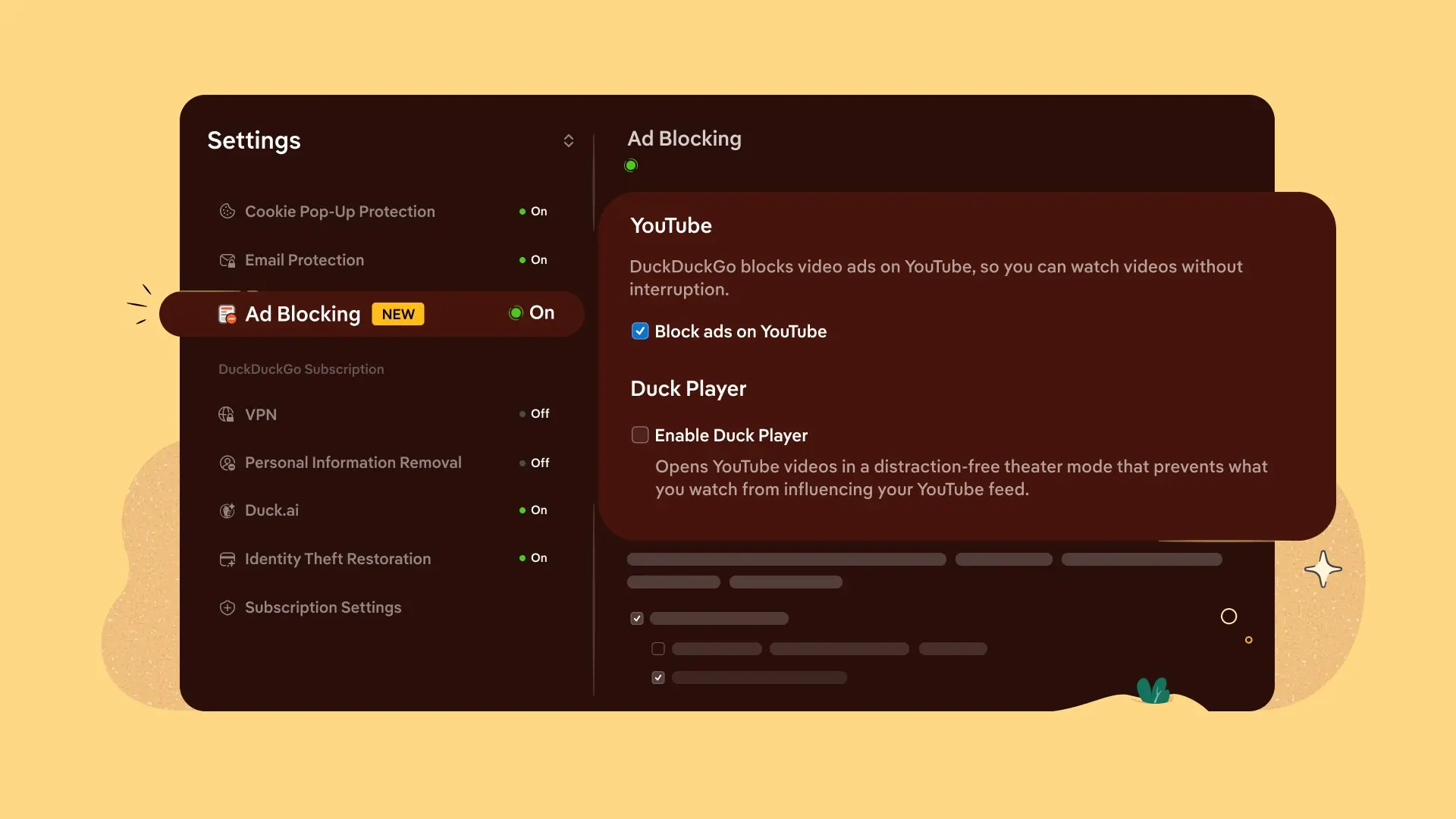
DuckDuckGo is enhancing its browser with a highly anticipated feature. The privacy-focused company announces that its browser can now block most video ads on YouTube during video playback.
This update comes at a pivotal moment as more users seek alternatives to Google, which has increasingly integrated artificial intelligence across its services.
Integrated blocking in DuckDuckGo’s browser
This new feature utilizes the well-known open-source filter lists used by uBlock Origin. DuckDuckGo explains that it employs these community filters while adding its own rules to optimize ad blocking in its browser.
Once activated, the feature automatically detects ads displayed on YouTube and attempts to prevent them from appearing during video playback.
The system is enabled by default on Windows, macOS, and iPhone.
On Android, the feature is currently available but needs to be manually activated in the browser settings. DuckDuckGo states that it will soon be enabled by default on this platform as well.
Users still have the option to disable this feature at any time.
A significant limitation
This new feature works only under specific conditions. Users must watch videos through the DuckDuckGo browser. The ad blocking does not apply to the official YouTube app, which naturally operates outside the browser’s control.
To take advantage of this functionality, users must access the web version of the service.
Launching as Google transforms search
The timing of this announcement is not coincidental. In recent months, DuckDuckGo has gained attention as Google has rolled out new AI-powered features in its search engine.
The AI Overviews and the new conversational mode fundamentally alter the search experience provided by Google.
In response to this evolution, DuckDuckGo emphasizes a different philosophy: providing users with more control over both their privacy and the role of AI in their browsing. The ability to block video ads now represents a tangible advantage that goes beyond the mere argument of data protection.
A strategy reminiscent of Brave
With this development, DuckDuckGo is drawing closer to a strategy already popularized by Brave. For several years, this browser has blocked a significant portion of ads and trackers present on the web, including on YouTube, by default. This approach has allowed it to attract an increasing number of users, recently surpassing 120 million monthly active users.
DuckDuckGo appears to be following a similar trajectory while adopting a more cautious stance regarding the technical limitations of its system.
The company acknowledges that this feature isn’t perfect yet. In some cases, users may experience slightly longer loading times and occasional interruptions during video playback.
Nevertheless, DuckDuckGo believes that these inconveniences are minimal compared to the comfort provided by ad removal.
More than just an ad blocker
Beyond this new functionality, DuckDuckGo is gradually transforming itself. Previously known solely as a privacy-focused search engine, the company now aims to make its browser a comprehensive alternative to dominant solutions.
By combining data protection, control over artificial intelligence, and native ad blocking, DuckDuckGo positions itself in a segment where user expectations are rapidly evolving. As browsers increasingly become AI platforms, the company bets that a simpler, more discreet, and less intrusive experience can still provide a significant competitive advantage.



