

Databricks Acquires Electric to Enhance AI Agent Database Infrastructure
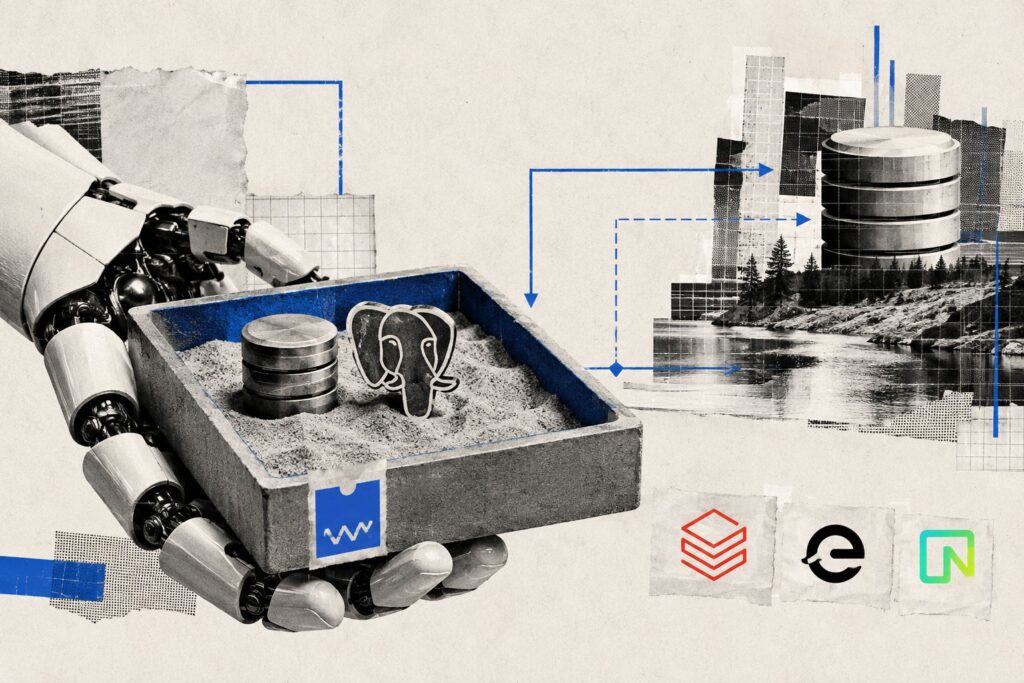
Databricks has officially acquired Electric, the developer behind PGlite, a PostgreSQL database compiled in WebAssembly that operates within a sandbox environment for running AI agent code. This acquisition aims to address the unique demands of applications where AI agents perform tasks autonomously. By utilizing Electric’s synchronization engine, local database states can be seamlessly integrated back to Databricks’ core Lakebase, allowing each agent to quickly access its immediate context while collaborating with others in real-time. The Electric team will also join forces with Neon, the serverless PostgreSQL company Databricks acquired last year.
As organizations increasingly build applications that rely on autonomous AI agents, the underlying data infrastructure for these agents diverges significantly from traditional applications. Unlike conventional applications that follow a fixed structure with pre-written queries requiring a managed database, AI agents dynamically determine their data needs during execution, often operating in isolated sandboxes and collaborating with other agents. Databricks finalized the acquisition of Electric on August 11, detailing the rationale in a blog post authored by four of its executives, including Reynold Xin and Nikita Shamgunov.
Electric has developed two essential tools to meet these requirements. The first, PGlite, is a fully functional PostgreSQL database running in WebAssembly, lightweight enough to operate directly within the agent, be it in a sandbox, a browser tab, or a user’s device, rather than relying on an external server. Notably, its weekly downloads skyrocketed from one million to thirteen million within just a year, according to Databricks. The second tool, a real-time synchronization engine, continuously updates data between distributed agents and the central infrastructure, mirroring the architecture of collaborative platforms like Google Docs, Figma, or Notion. PGlite originated from an experimental repository by Stas Kelvich, who successfully managed to run PostgreSQL in a sufficiently lightweight manner for client-side integration, overcoming previous attempts that depended on cumbersome virtual machines.
A Localized State Per Agent, A Shared State at the Center
The strategic framework from Databricks is rooted in three use cases and focuses on how agents differ from traditional applications in the context of database operations. An agent decides its data requirements dynamically during execution, revising its context multiple times per second, necessitating that this data is processed within the same operational environment. Agents typically operate where the work is being done, isolated, with remote databases accessible only through the network. They must also maintain a constantly updated shared view of others’ activities to prevent redundant work and avoid outdated states. PGlite satisfies the first requirement by embedding the database within the agent’s process, ensuring rapid data access without network latency. Meanwhile, the synchronization engine addresses the need for consistency, allowing each agent to write data locally while propagating changes to other agents and the central system. In essence, Databricks encapsulates this vision as “one database per agent, with a shared state centralized.”
Databricks effectively integrates two layers it already partially controlled. Lakebase offers a production-grade PostgreSQL solution built on low-cost, durable object storage, while PGlite provides a WebAssembly variant for operations within the agent’s sandbox. This synchronization keeps both layers up-to-date. Consequently, agents can rely on a lightweight database for fast processing, alongside an infrastructure capable of scaling effectively—all leveraging the same PostgreSQL technology, emerging as the default foundation for AI agent applications. Lakebase, presented by Databricks as a serverless PostgreSQL solution for applications and agents, scales down to zero usage when inactive, generates data branches on demand, and supports both transactional and analytical processing—all features that the localized PGlite layer extends to the agents. Databricks has not disclosed the financial details of the acquisition or the timeline for integration.
Expansion Following the Neon Acquisition
PGlite builds on the WebAssembly PostgreSQL efforts by Stas Kelvich, co-founder of Neon, the serverless PostgreSQL provider acquired by Databricks for nearly $1 billion last year. This acquisition further solidifies Databricks’ foundation for Lakebase, making it a sequel to the previous acquisition. By incorporating Electric’s team into Neon, Databricks aligns two halves of the same concept—Stas Kelvich’s WebAssembly PostgreSQL innovations with Electric’s embedded database solutions—thus strengthening its position in the rapidly evolving landscape of databases for AI agents.
The Electric Cloud service will be discontinued as a consequence of the acquisition, requiring Electric’s customers to either self-host or transition to a different provider, while the open-source components, including PGlite, remain accessible. Those who built on Electric’s hosted service will face migration challenges, whereas users who only utilized the open-source features can continue without interruption.
IT departments will assess the benefits of the PGlite and Lakebase combination in delivering an agent-per-database approach based on a single standard. This choice enables local, low-latency access and shared state synchronization, two critical needs for multi-agent AI systems, albeit at the potential cost of managing more instances to ensure consistency. Databricks positions this proliferation as an advantage, promoting the central control of lightweight databases while introducing additional administrative overhead. Companies deploying teams of agents will ultimately evaluate the effectiveness of this architecture against their ability to govern thousands of small databases without compromising their shared state.



