

Nvidia Kicks Off GTC 2026 in Taipei with Major Announcements
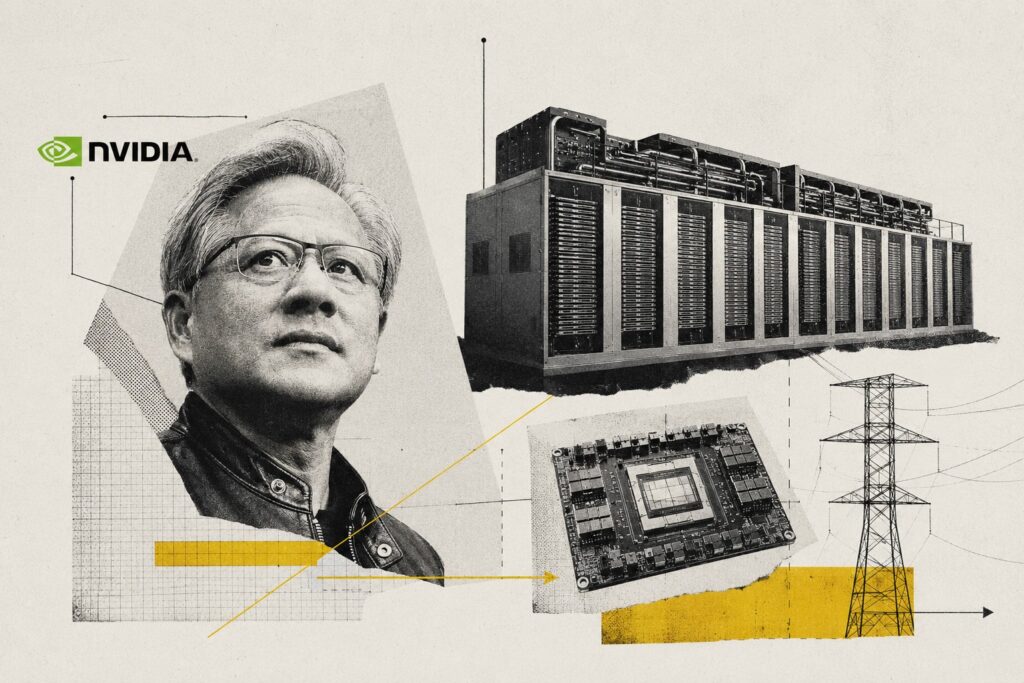
Nvidia has officially launched GTC 2026 in Taipei, unveiling Vera Rubin, its first multi-rack computing platform designed to operate agents. The company positions this initiative as a comprehensive calculation factory, integrating everything from graphics processing units (GPUs) to cooling systems and power networks. Nvidia estimates that by the end of the decade, a gigawatt factory could cost a staggering $100 billion.
Historically, AI computation has revolved around individual components, measuring the latest GPUs against their predecessors. However, Nvidia asserts that this perspective is outdated. Providers of infrastructure now offer an integrated chain that spans from silicon to the power grid, with performance metrics based on tokens produced per watt consumed. Computex 2026, which will run from June 2 to 5 in Taiwan, emphasizes this paradigm shift with the theme “AI Together,” reflecting the ongoing transformation in the electronic manufacturing landscape.
The event kicked off on May 31 at Pacific Time with an opening keynote by Nvidia’s founder and CEO, Jensen Huang. He introduced Vera Rubin as “the first multi-rack supercomputer built for the agentic age.” This cutting-edge machine integrates seven new chips fabricated in TSMC’s 3nm process, coupled with HBM4 memory supplied by Micron, SK Hynix, and Samsung. It features a proprietary Vera processor, NVLink networking, and a security software stack that encrypts data at rest. A single computing card boasts an impressive six trillion transistors and over 18,000 components.
From Component to Factory
Nvidia’s new paradigm is reflected in how it describes its clients: they are not merely looking to buy computers; they aim to construct token production factories. The company introduced a design framework dubbed DSX that treats AI factories as cohesive systems, integrating everything from chips and racks to power supply and cooling—all designed to work in harmony. “Computing is revenue,” Huang stated, arguing that each component must be optimized from end to end. Features such as liquid cooling at 45 degrees, dynamic power reallocation between racks, and the smoothing of current spikes are now seen as critical to profitability, on par with core frequencies.
The shift in this industrial logic comes with striking figures. Nvidia estimates that the price of a gigawatt factory could rise from $20-30 billion to $50-60 billion and escalate to $80-100 billion by the decade’s end. The company anticipates that before 2030, around 100 gigawatts of AI factories will be operational. The assembly process itself has been reengineered for efficiency; a Grace Blackwell rack, which previously took two hours to assemble, can now be put together in just five minutes due to a cable-free basket design. Major players like Microsoft, Dell, and CoreWeave are already building their first engineering racks featuring Vera Rubin.
Central to this economic argument is the concept of inference, which has often been overshadowed by learning models. “Inference is money,” Huang concluded, noting that real-time token production with high interactivity and simultaneous throughput is now the most challenging issue in AI. The pursuit of achieving “the lowest token cost in the world” through extreme co-design is becoming a primary competitive advantage, transcending mere processing power.
The Processor Takes Center Stage, Targeting x86
The latest updates to data center architectures center on the central processor. Nvidia detailed Vera, its in-house 88-core processor built on a monolithic mesh, positioned directly against x86 architectures. Nvidia claims its memory latency is 40% lower than that of x86, with a 50% faster inter-core communication compared to traditional processors. A rack of Vera processors features 256 water-cooled units, tasked with orchestrating models, managing memory, and launching tools.
This push into processor development extends the trend started by other players in the market. French fabless design company SiPearl unveiled its first Rhea1 microprocessor aimed at supercomputing and AI at the end of May, highlighting a European sovereignty effort in the processor layer that has largely been overlooked in Taiwanese announcements. Meanwhile, Qualcomm is advancing its data center solutions, with its CEO scheduled to speak at Computex. The conversation surrounding instruction sets, once dominated by x86 from Intel and AMD in the server domain, is reopening under the pressure of AI workloads, where agent orchestration prioritizes memory latency and coherence with GPUs.
This trend extends beyond data centers to the desktop. Nvidia introduced RTX Spark, a chip pairing a Blackwell GPU with 6,144 CUDA cores and a 20-core Grace processor co-designed with MediaTek, and fabricated in TSMC’s 3nm process. The setup includes a Windows-compatible workstation equipped with 768 gigabytes of memory, capable of running a model with one trillion parameters locally. This brings the hardware layer of agent development right to the developer’s desk, bolstered through collaboration with Microsoft on the Windows platform.
Memory and Manufacturing: New Bottlenecks in the Chain
The Vera Rubin architecture highlights the entire ecosystem’s dependence on two critical upstream components: high-performance HBM4 memory sourced from Micron, SK Hynix, and Samsung, and chip manufacturing relying on TSMC’s 3nm process and packing technologies. According to Nvidia, the demand for AI factories has skyrocketed the workloads for Taiwanese subcontractors, from foundries to assembly companies like Foxconn and Quanta. Nvidia estimates around 150 supply chain partners across Taiwan are mobilized for the production of Vera Rubin.
This material tension is also reflected in financial markets, where stakeholders anticipate substantial physical expansions due to AI needs. Memory manufacturers Micron and SK Hynix have surpassed $1 trillion in market valuation, driven by the demands for memory tailored for learning and inference. Quarterly reports from SK Hynix, as well as storage manufacturers Western Digital and Seagate, show over 40% annual growth. However, the semiconductor industry remains cyclically prone to investment cycles, memory pricing, and geopolitical tensions around Taiwan and South Korea, urging caution regarding the longevity of the current trajectory.
For CIOs, CTOs, and infrastructure engineers, this shift towards an integrated hardware layer complicates decision-making processes. The concentration of AI computation within a supply chain primarily controlled by a single provider and reliant on Taiwanese industrial bases raises important questions about resource allocation, supplier dependency, and sovereignty. Although developments like the Rhea1 processor and the establishment of AI factories in Europe are steps in the right direction, they do not yet fully counterbalance these concerns. The transition from individual components to AI factories also redefines equipment decisions into energy infrastructure considerations, where costs per token, power availability, and cooling footprints are just as crucial as chip performance.



