

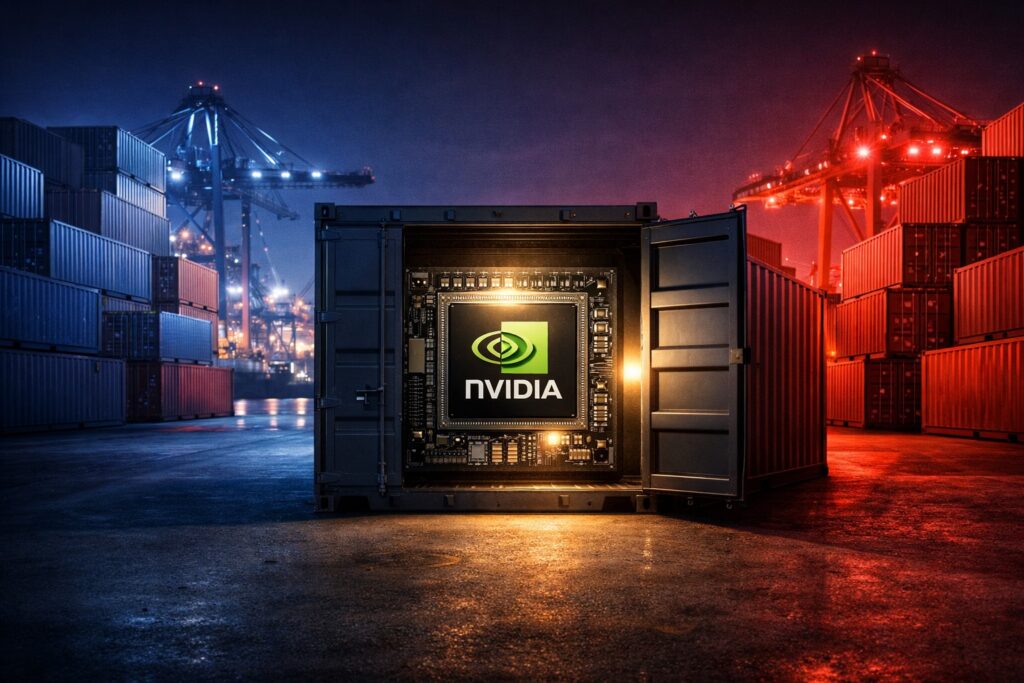
Nvidia Set to Resume H200 Processor Shipments to China by Early 2026
Nvidia is reportedly preparing to resume shipments of its H200 processors to China by mid-February 2026, according to Reuters. This development marks a new chapter in the complex saga surrounding AI graphics processing units (GPUs) amid ongoing tensions between Washington and Beijing. Behind this potential business move lies a backdrop of years marked by restrictions, countermeasures, and political adjustments that have significantly transformed the global advanced semiconductor market.
The narrative began with a gradual tightening of U.S. controls aimed at limiting China’s access to top-tier components essential for training AI models. Nvidia’s chips, including the H100 and H200, quickly became central to these constraints. Officially, the measures were implemented to safeguard American technological advantages and mitigate military risks. In response, Nvidia created downgraded versions specifically for the Chinese market, but these alternatives have struggled to meet local performance expectations.
As months passed, economic pressures intensified, complementing the geopolitical strains. Chinese firms sought alternatives, speeding up their own processor design projects, while American manufacturers raised alarms about the financial and industrial ramifications of a rapid decoupling. Amid this fraught atmosphere, Washington eventually shifted its stance; certain exports are now back on the table, albeit under strict conditions that include a 25% tax and enhanced authorization processes.
A Delicate Landscape Amid Resuming Exports
Against this backdrop, Nvidia’s potential resumption of H200 shipments appears promising. The company has reportedly informed its Chinese customers of its ability to dispatch several thousand modules from existing stock, possibly before the Lunar New Year. However, this timeline is contingent upon approval from Chinese authorities. Simultaneously, some U.S. lawmakers are demanding additional guarantees and greater transparency regarding export licenses, indicating that the situation remains sensitive.
While the H200 is not Nvidia’s latest chip, it still holds a vital role in many AI projects. Its possible return to the Chinese market will not resolve all existing tensions but underscores a broader truth. The United States is striving to balance national security with maintaining a robust industrial landscape, while China continues to fortify its computing capabilities and bolster its domestic supply chains. The interplay of regulation, interdependencies, and influence strategies within this GPU saga highlights that AI is not merely about innovation; it is fundamentally intertwined with global power dynamics.



