

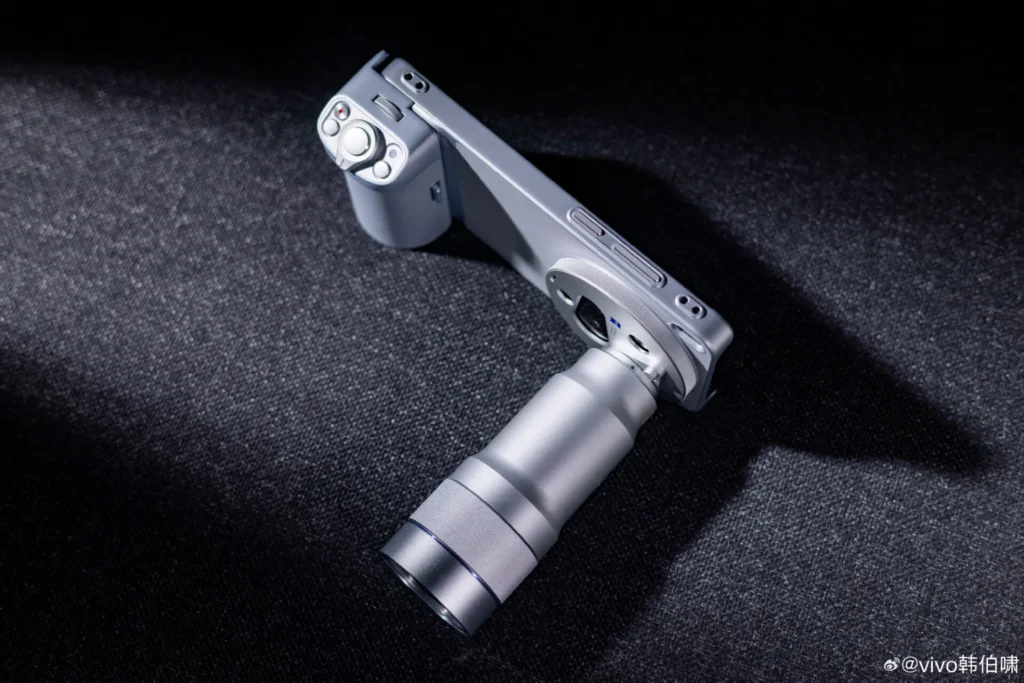
Architecture ‘3 +2’: How Vivo and Zeiss are reinventing photography with the Vivo X300 Ultra?
Vivo is no longer pretending: with the upcoming Vivo X300 Ultra, the brand prioritizes photography over the smartphone aspect. During its Blueprint Imaging Technology Communication Conference, the company detailed a photo architecture co-developed with Zeiss and designed as a system, rather than just an assembly of sensors.
The outcome is a Vivo X300 Ultra that resembles more a “compact expert” alternative than a typical flagship.
A “3 + 2” Configuration: Three Main Sensors and Two Levels of True Optical Work
The manufacturer discusses a “3 + 2” configuration, combining three main sensors with optical and software optimizations. This hybrid approach merges substantial hardware with advanced computational processing—now essential to compete with dedicated devices.
The Vivo X300 Ultra boasts components rarely seen at this scale in the mobile universe.
Ultra Wide Angle: Giant Sensor and Advanced Stabilization
The ultra-wide-angle module features a Sony LYTIA 818 sensor sized 1/1.28 inches—an unusual size for this type of focal length. Vivo incorporates VCS bionic spectrum technology, Zeiss T* optical treatment, and CIPA 6.0 certified stabilization.
Expected outcome: usable wide shots even in low light, where ultra-wide angles traditionally fall short.
Main Sensor: Entering the Era of Next-Gen 200 Megapixels
At the core of the device, Vivo presents the Sony LYTIA 901, a 200-megapixel sensor unprecedented in smartphones. Beyond raw definition, the brand highlights a new lens that minimizes reflections, enhanced HDR processing, and finer noise reduction. The aim is not just sharpness, but better handling of complex scenes—backlighting, mixed lighting, intricate textures.
Perriscope Telephoto: The Centerpiece
This is undoubtedly where Vivo makes the strongest impact. The telephoto lens is based on a 200 MP sensor using Samsung’s HP0, integrated into an advanced periscope module.
Key points:
- CIPA 7.0 stabilization, resembling a gimbal system
- G2 teleconverter allowing up to 400 mm
- Long-range zoom designed for nearly photographic uses (compressed portraits, wildlife, urban details)
We are no longer talking about a gimmicky zoom, but a fully-fledged creative tool.

A Clear Strategy: Bringing Smartphones Closer to Cameras
With the Vivo X300 Ultra, the Chinese brand aligns with a significant market trend: transforming smartphones into viable alternatives to compact cameras and, in some cases, hybrids. In facing competitors like Apple, Samsung, and Xiaomi, Vivo opts for a radical approach: push hardware to its limits rather than relying solely on software processing.
This positioning involves several stakes: differentiating itself in a saturated market, attracting mobile content creators, and enhancing the brand’s premium image internationally.
However, the real question remains regarding usage: will these capabilities be practical for daily use, or will they remain mere technological showcases?
Toward a New Category of Hybrid Objects?
The Vivo X300 Ultra goes beyond simply adding megapixels. It suggests a deeper evolution: a smartphone that becomes a modular photographic tool, almost professional.
If the promises are confirmed in real-world conditions, Vivo could redefine expectations surrounding mobile photography—and compel its competitors to ramp up their efforts.
One thing is certain: the line between smartphones and cameras has never been so thin.



