

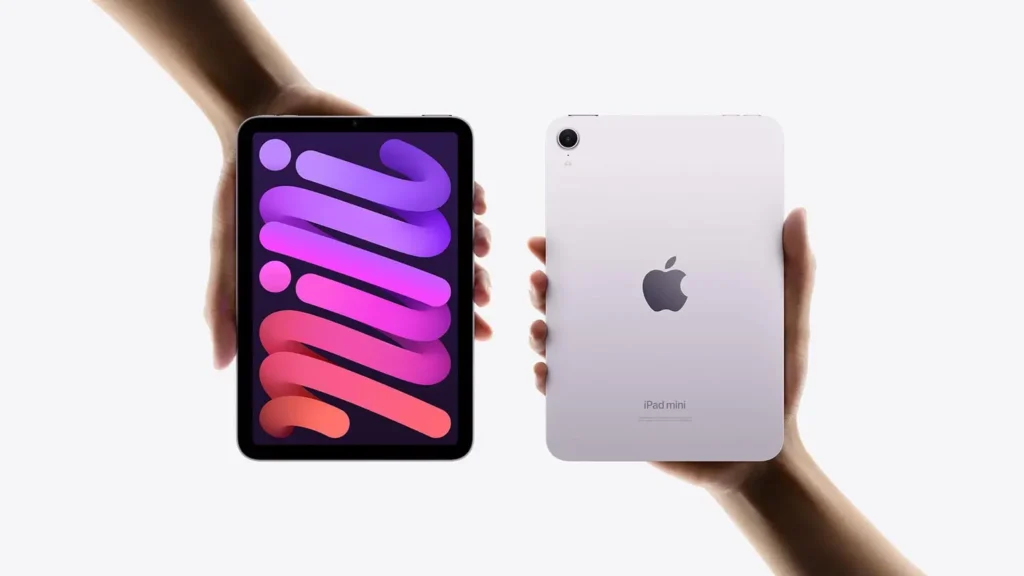
Apple is reportedly preparing an OLED iPad mini with A19 Pro chip for October
After several years of subtle changes, the iPad mini seems poised to make a significant leap forward. According to reports from Bloomberg, Apple is working on a new generation of its compact tablet, featuring an OLED display for the first time. Slated for release in October, this model would mark the most substantial redesign of the iPad mini since the 2021 update.
If confirmed, this would continue Apple’s gradual transition towards OLED displays across its lineup, enhancing the premium positioning of its smallest iPad.
An OLED Display, but Without ProMotion Technology
The most significant upgrade would be the display. According to Bloomberg, the upcoming iPad mini, internally referred to as J510, will finally ditch its LCD panel in favor of an LTPS OLED screen.
However, Apple will not incorporate LTPO technology, which is currently exclusive to the iPad Pro. This means the tablet will maintain a fixed refresh rate of 60 Hz and will not feature the adaptive ProMotion technology, which can vary up to 120 Hz.
This decision allows Apple to leverage the inherent benefits of OLED—perfect blacks, higher contrast, better energy efficiency, and richer colors—while keeping production costs manageable.
A19 Pro Chip to Accompany This Upgrade
Beyond the display, Apple is also expected to deliver a significant hardware upgrade. The forthcoming iPad mini will include an A19 Pro chip, succeeding the A17 Pro introduced in the current generation.
Though Bloomberg hasn’t yet detailed performance gains, this new architecture is likely to enhance both computational power and AI capabilities, a central focus in Apple’s strategy with Apple Intelligence.
The goal appears clear: to provide enhanced performance while preserving the compact philosophy that has contributed to the iPad mini’s success.
The Entire iPad Range Continues to Evolve
The iPad mini is just one piece of a much broader roadmap. According to Bloomberg, Apple is also preparing several other models:
- A new entry-level iPad expected in early 2027, primarily featuring a faster processor
- New iPad Air models in 11 and 13 inches anticipated in spring 2027
- A new generation of iPad Pro, which will also see a design update.
For now, only the iPad mini will adopt OLED in this upcoming wave of products, while the standard iPad will retain its LCD screen.
This segmentation would allow Apple to clearly differentiate its various ranges while gradually introducing new technologies.
A Launch Scheduled in a Particularly Busy Calendar
If the timeline mentioned by Bloomberg holds true, the OLED iPad mini would arrive just weeks after a particularly busy season for Apple. The fall is expected to be marked by the launch of the iPhone 18 Pro range, the introduction of the company’s first foldable iPhone, a new generation of Apple Watches, and several new Macs.
In this context, the iPad mini could gain significant visibility while filling a unique niche: that of a compact yet high-end tablet.
However, OLED Could Lead to Higher Prices
This upgrade raises a crucial question: that of pricing. The current iPad mini starts at €689, up from €559 before recent increases driven by global memory chip market tensions.
The introduction of an OLED screen, which is pricier to manufacture than a traditional LCD panel, could further raise the price.
This issue is part of a broader context where Apple is facing a continuous rise in component prices, particularly for memory, affecting multiple product categories.
The iPad Mini in Light of the Future Foldable iPhone
The upcoming release of the first foldable iPhone creates a unique situation within Apple’s lineup. According to recent estimates, this future model will feature a screen of about eight inches when unfolded, relatively comparable to the iPad mini’s size.
The real differentiator will primarily be price.
The foldable iPhone is expected to exceed $2,000, while the iPad mini will remain, despite a likely price increase, the most accessible option for a large portable screen within the Apple ecosystem. This coexistence could allow both devices to address distinctly different use cases, despite having similar display sizes.
Apple Continues to Elevate Its Ecosystem
Beyond just changing the display, this evolution reflects a broader strategy. Apple appears to be accelerating the modernization of its entire range, focusing on OLED, integrated AI, and new hardware architectures as key innovation drivers.
A significant unknown remains: the company’s ability to secure enough components to adhere to its schedule.
Ongoing tensions in the memory market continue to impact the entire semiconductor industry. Should these constraints worsen, they could delay some launches or limit available quantities at the time of release.
If Bloomberg’s predictions are accurate, the OLED iPad mini could signify an important turning point for a range that has long remained in the shadows. After several years of modest updates, Apple’s smallest tablet may be ready to reclaim a central role in the company’s strategy.



