

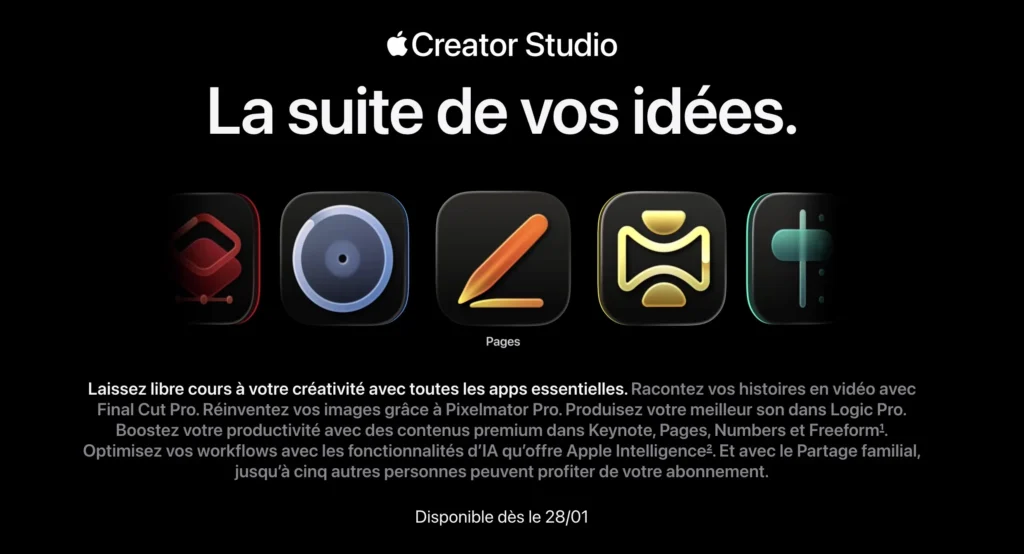
Apple Creator Studio: The ‘Adobe Competitor’ Bundle Arrives on January 28
Apple recognizes that creation is no longer a “niche market” exclusive to studios; it has become a daily practice embraced by freelancers, students, YouTubers, podcasters, and marketing teams working on both iPads and Macs.
With Apple Creator Studio, the company is changing the game: its professional tools are finally available in a unified, multi-device, and more accessible format, while still allowing for standalone purchases on Mac.
The promise is straightforward: instead of having to purchase each application at a premium price (or juggling separate subscriptions on iPad), Apple offers a comprehensive package that clearly aligns with its service-focused strategy—this launch is part of the company’s recurring revenue strategy and the addition of “smart” features across several apps.
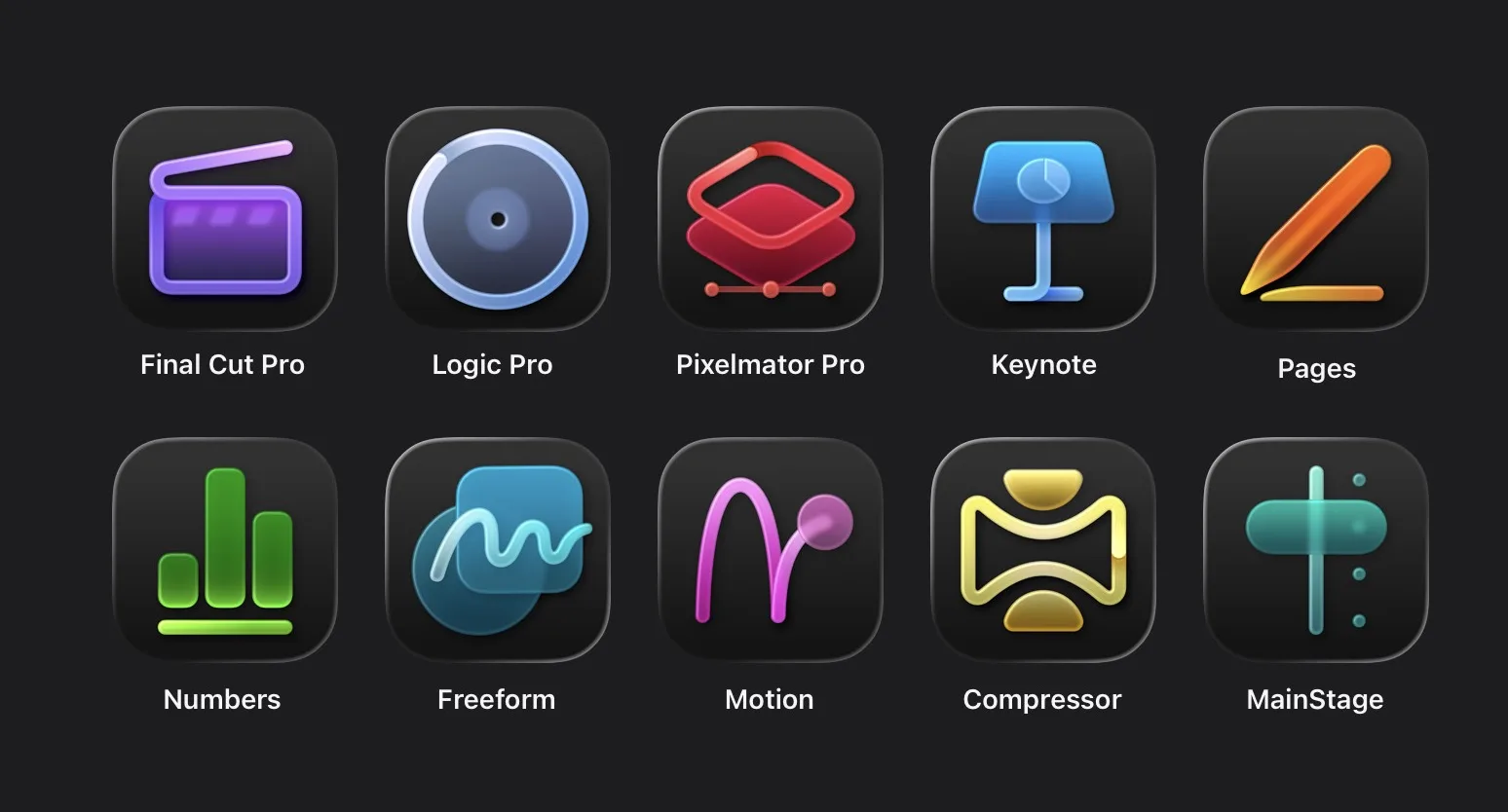
What’s Included in Apple Creator Studio
The package includes:
- Final Cut Pro, Logic Pro, and Pixelmator Pro on Mac + iPad (this is the first time they are being sold together, and Pixelmator Pro finally makes its debut on iPad).
- Motion, Compressor, and MainStage on Mac.
- Premium templates/content and smart features for Keynote, Pages, and Numbers, with an extended announcement later for Freeform.
Importantly, Apple will continue to offer individual purchases on Mac (Final Cut Pro, Logic Pro, etc.). The switch to a subscription model is not (yet) mandatory—this is a crucial nuance in an industry grappling with subscription fatigue.
Pricing and Availability
The launch is scheduled for January 28, 2026, on the App Store, with a subscription price of €12.99/month or €129/year, including a 1-month trial. Educators and students will be able to access a discounted rate of €2.99/month or €29.99/year.
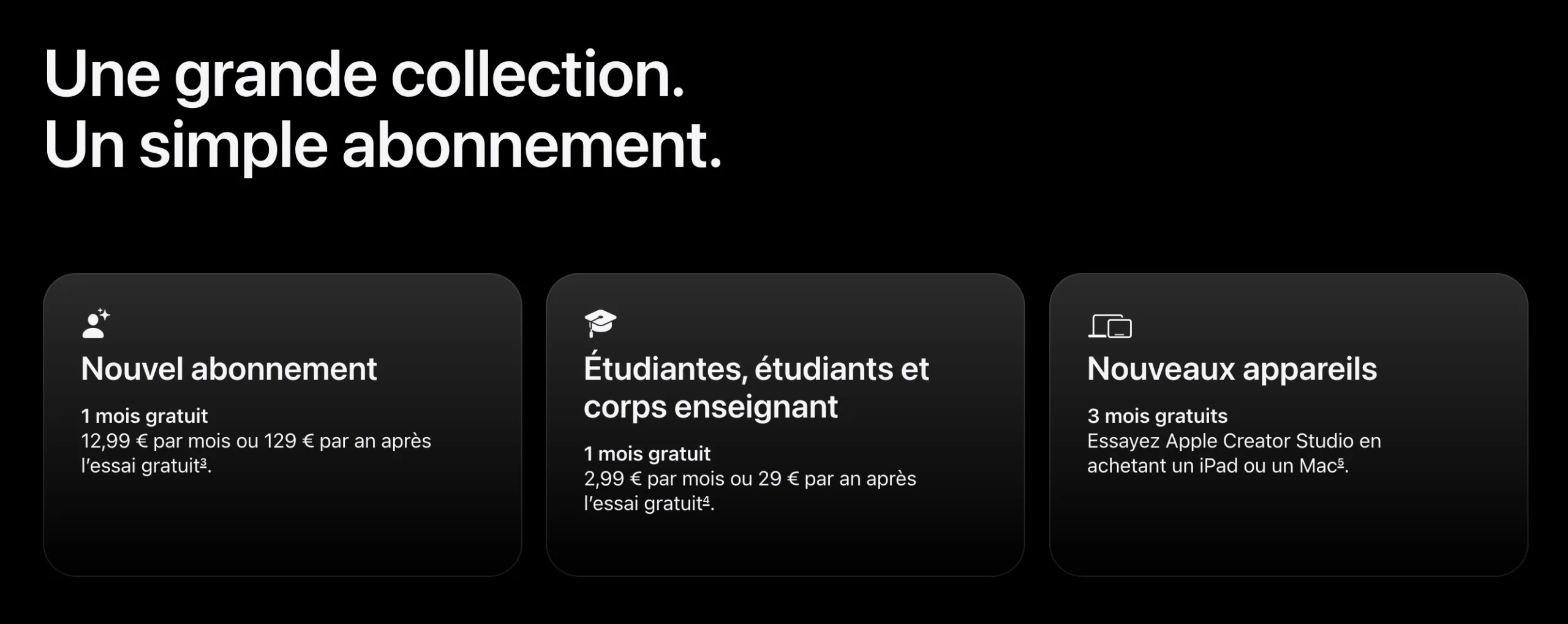
Apple also confirms that certain recent purchases of Mac/iPad will come with an extended trial period (depending on the market/offers).
Why This is a Real Offensive Against Adobe
Apple is not just bundling its products; it’s challenging a perception. Adobe dominates because its suite is “universal”—but also because it’s expensive. The price tag for Creative Cloud “Pro” is significantly higher, which makes Apple’s offer immediately attractive to part of the market.
However, the real game changer is the combination of Mac and iPad: Apple is betting on hybrid creation (studio work on Mac, field work on iPad), reducing entry costs and friction. The launch also comes with new features: AI tools for Final Cut Pro (e.g., transcription-based search, “beat detection”) and audio enhancements in Logic Pro (Synth Player, Chord ID).
Blind Spots: Absence of Photomator and the Subscription vs. Ownership Debate
Two tensions already stand out:
- Photomator is not included (even though Pixelmator Pro is), which leaves a gap in the “photo” workflow for those looking for a Lightroom equivalent. Apple has not publicly detailed the reason for this exclusion. (We can only note the absence, not explain it.)
- Trust issues: even if Apple maintains individual purchases on Mac for now, the industry has seen bundles coexist before transitioning to an all-subscription model. Apple hasn’t announced such a plan, but the debate will inevitably resurface with each major update.
Who is this aimed at, specifically?
- Versatile creators (video + audio + visuals): the bundle becomes quickly rational, especially if you use both iPad and Mac.
- Students/educators: the aggressive pricing for this demographic resembles a strategic entry point into the professional Apple ecosystem.
- Ownership-focused users: if you primarily work on Mac and keep your apps for a long time, individual purchases remain coherent—and Apple allows this option.
In conclusion, Apple Creator Studio is not just about “being cheaper than Adobe.” It aims to make its professional apps more appealing to try, easier to adopt, and more seamless to use across multiple screens. And that’s often how Cupertino wins: not by shouting louder, but by making the decision… simpler.



