

Android 16 QPR2: End of Annual Update Cycle, Google Accelerates Update Pace
It’s official: with the arrival of Android 16 QPR2, Google is turning a new page. This update — minor on the surface but significant in its implications — confirms the end of the traditional annual Android version cycle.
From now on, the world’s most widely used mobile OS will evolve faster, more frequently, and in a more modular manner.
A silent revolution, yet a strategic one.
Android 16 QPR2: A “Small” Update That Speaks Volumes
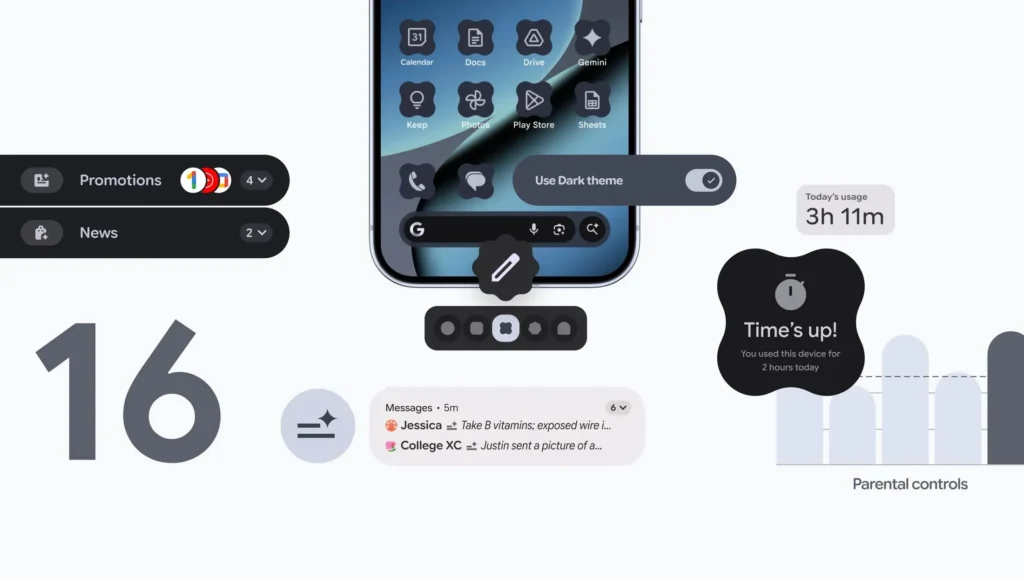
Android 16 had already experienced an early launch in June, well ahead of the traditional Q3 schedule. This QPR2 (Quarterly Platform Release 2) does not introduce any groundbreaking changes but quietly expands on:
- notification enhancements,
- icon customization options,
- call screen display adjustments,
- and several welcome system tweaks.
However, the key takeaway is: Android is permanently moving away from the annual model.
Why is Google Making These Changes Now?
For years, Android faced a paradox: even when Google released a new version, the majority of smartphones — sometimes even very recent ones — had to wait months. Sometimes a year. Occasionally… never.
Google acknowledged this was no longer sustainable. Consequently, in October 2024, Google announced:
- More frequent small updates: The “biannual” SDKs will become the new normal.
- Major versions will launch earlier in the year: Android 16 in Q2? That was a test. It will become the norm.
- Quarterly Feature Drops will continue: They will now be better aligned with system updates.
A Change That Could Finally Solve Android’s Biggest Problem
Let’s be clear: this new model primarily targets third-party manufacturers. Until now, they were often caught in a bind. Google would release an update, and Pixel devices would get it instantly. Meanwhile, Samsung, Xiaomi, OPPO, and others had to adapt the new version to their customized interfaces, leading to delays. The result? Fragmentation, frustration, and slow adoption of new APIs.
With a more frequent, earlier, and modular schedule, Android brands will have the time to optimize their devices before release, rather than scrambling to catch up with Google.
The logical outcome? More smartphones will be available on launch day with the latest version of Android, and more applications will be able to leverage new features quickly. Consequently, the fragmentation — a long-standing issue for Android — could finally decrease.
While Google Pixel devices will remain a priority, the gap could narrow for the first time since… 2015.
What This Means for You
Even if QPR2 isn’t spectacular, you will receive updates more quickly. Instead of waiting for “Android 17,” you’ll see feature packs, UI adjustments, and system improvements throughout the year. Applications will evolve faster as the adoption of new APIs becomes more viable, given that more devices support them. Lastly, non-Pixel smartphones will no longer be as “left behind,” which is excellent news for the majority of Android users.
With QPR2, Google initiates a historic transition: Android is no longer an OS that receives updates once a year but a continuously evolving platform, more akin to ChromeOS and Windows 11.
This may be just a “small” update, but it signifies the dawn of a new era: one of a faster, more cohesive, and less fragmented Android.
And that’s probably the best news for Android in years.



