

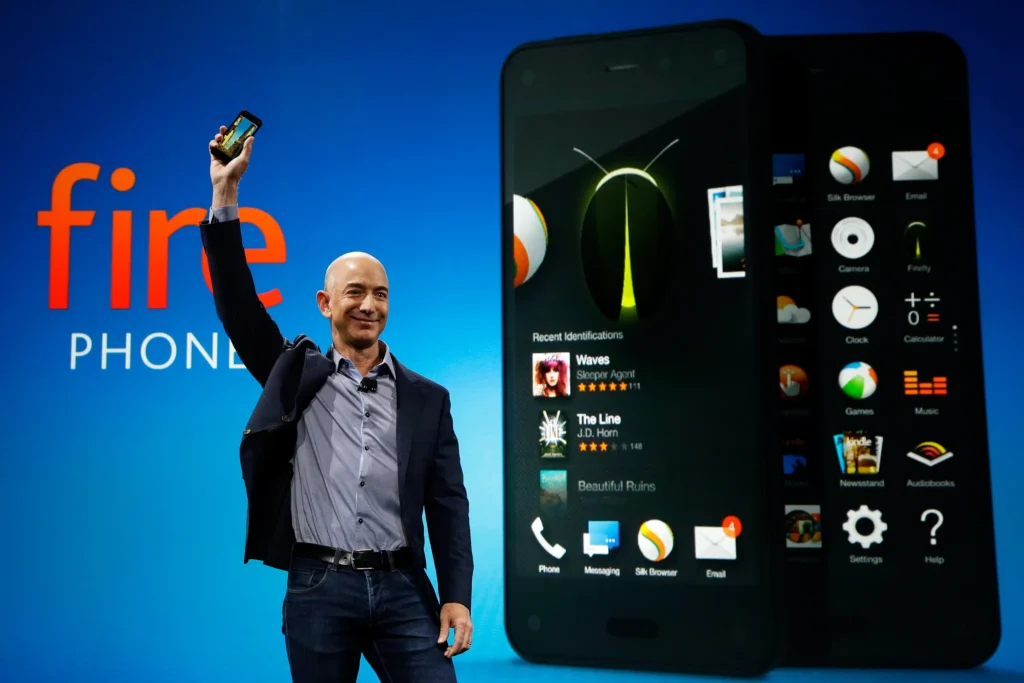
Amazon ‘Transformer’: The Secret Smartphone That Aims to Make Us Forget the Fire Phone
More than a decade after the highly publicized failure of the Fire Phone, Amazon is reportedly making a comeback in the mobile arena. According to Reuters, Amazon is developing a new internal smartphone, codenamed ‘Transformer’, with a focus on being an AI-native device designed to streamline access to Alexa and other home services (Shopping, Prime Video, Prime Music), rather than competing directly with the iPhone in the classic “super smartphone” segment.
A Project Led by ZeroOne, the ‘Breakthrough Devices’ Unit
The development is spearheaded by the Devices & Services division, particularly a relatively new unit called ZeroOne, headed by J Allard (a former Microsoft employee known for his role in creating the Xbox).
Reuters indicates that Amazon has yet to finalize all project details (price, release date, final features), and internally, the team is exploring various options, including a move towards a more traditional smartphone or a minimalist device reminiscent of premium “dumbphones.”
A ‘Service-First’ Smartphone, Not Just Another Android
The strategic focus is on customization around the Amazon ecosystem: a phone designed to enhance the use of Shopping, Prime Video, Prime Music, and especially Alexa.
What makes this project intriguing is the mention of an AI-centric device that may rely less on a traditional app store and more on experiences guided by the assistant (mini-apps, actions, automations).
This approach gives a very “agentic” feel: the phone transforms from a grid of icons into a command center.
Alexa+ as the Anchor, AI as the Catalyst… and Necessity
Amazon is transitioning from a long and expensive project: reinventing Alexa into an AI-enhanced version, Alexa+. In this context, a proprietary smartphone could serve as a launchpad: a place where Alexa+ feels at home, where user experiences are optimized, and where Amazon controls integration from end to end.
The timing also aligns with Amazon’s massive investment cycle in AI infrastructure. Reuters reports that the company is projected to spend around $200 billion in capex in 2026 (AI, chips, robotics, etc.), indicating a commitment to build capacity before capturing market usage.
‘Amazon has invested $50 billion in OpenAI‘ remains unconfirmed
Recently, there have been talks of a $50 billion investment in OpenAI. Currently, Reuters suggests that discussions could involve amounts up to $50 billion, with potential conditions (IPO, milestones, etc.). This has not been portrayed as a finalized and transferred amount.
Additionally, Reuters reported on tensions surrounding a cloud agreement worth $50 billion involving AWS and OpenAI, but this situation is complex and politically charged.
What Could Make ‘Transformer’ Successful… or Cause It to Fail Again
Amazon has learned from the Fire Phone experience: a smartphone does not succeed solely by intention but by offering a clear value proposition.
What could work:
- An Alexa+ experience that is genuinely superior, faster, more useful, and more “actionable” than on iOS/Android.
- A smart ‘second device’ positioning: a simple, secure, agentic phone that saves time.
- Integration of Prime/Amazon Shopping designed as a comfort advantage, not as constant advertising.
What could doom the project:
- A smartphone perceived as an Amazon remote rather than a desirable product.
- AI that is overly intrusive or not reliable enough.
- The market barrier: Apple/Samsung dominate, and users rarely switch without a compelling reason.
Overall, ‘Transformer’ seems less like a battle against the iPhone and more like an attempt to create the first credible ‘Alexa phone’ — a device that bridges commerce, entertainment, smart home, and agentic AI. If Amazon can strike the right balance, it may find its niche. If it misses the mark, the smartphone will revert to being what it has historically been for Amazon: a costly strategic luxury.



