

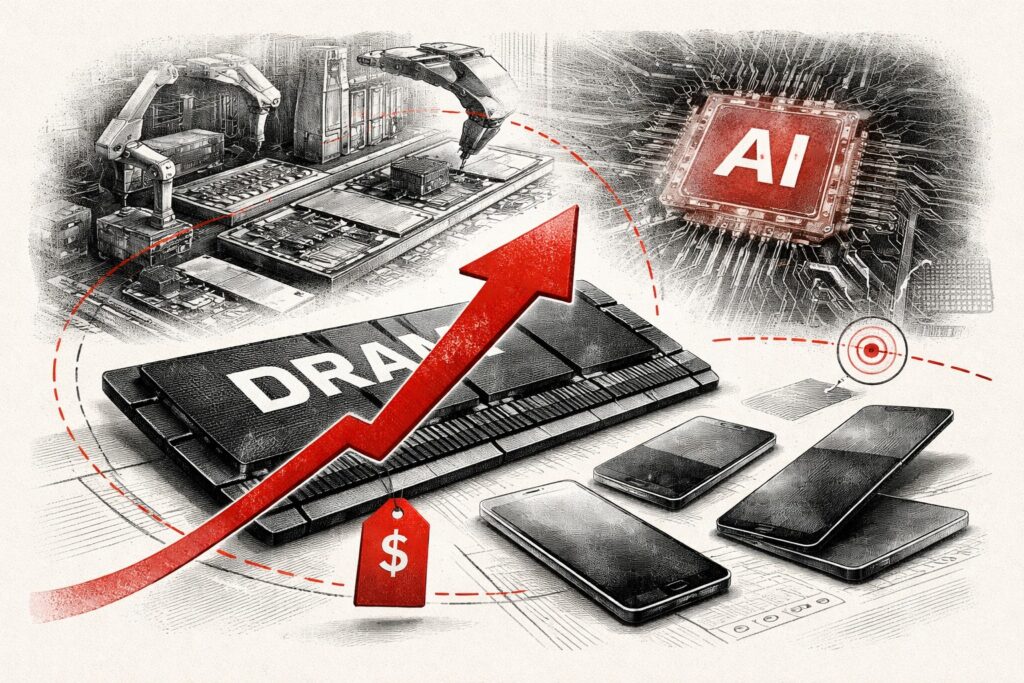
Samsung Electronics and SK Hynix have issued a significant warning about tightening supply levels for PC and smartphone memory, driven by soaring demand linked to artificial intelligence (AI). While both DRAM giants report robust profits spurred by specialized AI memory products, they anticipate ongoing strain in the consumer market. This situation has led to downward revisions in sales forecasts for smartphones and computers heading into 2026.
The two companies, which dominate the global dynamic random-access memory (DRAM) market, noted in their latest financial results that their production lines are being prioritized for high-bandwidth memory designed for AI servers. This shift is resulting in a shortage of traditional memory components for consumer electronics, accompanied by sharp price increases.
In the fourth quarter of 2025, Samsung reported a more than threefold increase in its consolidated operating profit compared to the previous year, totaling approximately 20 trillion won, with over 80% of this profit coming from its memory division. Meanwhile, Samsung’s mobile division experienced a decline in profits, directly affected by rising memory costs essential for its high-end devices. On the other hand, SK Hynix announced a record operating profit, largely driven by sales of high-bandwidth memory (HBM) used in AI accelerators, capturing an estimated market share of about 61% in this segment.
### A Structural Shift in the Semiconductor Market
These figures highlight a structural transformation within the semiconductor market. The growing demand for specialized AI memory is consuming an increasing share of production capacity, which in turn diminishes the available supply for traditional DRAM and NAND products. Recent data indicates that contract prices for DRAM modules, such as 16 GB DDR5 sticks, have seen substantial increases in recent quarters, with some market estimates suggesting price quadrupling compared to the previous year, and projections for further increases of around 50% to 60% in the upcoming quarters.
This dynamic is impacting the entire consumer electronics supply chain. Manufacturers of smartphones and computers are grappling with higher component costs, which squeeze their profit margins or force them to pass some of these costs onto consumers. Additionally, supply lead times are extending, and certain high-performance configurations are becoming less available.
Forecasts from various analysts underscore the ramifications for the consumer market: global smartphone sales are expected to decline by at least 2% in 2026, while personal computer sales may drop by around 5% during the same period. These adjustments reflect the tough choices facing manufacturers as they balance production volumes, product specifications, and cost constraints in a tightened memory market.
### Massive Investments to Increase Production Capacity
In response to these challenges, memory manufacturers are announcing significant investments to enhance their production capabilities, with new factory projects slated to come online by 2027-2028. However, these expansions will not immediately close the gap between the skyrocketing demand for AI and the supply of memory aimed at specialized segments. As a result, supply pressures on memory for PCs and smartphones are expected to persist in the short to medium term.
Under these conditions, both manufacturers and suppliers must adapt their sourcing strategies, optimize product portfolios, and reassess pricing models to remain competitive. As investments in AI continue to grow, the semiconductor market is undergoing a reconfiguration, creating substantial opportunities in specialized segments while presenting challenges for mainstream consumer applications.



