

Mobile Network Disruption Highlights Risks for Businesses and Consumers Alike
The mobile network serves as a crucial conduit for far more than just employee calls. It facilitates essential services such as merchants’ payment terminals, IoT devices in industrial settings, backup routers at agencies, and SMS authentication codes. When this network experiences an outage, multiple functionalities are compromised simultaneously, prompting IT departments to rethink continuity strategies across their entire infrastructure.
On October 21, Orange, France’s largest telecom provider with 34 million customers nationwide, reported a significant technical incident affecting its mobile network in the late morning. The company acknowledged that calls, SMS, and mobile services were severely disrupted for a substantial portion of its clientele, including both individual users and businesses.
For enterprises, this disruption impacted every service reliant on an Orange SIM card. Sales representatives on the go found themselves cut off from communication, while mobile payment systems, backup 4G or 5G units, and connected devices reliant on the network ceased to function. Although Orange affirmed that emergency calls remained operational, they encouraged users to switch to Wi-Fi networks for messaging and video conferencing. However, this workaround relies on fixed access—ironic, given that it negates the mobility benefits intended by the SIM card in the first place.
Core Network Equipment Responsible for Outage
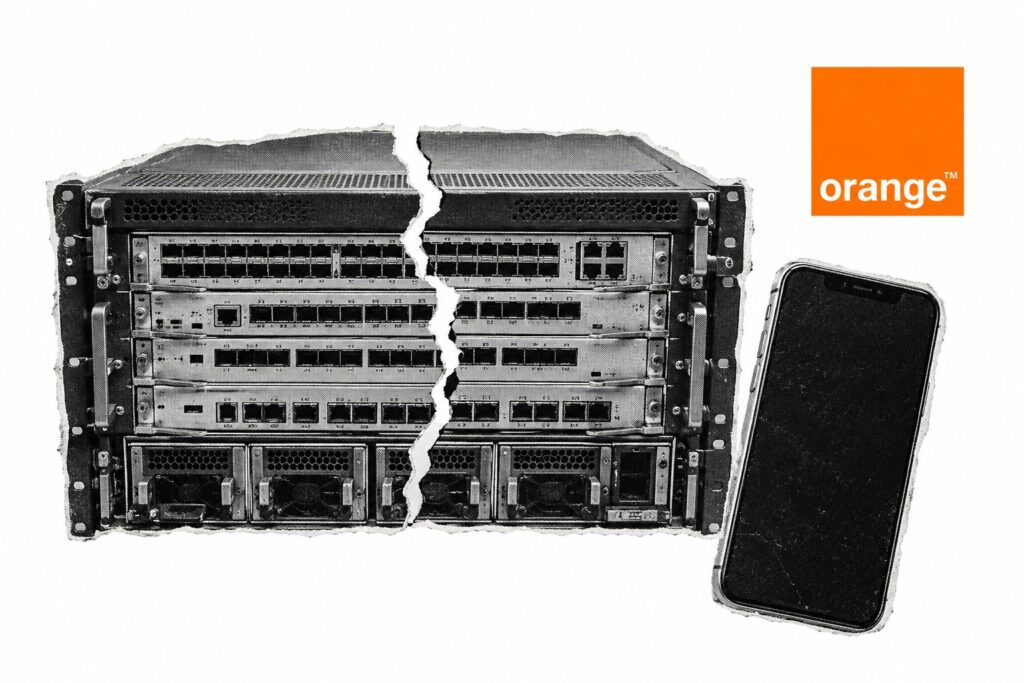
Later that day, Orange announced it had restored services for both personal and business customers, attributing the outage to a failure in a key piece of mobile network equipment. The operator did not specify the particular equipment or its manufacturer, nor did it disclose the number of affected lines. Orange’s technical teams continued monitoring the network to ensure its stability in the subsequent hours.
The core network is responsible for authenticating subscribers, establishing calls and data sessions, and linking them to the internet and other operators. This means that while antennas may remain active, they are rendered useless if the central system serving them is faulty. The network’s architecture causes this centralization of a few key components, which can plunge customers nationwide into connectivity issues due to a single point of failure. While Orange issued apologies to its customers in two public statements, it has not yet revealed any plans for compensation.
Three Nationwide Outages in Nine Months
This outage marks the third nationwide disruption of Orange’s mobile network within nine months, following notable incidents in January and June. In its communications, Orange reminded customers that the telecommunications regulator, Arcep, has ranked it first in terms of mobile network quality for the past 15 years. These findings are not contradictory, as quality measures focus on coverage and performance under normal conditions, while outages underscore the risks tied to centralized systems.
For IT departments, the key takeaway lies in how they design mobile access rather than merely selecting an operator. An entirely homogeneous fleet with a single telecom provider shares the same core network and is vulnerable to its failures. Businesses can mitigate this risk by incorporating redundancy—such as SIM cards from a second operator, eSIMs that support multiple profiles, or backup routers capable of switching to alternative networks. While these redundancies come at a cost, they become justified for critical functions like payments, on-call duties, or site monitoring. For less critical operations, reverting to Wi-Fi as suggested by Orange may suffice during an outage.
Evaluating Service Commitments and Continuity Plans
The service commitments associated with professional mobile offerings, outlining responses to interruptions and potential exclusions, take on a new significance in the aftermath of a disruption affecting many customers. Mobile telephony is rarely prioritized in continuity plans, which tend to focus on data centers and applications.
Nevertheless, businesses working under the NIS2 directive are required to demonstrate continuity for their essential services, which frequently rely on mobile access. The events of October 21 provide IT departments with a real-world scenario to evaluate mobile service disruption, assess reliance on a single SIM card for various applications, and make informed decisions on which functionalities warrant a dual network setup.



