

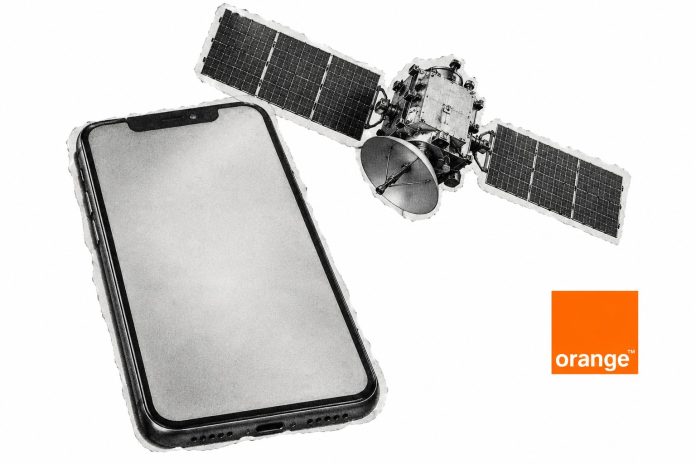
Deutsche Telekom, Orange, Telefónica, and Vodafone are collaborating on a joint application for satellite frequencies that the European Union is set to allocate post-2027. The four telecom giants aim to maintain ground network operations and oversight while partnering with a satellite provider to handle orbital communications. This satellite link is poised to serve as an extension of the European mobile network, allowing access via standard smartphones.
Connecting an ordinary phone directly to a satellite without the need for specialized terminals has become a key focus for mobile operators. They see this as a viable solution to cover areas where their terrestrial networks fall short. In Europe, satellite constellation operators, who own the requisite technology, can also vie for these frequencies, potentially interfacing directly with consumers. In response to this competitive landscape, Deutsche Telekom, Orange, Telefónica, and Vodafone issued a letter of intent on October 19, committing to explore a shared application for the European allocation of Mobile Satellite Service (MSS) frequencies. Their focus is on direct-to-device (D2D) communication, establishing a direct link between satellites and phones.
This joint application aligns with a regulatory timetable, as the licenses for the harmonized 2 GHz band, granted in 2009 to two satellite operators, are set to expire in May 2027. On May 27, 2026, the European Commission proposed a streamlined process to select their successors across the Union, replacing the 2008 decision that originally governed the first selection. The proposed regulation divides the frequency band into six paired blocks of 5 MHz, with two earmarked for a secure system integrated with IRIS², the European secure connectivity initiative designed for critical and government communications. The remaining blocks will be allocated to commercial services, prioritizing new entrants from the Union for two of the blocks and capping frequencies at 10 MHz per applicant. Rights would be granted for twenty years, with an additional two-year extension for 2009 licenses to ensure a smooth transition.
Operators to Maintain Ground Control, Partner for Orbit
The four telecom operators plan to develop the necessary ground network infrastructure in Europe and oversee critical functions of coordination and management without investing directly in a satellite constellation. This satellite system will be acquired through a yet-to-be-determined satellite partner. Neither the investment amount nor its distribution among the four companies has been disclosed. According to the statement, this approach aims to combine European governance with market access while leveraging proven satellite technology.
This model allows operators to focus on their core competencies while maintaining compliance with regulatory preferences. By keeping ground stations, traffic management, and oversight within the EU, the initiative reinforces the Commission’s emphasis on security and resilience. The heavier investment in satellites will fall to the selected partner. Furthermore, the initiative is associated with the Commission’s goal of enhancing the sovereignty and resilience of critical connectivity infrastructure and the development of a European satellite constellation.
An Accessible Layer of Resilience for All Operators
The four operators aim to address underserved areas, bolster the resilience of public networks, and safeguard critical communications. This initiative would provide a backup connection for multi-site businesses, ensuring connectivity for isolated locations, construction sites, or mobile teams where terrestrial antennas are lacking or down.
This backup link will remain available to customers of all mobile operators, as access to satellite technology is a regulatory requirement. The Commission’s proposal expects commercial applicants to support wholesale access to their satellite capacities or frequencies on equitable, reasonable, and non-discriminatory terms, particularly benefiting virtual operators. The letter of intent specifies that all mobile network operators should have open and non-discriminatory access to D2D service provisions for their customers. Therefore, choosing an operator should not restrict satellite access. However, this initiative is still in the exploratory phase, lacking a defined timeline, offers, or pricing structures.
Existing Satellite Partnerships Continue
Each signatory will maintain its existing agreements, as the letter of intent does not supersede them. Vodafone has formed a joint venture with the American company AST SpaceMobile, named Satellite Connect Europe, which is establishing ground infrastructure operated in Europe and providing open access to D2D for mobile operators, according to an AST SpaceMobile statement released on August 6. Orange is actively involved in integration trials taking place in France, Germany, Spain, and Romania, pending regulatory approvals.
This consortium thus prioritizes governance before selecting technology. While a satellite partner has yet to be appointed, the initiative is motivated by the need for sovereignty in critical connectivity infrastructures. It’s important to note that sovereignty cannot be fragmented across different links in a chain; the choice of partner will ultimately shape the entire service framework. The Commission’s proposal distinguishes between two distinct uses, reserving the secure system for an EU operator integrated within IRIS², separate from commercial licenses.
Joint Application Deadline Approaching Before May 2027
The letter of intent solidifies a unified position for the incumbent operators ahead of the European selection process, the rules of which must still be adopted by the European Parliament and the Council through the standard legislative procedure. The Commission plans for a single selection across the Union, granting rights valid in all member states.
For the IT managers of multi-site enterprises, the appeal lies in securing access to satellite connections through their usual operator, framed in a manner that mandates inclusivity for all. The choice of satellite partner and the specifics of the application process will determine whether this continuity is underpinned by a fully European chain.



